By XAMXAM
DAVOS, Switzerland — In a forum better known for calibrated language and cautious consensus, Prime Minister Mark Carney did something rare: he spoke as if the old rules no longer applied.
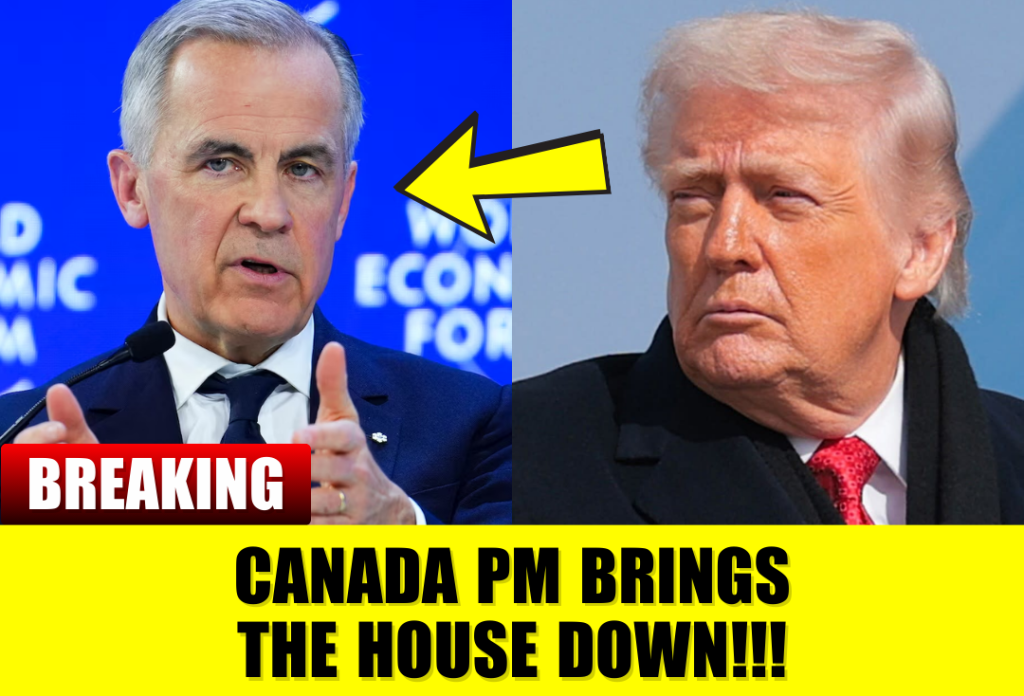
Addressing the annual meeting of the World Economic Forum in Davos, Carney delivered a sweeping critique of how power is now being exercised in global affairs — and of the country he suggested had done the most to hasten that shift. Without theatrics or personal insult, he described a world in which tariffs had become weapons, supply chains instruments of coercion, and sovereignty something to be tested rather than respected.
The target of the critique was unmistakable. Under President Donald Trump, Carney argued, the United States has blurred the line between negotiation and intimidation, treating economic interdependence less as a shared good than as leverage to be pulled when convenient. The applause that followed was unusually sustained for Davos — a signal that the message resonated far beyond Canada’s delegation.
Carney’s speech was not framed as anti-American in the traditional sense. He acknowledged the benefits that American leadership once provided: open sea lanes, a stable financial system, collective security. But he contended that the bargain underpinning that order — that rules would restrain the strong as well as the weak — had eroded. What remains, he suggested, is a period of “rupture,” not transition, in which middle powers must confront a harsher reality.
In one of the address’s most pointed passages, Carney invoked the idea of “living within a lie” — the quiet acceptance of norms that no longer function as advertised. Countries, he said, had continued to invoke a rules-based order even as exceptions multiplied and enforcement grew selective. That pretense, he argued, was no longer sustainable. Silence, in the face of economic coercion, had become complicity.
The immediate context was the Arctic. Carney reiterated Canada’s support for Greenland and Denmark amid renewed American pressure over the island’s future, rejecting the notion that tariffs or threats could be used to extract territorial concessions. Canada’s commitment to NATO’s Article 5, he said, was “unwavering,” and Ottawa would invest accordingly — in radar, submarines, aircraft and an expanded presence in the North.
But the broader argument went well beyond Greenland. Carney framed the moment as a test for all mid-sized economies caught between great powers. Dependence, he warned, no longer guaranteed security; it created exposure. As a result, countries were moving — quietly but deliberately — to build strategic autonomy in energy, food, critical minerals and finance.

He was careful to acknowledge the risk of that path. A world of self-sufficient fortresses, he said, would be poorer and more fragile. The alternative, in his telling, was not isolation but coalition: new groupings based on shared interests, variable geometry rather than universal institutions that no longer command trust. Canada, he said, was already pursuing that strategy — diversifying trade, deepening ties with Europe and Asia, and reducing its vulnerability to unilateral pressure.
What made the speech stand out was not its diagnosis — many leaders privately share similar concerns — but its candor. Davos is a place where disagreements are often softened into abstractions. Carney chose specificity. He named tariffs as coercion. He described the erosion of multilateral institutions as a choice, not an accident. And he suggested that the era of quietly “going along to get along” was over.
The reaction in the hall suggested a shift in mood. Delegates from Europe and beyond have been grappling with the same dilemma: how to manage a United States that remains indispensable but increasingly unpredictable. Carney’s address gave voice to a sentiment that has been growing beneath the surface — that adaptation requires more than patience, and that credibility now depends on the ability to withstand pressure.
Whether Canada can sustain that posture remains an open question. The country is deeply integrated with the U.S. economy, and diversification takes time. But Carney appeared intent on reframing the debate. Sovereignty, he said, is no longer just a matter of law or alliance membership; it is the practical capacity to absorb shocks without capitulation.
In that sense, the standing ovation was about more than one speech. It reflected a recognition that the world’s middle powers are reassessing old assumptions — and that some are prepared to say so out loud. At Davos, at least, the silence broke.