By XAMXAM
OTTAWA — When Prime Minister Mark Carney stepped before cameras on November 26 and announced a sweeping clampdown on steel imports, the message was unmistakable: Canada would no longer absorb the costs of a trade war it did not start.
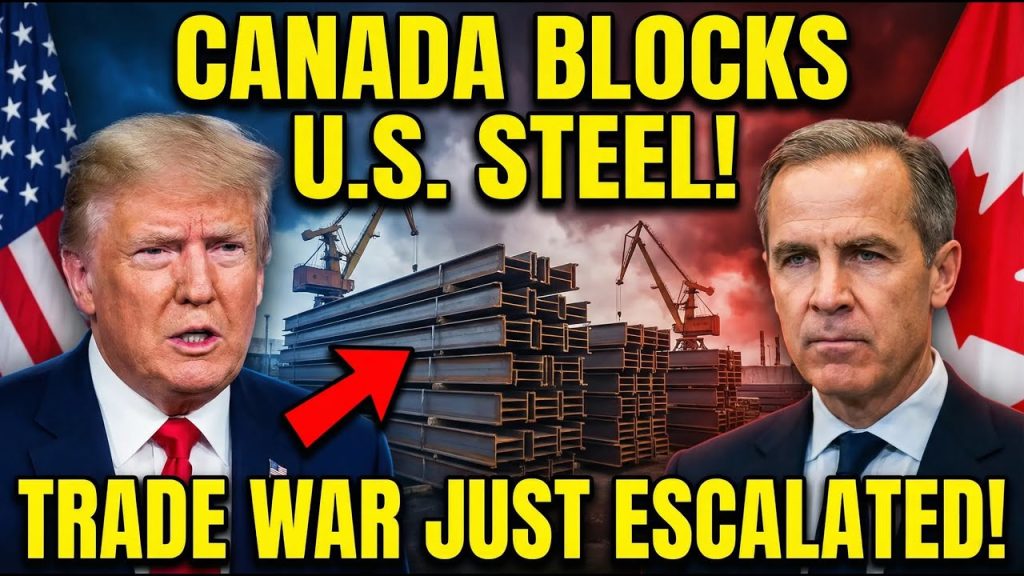
For months, Canadian steelmakers had watched their access to the United States evaporate. Under tariffs imposed by President Donald Trump, the duty on Canadian steel entering the U.S. market climbed to 50 percent — a level that effectively shut the door on an industry that had long depended on its southern neighbor. Exports fell sharply. Mills in Ontario and Quebec cut shifts. Layoffs followed. What had been framed in Washington as “leverage” began to look in Ottawa like a permanent condition.
Carney’s response marked the most aggressive use of trade defenses Canada has deployed in decades. It was not a mirror-image retaliation. It was a redesign of the market itself.
At the center of the package were sharply reduced tariff-rate quotas on imported steel. For countries without free-trade agreements with Canada, allowable imports were cut to just 20 percent of recent levels. Even countries with trade agreements but outside North America saw their quotas reduced. Imports above those limits now face a 50 percent surcharge, a barrier high enough to deter most shipments.
Canada also moved beyond raw steel. Ottawa imposed a 25 percent tariff on steel “derivative” products — everything from fabricated beams and fasteners to industrial components — applying the duty to the full value of the product, not just its steel content. The measure went further than comparable U.S. rules and was designed to prevent foreign producers from bypassing quotas by exporting finished goods instead of raw metal.
Perhaps most consequential was the decision to end so-called horizontal remission — the tariff waivers that had allowed Canadian manufacturers to import U.S. steel without paying retaliatory duties when domestic supply fell short. Beginning early next year, most manufacturers will lose that relief. Decades of tightly integrated North American supply chains will have to adjust, quickly and at a cost.
The shift reflects both economic calculation and political reality. Carney, a former central banker, has framed the dispute as a matter of economic sovereignty. In his telling, tariffs justified on “national security” grounds against a close ally leave little room for incremental compromise. When pressure becomes structural, he has argued, accommodation only delays the damage.

The consequences will not be confined to steel mills. Construction costs are expected to rise as imported beams and fasteners become more expensive. Manufacturers that rely on specialized steel inputs face higher costs or the challenge of finding new suppliers. Consumers, economists warn, are likely to see price increases ripple through everything from appliances to vehicles.
The pain will be felt in the United States as well. American manufacturers that relied on Canadian steel must now either absorb higher costs or seek alternative sources. Studies of earlier tariff rounds found that while steel producers benefited, downstream industries lost more jobs than the steel sector gained. The broader economy paid the price.
Yet trade wars are rarely settled by aggregate economic logic. They are driven by political imperatives, and those imperatives are hardening on both sides of the border. In Washington, protectionist measures enjoy support among domestic steelmakers and fit neatly into Trump’s broader strategy of using tariffs as tools of pressure. In Ottawa, allowing a foundational industry to collapse would carry heavy political costs, particularly in regions built around steel production.
The timing adds another layer of uncertainty. A scheduled review of the United States–Mexico–Canada Agreement in mid-2026 looms over the dispute. Under calmer conditions, the process would be technical. In the current climate, it could become a flash point that tests the future of free trade in North America.
Carney has responded by accelerating efforts to diversify Canada’s trade relationships, deepening ties with Europe and Asia and reducing reliance on the U.S. market. But geography and history impose limits. Roughly three-quarters of Canadian exports still go south. That dependence cannot be unwound quickly.
What is unfolding, then, is less a calculated strategy for advantage than a collision of constraints. Canada is fortifying its market to protect workers and capacity. The United States is maintaining tariffs to protect its own producers and assert leverage. Both sides are absorbing losses they know, on paper, make the overall economy worse off.
The steel dispute has become a symbol of something larger: the erosion of the guardrails that once kept trade conflicts contained. Rules-based mechanisms have given way to unilateral measures justified by security claims and answered with defensive walls. Other countries are watching closely, drawing lessons about how disputes are now resolved.
For workers in Hamilton or Sault Ste. Marie, and for manufacturers in Michigan or Ohio, the abstract language of quotas and derivatives translates into layoffs, delayed projects, and higher costs. The trade war may be waged in capitals, but its effects are felt in communities that spent generations building an integrated continental economy.

Canada’s move does not guarantee a resolution. It does, however, make one thing clear: Ottawa has concluded that waiting for relief is no longer an option. By blocking U.S. steel and tightening its o