By XAMXAM
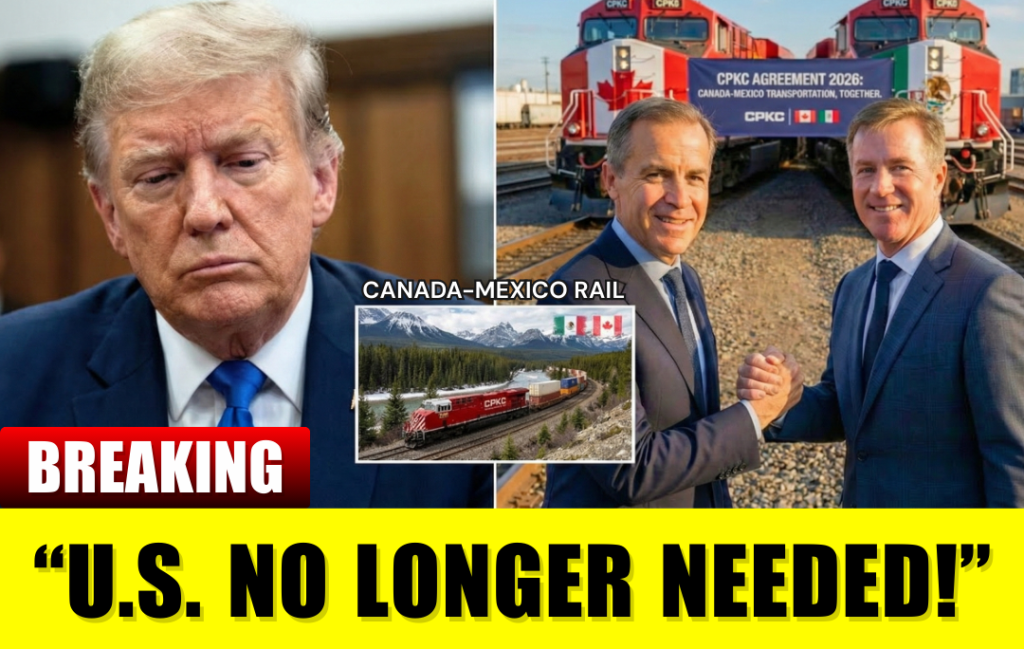
The shift did not arrive with a tariff announcement or a summit communiqué. It arrived on steel rails, stretching more than 3,000 kilometers from the Canadian Prairies to the heart of Mexico. With a $500 million expansion of capacity, Canadian Pacific Kansas City has turned a long-theoretical idea into a working reality: Canadian grain moving directly to Mexican consumers, bypassing U.S. ports and the leverage they once conferred.
For decades, Canadian exports to Latin America relied on American infrastructure. Grain traveled south by rail, bottlenecked at U.S. ports along the Gulf Coast or the Pacific Northwest, where inspections, fees, and congestion added cost and uncertainty. That system embedded the United States as an indispensable intermediary. It also made trade vulnerable to policy shocks—tariffs, inspections, or sudden rule changes.
The CPKC corridor changes that calculus.
Formed by the 2023 merger of Canadian Pacific and Kansas City Southern, CPKC is the first single-line railroad linking Canada, the United States, and Mexico. Its 32,000-kilometer network allows grain loaded in Manitoba or Saskatchewan to arrive in Mexico City or Guadalajara without interchanges between railroads—no handoffs, no port transfers, no exposure to maritime chokepoints.
This year, the company backed that network with money. More than $500 million is being invested in high-capacity hopper cars, new Tier 4 locomotives, and infrastructure upgrades designed specifically to move agricultural volumes at scale. The result is not incremental efficiency but a new route option. For the 2024–25 crop year, CPKC expects to move roughly 27 million metric tons of Canadian grain and grain products, with weekly capacity rising toward levels that could support more than 30 million tons annually.
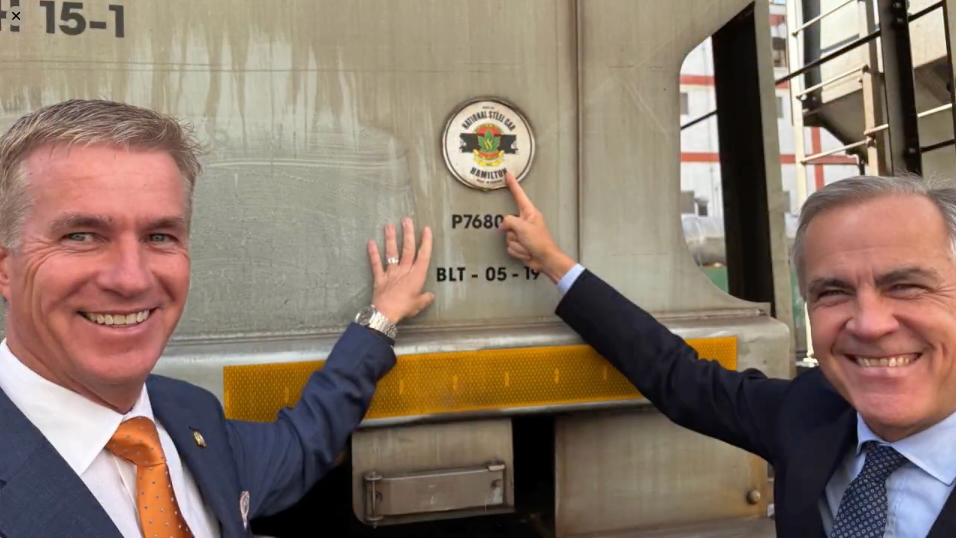
The symbolism has not been lost on Ottawa. When Prime Minister Mark Carney toured a CPKC yard in Mexico alongside company executives, the message was unmistakable: trade diversification is no longer an aspiration; it is infrastructure.
Mexico, for its part, has strong incentives to welcome the shift. With a population of roughly 130 million and a growing middle class, demand for wheat, corn, and other staples continues to rise. Mexico produces grain domestically but remains a major importer, historically dependent on U.S. supply. Political uncertainty north of the border—tariff threats, inspection delays, and episodic trade disputes—has prompted Mexican buyers to seek reliable alternatives.
Canadian wheat fits the bill. Prairie varieties are prized for protein content and baking quality, attributes valued by Mexican mills and bakeries. Logistics now match the product. Single-line service reduces transit times and costs, while Canada’s move to electronic phytosanitary certification has streamlined customs clearance, making rail-delivered grain competitive with—and in some cases preferable to—traditional U.S. supply.
What makes the corridor particularly consequential is what it removes from the equation. U.S. ports no longer collect handling fees. American inspection regimes no longer gate shipments. Gulf and Pacific Northwest terminals that once processed Canadian grain for Latin America see volumes diverted inland. The trains do cross U.S. territory, but as transit—much like an aircraft overflight—capturing minimal value compared with full export services.
Legally, the arrangement is protected. Under North American trade rules, including the USMCA, rail transit across borders is permitted. Blocking it would invite retaliation and legal challenge. In practical terms, that leaves Washington with few tools to influence the flow.
For Donald Trump, whose trade strategy has often relied on pressure at borders and ports, the development is unsettling. Tariffs lose potency when exporters can route around them. Inspections lose bite when shipments no longer queue at docks. Infrastructure, once built, is stubbornly apolitical.
The permanence is the point. Hopper cars and locomotives are designed for decades of service. Customer relationships formed around predictable delivery tend to endure. Once Mexican buyers recalibrate supply chains toward Canada—and Canadian farmers toward Mexico—the reversal costs rise. Even a calmer political climate would struggle to lure volumes back through U.S. ports without compelling economic incentives.
None of this signals a rupture in North American trade. The United States remains Canada’s largest partner, and CPKC itself operates extensively on U.S. soil. But the balance has shifted. Integration is no longer synonymous with dependence. Optionality—having multiple routes to market—has become policy by other means.
The broader implication is structural. Power in trade does not rest solely on markets or rhetoric; it rests on routes. When routes multiply, leverage diffuses. Canada’s rail pivot to Mexico is not loud, but it is durable. And durability, in trade, tends to outlast any single political cycle.
What is moving south on those rails is more than grain. It is a reallocation of influence, measured not in statements but in tonnage, schedules, and steel that will still be there long after today’s arguments have passed.