By XAMXAM
DOHA — When Mark Carney announced that Canada was building “a dense web of new connections” to diversify trade and attract investment, the remark sounded, at first, like familiar diplomatic language. But the itinerary that followed told a sharper story. Within days of concluding a landmark visit to Beijing, Carney prepared to land in Qatar — the first sitting Canadian prime minister ever to do so — before heading onward to Europe. The sequence was not symbolic. It was strategic.
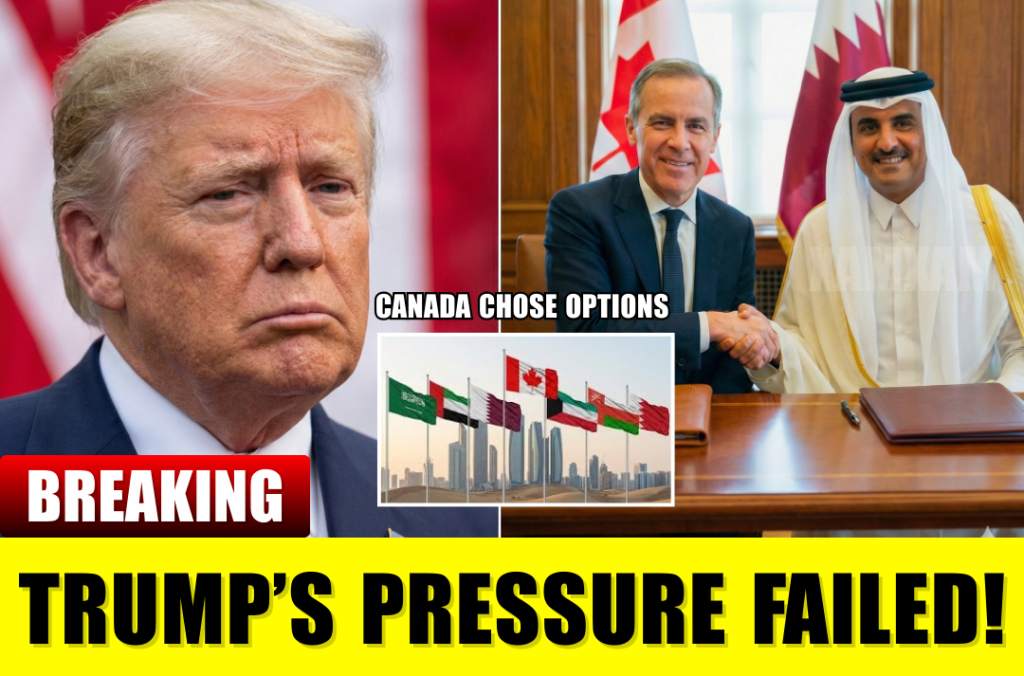
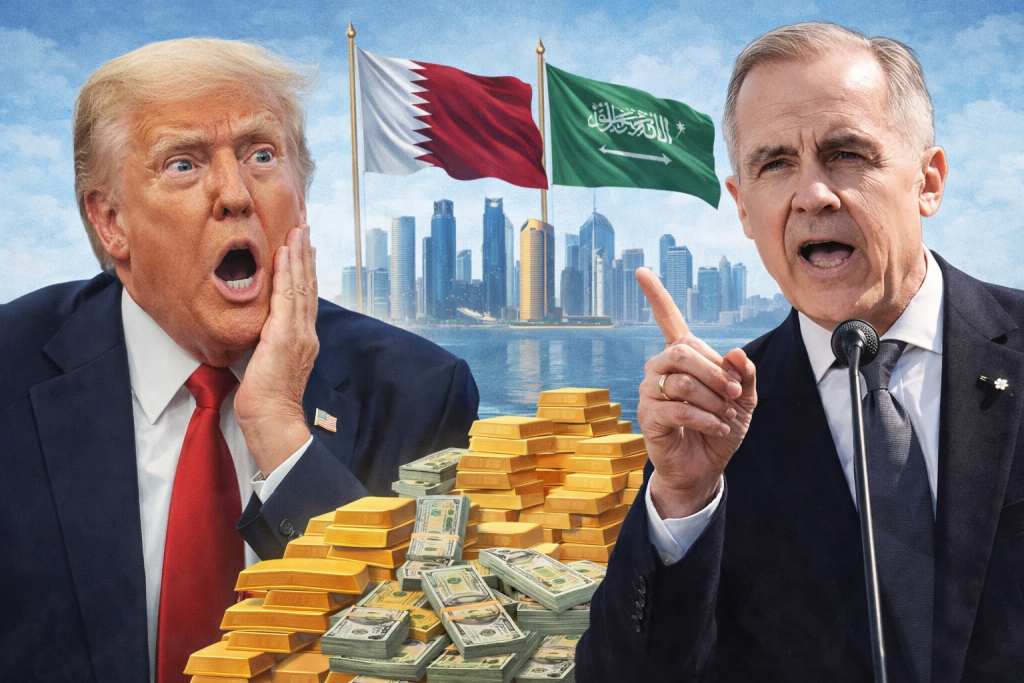
The Gulf, long courted quietly by global capital seekers, has emerged as the centerpiece of Canada’s effort to reduce its vulnerability to American political volatility. While Donald Trump has revived tariff threats and rhetoric about annexation, Ottawa has been pursuing a different response: attracting sovereign wealth capital that operates entirely outside U.S. political influence.
The scale of that capital is difficult to overstate. Sovereign wealth funds from the Gulf Cooperation Council control more than $5.6 trillion in assets, a figure projected to approach $9 trillion by the end of the decade. These funds are not short-term investors. They build ports, power grids, data centers, and energy systems designed to generate returns for half a century or more. For Canada, they offer something increasingly rare — patient capital untethered from Washington.
At the center of this pivot is Qatar Investment Authority, which manages more than $550 billion. In December, it launched a new artificial intelligence subsidiary and shortly afterward committed $20 billion to a joint venture with Brookfield Asset Management, headquartered in Toronto. The partnership aims to develop large-scale AI infrastructure — energy systems, land, data centers, and computing capacity — in Qatar and select international markets, with Canada positioned as a primary beneficiary.
The logic is straightforward. Data centers require enormous amounts of reliable electricity, predictable regulation, and political stability. Canada offers abundant hydroelectric and nuclear power, a cool climate that reduces operating costs, and a legal environment that reassures investors making multi-decade bets. For Gulf funds wary of American unpredictability, those attributes have become decisive.
Energy provides a second pillar. Qatar has invested in Canadian oil and gas for more than a decade, holding stakes in Western Canadian assets and offshore licenses near Newfoundland and Labrador. With global energy markets increasingly shaped by geopolitical risk, Canadian production — governed by rule of law and relatively low carbon intensity — has gained appeal. New liquefied natural gas exports to Asia have only strengthened that case.
Saudi Arabia and the United Arab Emirates are following similar paths. Both are channeling tens of billions into artificial intelligence, energy transition projects, and critical minerals. Canadian firms, particularly those listed on the Toronto Stock Exchange, are global leaders in mining finance and expertise. Gulf funds have begun taking strategic stakes in Canadian companies developing lithium, copper, and rare earth projects across Africa and Latin America — partnerships that pair Gulf capital with Canadian know-how.
Taken together, officials and analysts estimate that Gulf investment into Canada could reach $75 billion to $110 billion over the next five to seven years. That figure is not tied to a single announcement. It reflects a convergence of interests: Canada’s need for infrastructure and diversification, and the Gulf’s search for stable, profitable destinations beyond the Middle East and the United States.
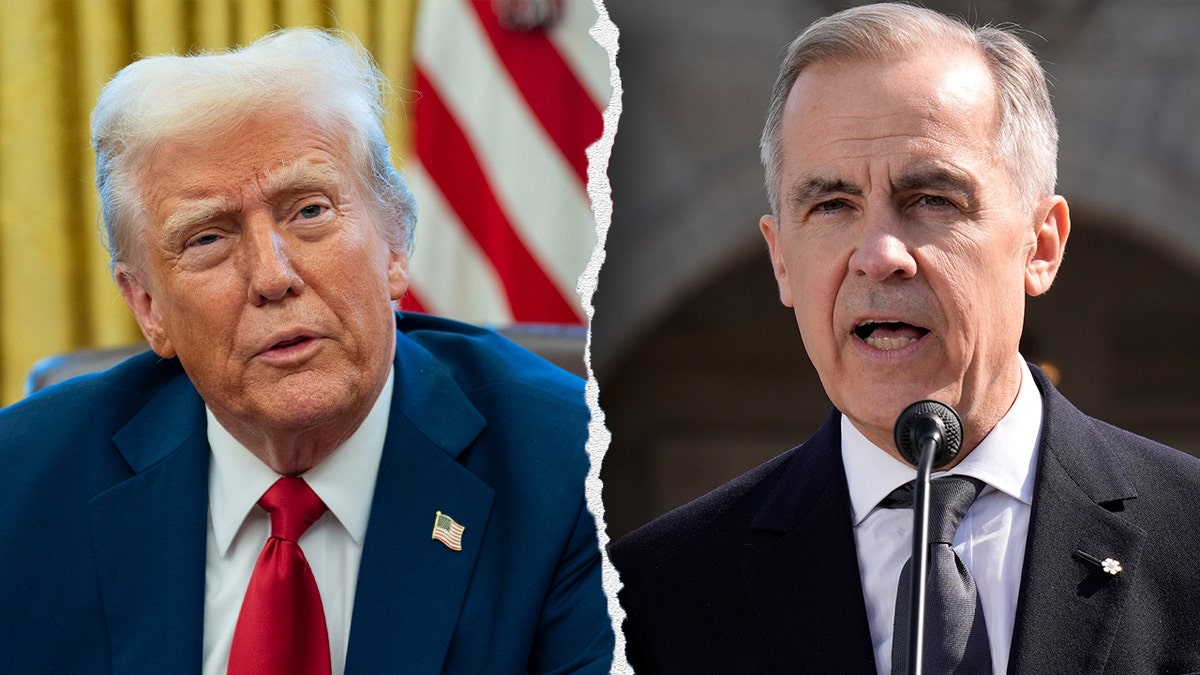
The timing is not accidental. Trump’s renewed confrontational posture has unsettled long-term investors accustomed to predictable frameworks. Sovereign wealth funds, whose mandates emphasize stability over decades, are particularly sensitive to political risk. A United States willing to threaten allies or weaponize trade introduces uncertainty these funds prefer to avoid.
Canada, by contrast, presents itself as a safe harbor. Its infrastructure needs are immense — electricity grids, ports, rail corridors, data centers — and its regulatory environment is transparent. Crucially, projects are structured under Canadian law, in Canadian dollars, with Canadian partners. Gulf funds gain exposure to a developed economy; Canada gains access to capital that domestic markets and U.S. banks cannot supply at comparable scale.
This shift carries broader implications. For decades, American financial centers served as the primary gateway for global capital flows into North America. Direct Gulf-to-Canada investment bypasses that system entirely. It reduces U.S. leverage not through confrontation, but through quiet reallocation.
Canadian officials insist this is not a rejection of the United States. The U.S. remains Canada’s largest trading partner and closest security ally. But the distinction between partnership and dependence has sharpened. By cultivating alternative sources of capital, Ottawa is insulating itself against future shocks.
Other middle powers are watching closely. If Canada succeeds in anchoring Gulf investment across artificial intelligence, energy, mining, and infrastructure, the model is replicable. Australia, parts of Europe, and East Asian allies face similar pressures and similar incentives.
What makes the moment striking is its subtlety. There have been no dramatic announcements, no grand declarations of independence. Instead, the shift is being measured in term sheets, joint ventures, and infrastructure plans that will shape economies for decades.
Trump’s strategy relied on the assumption that pressure would force compliance. The Gulf pivot suggests a different outcome. Faced with volatility, Canada has sought alternatives — and found them in capital pools large enough, patient enough, and distant enough to redraw the map of economic influence.
Money, as always, speaks quietly. But in this case, it is speaking volumes.