By XAMXAM
When tariffs are imposed, retaliation is usually loud and immediate: counter-duties, press conferences, carefully worded threats. This time, the response was neither dramatic nor public. It was simply a reminder.
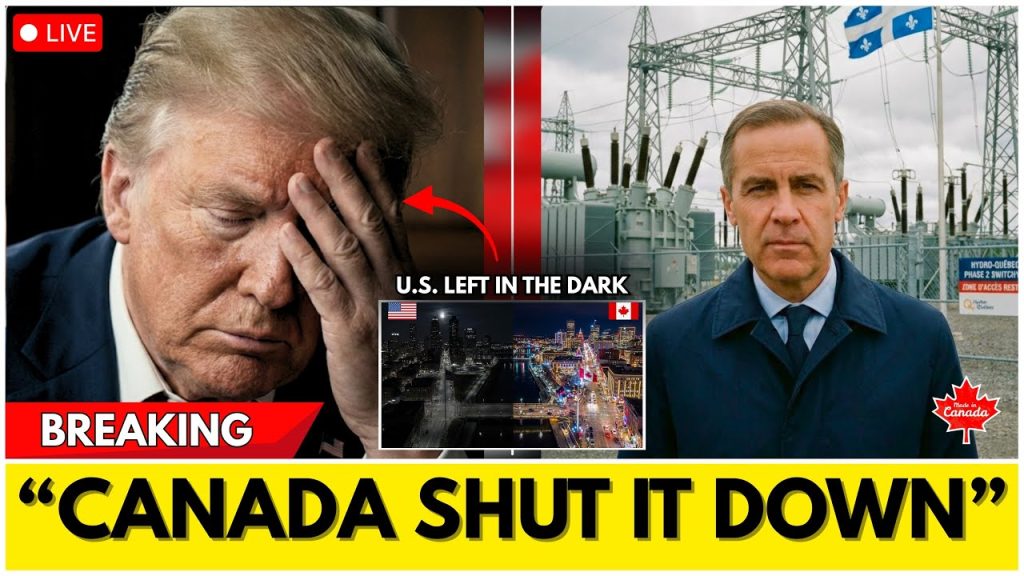
“If they want to come at us with tariffs, we have options too,” said Quebec Premier François Legault, noting that one of those options was the electricity that keeps parts of the United States lit and warm. It was not framed as a threat, but as a statement of structural reality—one that Washington, and much of New England, had largely forgotten.
For decades, the northeastern United States has quietly integrated its energy system with Canada’s. Quebec’s vast hydroelectric network, anchored by massive dams in James Bay and along the St. Lawrence River, has supplied clean, reliable power south of the border since the 1980s. Vermont now sources roughly a quarter of its electricity from Canada. Massachusetts and New York have gone further, building billion-dollar transmission lines specifically designed to import Canadian hydro power as a cornerstone of their climate strategies.
That integration worked because it was boring. Electricity flowed. Prices stayed stable. Emissions targets became more attainable. Politics stayed out of it.
Then Donald Trump imposed new tariffs on Canadian energy exports.
The immediate effect was subtle but telling. Hydro-Québec paused exports into New England’s wholesale spot market. Officials cited market conditions, but the timing—days after tariffs took effect—was impossible to ignore. Shortly afterward, Quebec signaled it was examining the legal feasibility of revisiting newly signed long-term contracts with Massachusetts and New York.
No contracts were torn up. No lights went out. But the message landed.
The numbers explain why. Canadian hydro supplies roughly 10 percent of New England’s electricity in an average year, and significantly more during periods of peak demand. New York imported nearly eight terawatt-hours from Quebec and Ontario last year. Two new transmission projects—the New England Clean Energy Connect and the Champlain Hudson Power Express—were completed after more than a decade of planning and over $10 billion in combined investment. Together, they were designed to deliver enough power to supply millions of homes and anchor state climate plans through mid-century.
Those projects did not treat Canadian electricity as a supplement. They treated it as foundation.

Massachusetts and New York made that choice deliberately. Their grids rely heavily on natural gas, which becomes volatile during winter cold snaps and summer heat waves. Canadian hydro acts as a stabilizer, dampening price spikes and reducing reliance on fossil fuels. Without it, states face an unpalatable menu: higher electricity bills, increased emissions, or years-long efforts to build replacement infrastructure that does not yet exist at scale.
Quebec, by contrast, has flexibility. Hydroelectric reservoirs allow power generation to be shifted in time. Excess electricity can be sold elsewhere or simply held back. The asymmetry is stark: New England needs Quebec more than Quebec needs New England.
Over the next three decades, the cumulative value of electricity trade between Quebec and the northeastern United States is projected to exceed $290 billion. That figure is not merely utility revenue. It represents grid stability, climate credibility, and economic competitiveness for states that market themselves as clean-energy leaders.
This is why the episode matters beyond a single tariff dispute. Electricity, unlike oil or gas, cannot be easily rerouted across oceans. It flows through fixed wires between directly connected systems. When political friction enters that relationship, leverage appears almost instantly.
Quebec officials were careful to draw distinctions. The dispute, they said, was with Washington, not with ordinary Americans. Long-standing contracts, such as Vermont’s, were not singled out. But trust—long assumed—was openly questioned. Future cooperation, they suggested, would be reassessed with greater caution.
For New England, that is the uncomfortable lesson. Years of energy planning assumed that cross-border cooperation was a given. Tariffs turned that assumption into a variable.
The immediate crisis has eased. Some tariffs were paused. Power continues to flow. But the precedent remains. An ally demonstrated, without flipping a switch, that it holds meaningful influence over American energy security.
In a world where climate policy increasingly depends on cross-border infrastructure, that influence will not disappear. States may still pursue deeper integration with Canada. But they will do so knowing that energy, once treated as apolitical, is now firmly within the realm of power politics.
The lights are still on in New England. The grid remains stable. Yet something fundamental has shifted. Electricity, once invisible, has become visible leverage—and Washington is no longer the only one holding it.