U.S. Strike in Venezuela Triggers Global Alarm and Domestic Backlash
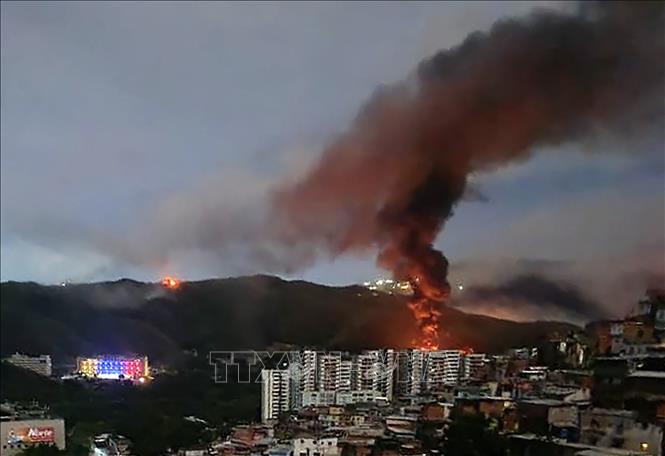
WASHINGTON — A sudden U.S. military action targeting Venezuela has ignited a fast-moving political crisis abroad and a widening storm at home, raising urgent questions about presidential authority, America’s global standing, and the risk of yet another open-ended conflict in Latin America.
In a nationally televised address, Venezuela’s acting president, Delcy Rodríguez, struck a defiant tone, declaring that Venezuela “will never be a colony of any nation” and insisting that the country recognizes only one president, Nicolás Maduro. Her remarks followed what U.S. officials described as a limited operation, but one that Venezuelan authorities and critics of the Trump administration characterize as an invasion aimed at regime change.
The Venezuelan government has not indicated any intention to surrender or negotiate. Interior Minister Diosdado Cabello, a powerful figure within the Maduro government, appeared in video circulated widely on Venezuelan and U.S. social media platforms vowing resistance and rejecting any handover of power. Governors aligned with Maduro echoed that stance, signaling a coordinated front — at least for now.
What remains unclear is the full scope of the operation, its immediate human cost, and whether it marks the opening phase of a longer military engagement.
Conflicting Narratives From Washington

President Trump, speaking at a press conference and later in remarks reported by the New York Post, suggested that foreign forces had been protecting Maduro and suffered casualties during the operation. He claimed that Cuban personnel embedded with Venezuelan security forces were killed, describing their presence as a “bad move.” Independent confirmation of those claims has not yet been provided, and neither the Cuban government nor international observers have verified casualty figures.
U.S. officials have acknowledged Venezuelan military casualties but have not released detailed numbers. Preliminary reports circulating among regional journalists and defense analysts suggest more than a dozen fatalities and dozens injured, though those figures remain unconfirmed.
At the same time, senior administration officials appeared to offer sharply different explanations of the operation’s legal and strategic basis.
While President Trump repeatedly described the action as necessary to “take back” oil resources and suggested the United States would “run” the country going forward, Secretary of State Marco Rubio argued that congressional authorization was not required, framing the operation as a law-enforcement-style action comparable to capturing a fugitive.
That divergence — highlighted extensively across U.S. cable news and political commentary platforms — has fueled criticism that the administration lacks a coherent strategy or legal justification.
Diplomatic Shockwaves
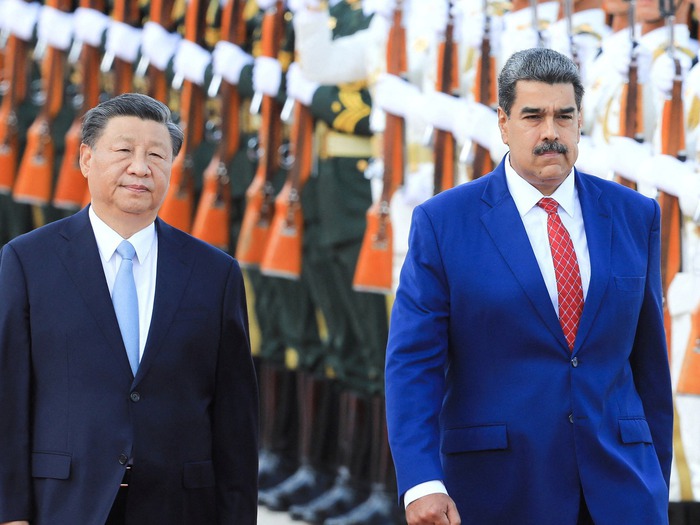
The operation has also sent ripples through international diplomacy. Chinese officials were reportedly in Venezuela for talks with Maduro at the time of the strike, prompting speculation among foreign policy analysts that Beijing may view the action as a direct affront.
On social media, several former U.S. diplomats and security experts warned that the move could undermine Washington’s ability to argue against territorial aggression elsewhere, particularly as it relates to Russia’s war in Ukraine or China’s posture toward Taiwan.
“If the message becomes that power alone determines legitimacy, that is a dangerous precedent,” wrote one former State Department official on X.
Russian state-aligned media outlets quickly seized on the episode, drawing parallels between U.S. rhetoric and the language Moscow has used to justify its own military actions — a comparison echoed by several American commentators.
Abandoning the Opposition

Perhaps the most politically consequential moment came when President Trump publicly distanced himself from Venezuela’s most prominent opposition figure, María Corina Machado.
Asked whether the United States was in contact with her, Trump replied bluntly that it would be “very tough” for her to lead, saying she lacked support and respect inside the country. The remarks stunned many Venezuelan activists, who had long assumed U.S. backing for Machado as a transitional leader.
Her allies noted that she had previously praised Trump and urged Venezuelans to mobilize. Within hours, her supporters flooded social media with expressions of anger and disbelief, accusing Washington of undercutting the very opposition it had encouraged.
Congressional Fury
The domestic backlash intensified as Democratic lawmakers — and some Republicans — reacted with alarm.
Representative Pat Ryan of New York, a former Army intelligence officer who served two combat tours in Iraq, called the operation “a dark day for our country” in a televised interview. He argued that the action made Americans less safe, damaged U.S. credibility, and risked launching “another forever war” without public support or congressional approval.
“This is not about drugs,” Ryan said, referencing the administration’s earlier justifications. “The president said it out loud. This is about oil.”
Ryan and other lawmakers pointed to War Powers resolutions scheduled for votes in both chambers, arguing that Congress must reassert its constitutional authority. Similar efforts before the holidays narrowly failed, though a handful of Republicans joined Democrats in opposition.
Advocacy groups and progressive organizers have already begun urging constituents to flood congressional offices with calls and emails, a strategy that lawmakers say can influence undecided members, particularly in swing districts.
Echoes of the Past
Across political media, comparisons to the run-up to the Iraq War have grown louder. Analysts note familiar patterns: shifting rationales, claims of imminent threats, and assurances of quick success without a clear plan for what follows.
For veterans and military families, the imagery has been especially unsettling. “Why are we bombing another country?” Ryan said his six-year-old asked while watching the press conference — a moment that resonated widely after clips of the interview circulated online.
An Uncertain Path Forward
For now, Venezuela’s leadership remains defiant, the opposition fractured, and Washington divided. Markets have reacted nervously, regional governments are reassessing security postures, and U.S. allies are seeking clarity that has yet to arrive.
What happens next — whether the operation escalates, stalls, or transforms into a prolonged occupation — may depend less on events in Caracas than on political pressure in Washington.
As one former Pentagon official wrote online: “The most dangerous wars are the ones that begin without honesty, consensus, or an exit plan.”