United States Faces Growing International Isolation After Venezuela Operation as U.N. Security Council Convenes Emergency Session
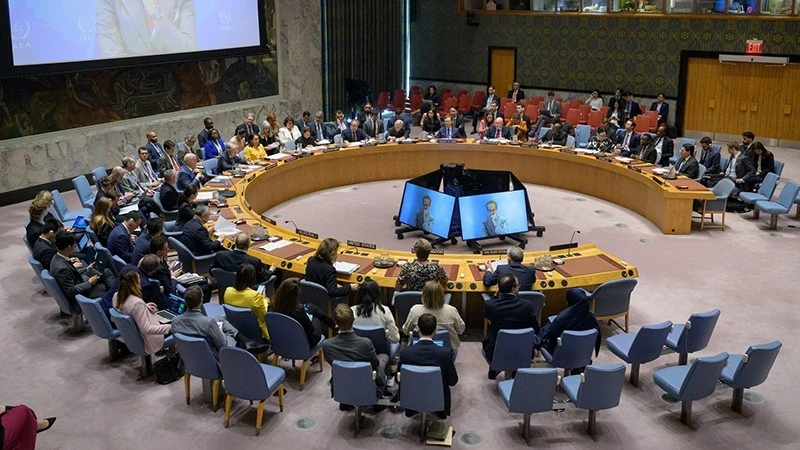
As the United Nations Security Council convened an emergency session this week to address the United States’ military action in Venezuela, President Donald Trump appeared largely disengaged from the unfolding diplomatic crisis. Instead, the president spent the morning posting repeatedly on social media about the 2020 U.S. election—recycling long-debunked claims that the vote had been stolen—while American diplomats faced near-universal condemnation on the world stage.
The contrast was striking. Inside the Security Council chamber in New York, representatives from China, Russia, Denmark, and several other nations sharply criticized Washington for what they described as a flagrant violation of international law and Venezuelan sovereignty. Outside the chamber, the U.S. president focused his attention on domestic grievances from six years earlier, underscoring what many observers described as a widening disconnect between the White House and the realities of global diplomacy.
A Controversial Justification
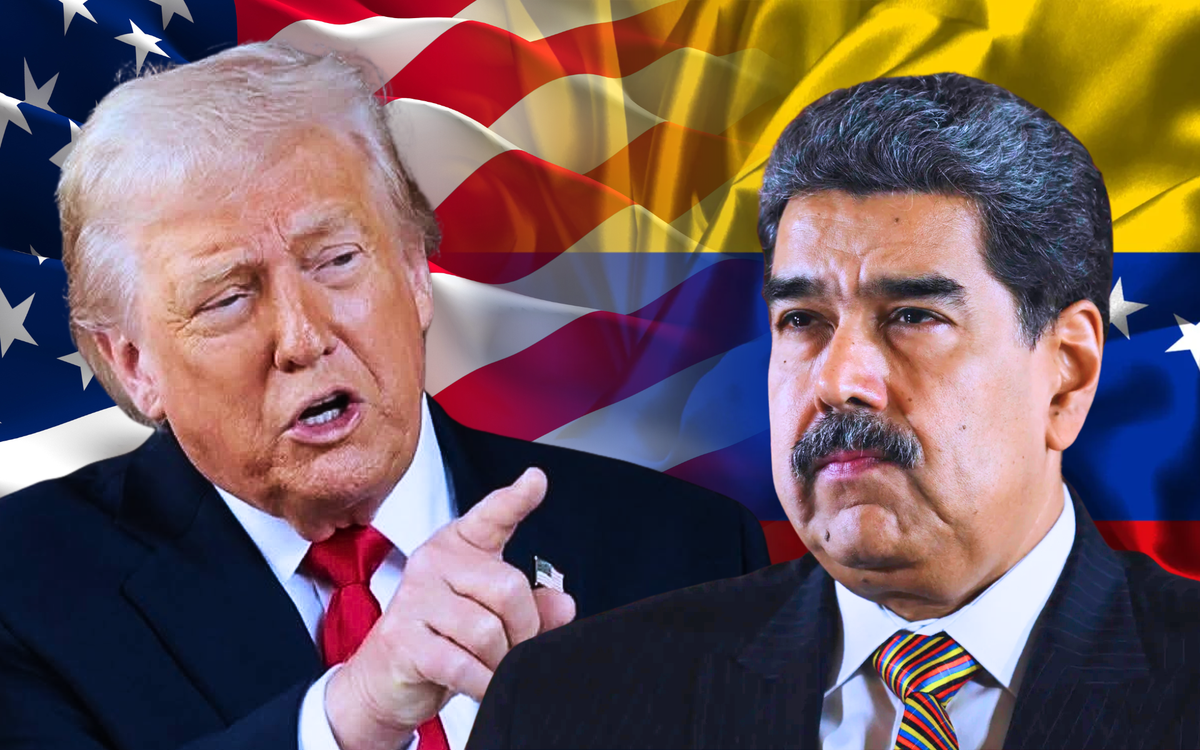
At the center of the controversy was testimony by Michael Waltz, the Trump administration’s ambassador to the United Nations, who defended the operation in Venezuela as a “law enforcement action” rather than a war. Waltz argued that U.S. forces, with military support, had merely carried out longstanding criminal indictments against Venezuelan President Nicolás Maduro and First Lady Cilia Flores, whom American authorities have accused of narcotics trafficking.
“There is no war against Venezuela or its people,” Waltz told the council. “This was a surgical law enforcement operation facilitated by the U.S. military.”
But Waltz’s remarks went far beyond legal justifications. He framed the action as part of a broader assertion of U.S. dominance in the Western Hemisphere, invoking language that critics said echoed a revived and expanded interpretation of the Monroe Doctrine. Waltz argued that the United States could not allow Venezuela’s vast energy reserves to remain under the control of leaders hostile to Washington or aligned with adversaries such as Iran, Russia, and China.
“There was no mention of the U.N. Charter, no acknowledgment of sovereignty,” said one European diplomat, speaking on condition of anonymity. “It sounded less like a legal argument and more like a declaration of imperial prerogative.”
International Condemnation

The response from the international community was swift and unusually unified.
China’s deputy ambassador to the United Nations said Beijing was “deeply shocked” by what it called the United States’ unilateral and illegal use of force. The Chinese delegation accused Washington of trampling on Venezuela’s sovereignty and warned that the action undermined the very principles the United States had long claimed to uphold.
“These principles—sovereign equality, non-interference, peaceful settlement of disputes—are the cornerstone of international peace and security,” the ambassador said, urging the U.S. to release Maduro and his wife immediately.
Russia’s ambassador went further, accusing Washington of “unparalleled cynicism” and of barely concealing what Moscow described as the true objective of the operation: control over Venezuela’s natural resources. In a pointed rebuke, the Russian envoy referenced the “rules-based international order” that the United States has frequently invoked to criticize Russian actions in Ukraine.
“This is your rules-based order, in all of its glory,” the ambassador said, adding that Washington’s actions had stripped it of any remaining moral authority.
Denmark’s representative delivered one of the most closely watched statements of the session, particularly in light of President Trump’s recent rhetoric suggesting the United States could “take” Greenland, an autonomous territory within the Kingdom of Denmark. The Danish ambassador reaffirmed the inviolability of borders and warned that threats to territorial integrity—anywhere in the world—must be rejected unequivocally.
“These principles apply everywhere,” the ambassador said. “They are not subject to negotiation.”
Silence From Allies
Notably absent from the debate were strong statements of support from traditional U.S. allies. Countries that often align with Washington on security matters either remained silent or expressed concern about escalation and legal precedent.
U.N. Under-Secretary-General Rosemary DiCarlo read a statement from Secretary-General António Guterres expressing deep concern that international law had not been respected. The statement emphasized the prohibition on the use of force and called on all parties to pursue dialogue and de-escalation.
“The power of the law must prevail,” DiCarlo said.
Domestic Messaging vs. Global Reality
While American diplomats sought to defend U.S. actions at the United Nations, President Trump’s public messaging took a very different direction. On his social media platform, the president amplified claims from fringe figures alleging new evidence of fraud in the 2020 election and reposted misleading images and conspiracy theories unrelated to the unfolding crisis in Venezuela.
Republican allies appeared on conservative television networks to reinforce the administration’s narrative, describing the operation as necessary for regional stability and likening it to past U.S. interventions framed as law enforcement actions. Critics, however, noted that such messaging closely resembled state-controlled media tactics often associated with authoritarian regimes.
“This is the kind of narrative management we criticize when Russia or China does it,” said a former U.S. diplomat. “Now we’re doing the same thing.”
Broader Consequences
Beyond the immediate diplomatic fallout, analysts warned that the Venezuela operation could have long-term implications for global governance. By bypassing the U.N. Charter and acting unilaterally, the United States has provided geopolitical rivals with ammunition to justify their own actions, potentially accelerating the erosion of international norms established after World War II.
Several Latin American and European countries—including Brazil, Chile, Colombia, Spain, Mexico, and Uruguay—issued a joint statement condemning the operation and rejecting any attempt by the United States to control Venezuela’s political future or natural resources.
British Prime Minister Keir Starmer reiterated his support for Denmark and Greenland, stating plainly that the future of the territory was for its people and the Danish kingdom alone to decide.
An Isolated Superpower
By the close of the Security Council session, the image was difficult to ignore: the United States, once the primary architect and defender of the postwar international order, stood largely alone. Its adversaries condemned it openly, its allies offered little public backing, and its president appeared more focused on revisiting past political grievances than on managing a rapidly escalating global crisis.
For many diplomats watching from the gallery, the moment symbolized a profound shift.
“When the United States disregards the rules,” one senior U.N. official said quietly, “it cannot be surprised when the world stops listening.”