By XAMXAM
For years, Canada’s response to Donald Trump’s trade threats followed a familiar script: careful language, quiet diplomacy, and a hope that tensions would ease before real damage was done. That script has now been discarded.

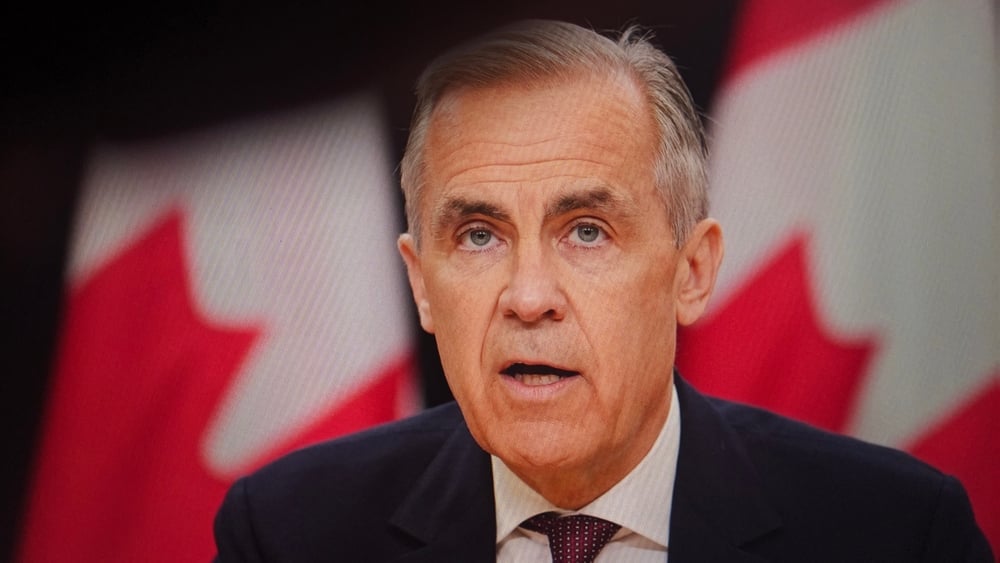
What unfolded in Ottawa this week was not a tantrum, nor a theatrical rebuke aimed at television cameras. It was something far more unsettling for Washington: a coordinated display of confidence. Prime Minister Mark Carney and Ontario Premier Doug Ford appeared side by side, projecting not disagreement or rivalry, but division of labor. One spoke the language of strategy and long-term alignment. The other applied blunt political pressure. Together, they signaled that Canada no longer intends to absorb American economic shocks in silence.
Carney’s message was delivered with the calm precision of a former central banker. Canada, he explained, is not a peripheral player in the North American economy. It is structural. Canadian energy powers American cities. Canadian aluminum saves the United States the equivalent of enormous electricity generation capacity. Canadian manufacturing feeds directly into American supply chains that support millions of U.S. jobs. These are not favors, Carney implied, but facts.
From that foundation came the line that mattered most: Canada will continue to be a partner — but only if it is treated as one. Stability, predictability, and secure market access are not optional concessions. They are the price of cooperation. Without them, the benefits Canada provides to the United States cannot be assumed.
It was not a threat. That was precisely the point. Trump’s political style thrives on confrontation, on opponents who shout back and validate the idea of a zero-sum fight. Carney refused to play that game. Instead, he reframed the relationship as a shared system whose incentives must align on both sides of the border. In doing so, he removed emotion from the exchange and replaced it with leverage grounded in economics.
Then Doug Ford took the microphone, and the tone shifted.
Where Carney speaks to presidents, Ford speaks to voters, governors, and television audiences. He did not soften his words. He defended Ontario’s aggressive public campaign targeting Trump’s trade policies, calling it effective, necessary, and overdue. If it unsettled Americans, he argued, that discomfort was the result of policies that deserved scrutiny.
Ford made clear that Ontario, more than any other province, sits on the front line of Trump’s tariff strategy. Steel, automobiles, pharmaceuticals, manufacturing — these are not abstract sectors in Ontario. They are communities, paychecks, and regional identities. Ford rejected the idea that restraint should come at the expense of those livelihoods. His job, he said plainly, is to fight.
What made the moment unusual was not Ford’s aggressiveness — that is expected — but his acknowledgment of Carney’s role. Ford conceded that he can afford to be loud precisely because the prime minister must be measured. Carney negotiates face to face with Trump. Ford absorbs and redirects the political heat. It was not rivalry. It was choreography.
This two-track approach presents a challenge Trump is not accustomed to facing from Canada. In the past, American pressure often exploited perceived divisions between federal and provincial leaders, or between diplomatic caution and domestic frustration. This time, there was no daylight. The message was unified, even if the tones differed.
The implications extend beyond optics. Carney’s insistence on protecting supply chains, defending supply management, and prioritizing Canadian workers signals a shift from reactive trade policy to structural repositioning. Canada is no longer arguing point by point over tariffs. It is accelerating domestic projects, reducing internal trade barriers, and fast-tracking investments in energy, critical minerals, and manufacturing capacity.
Ford emphasized this acceleration repeatedly. Agreements with provinces, streamlined approvals, partnerships with Indigenous communities, and rapid deployment of capital are meant to make Canada less vulnerable to external pressure. The faster Canada builds, the weaker Trump’s leverage becomes.
From Washington’s perspective, this is unsettling not because it is hostile, but because it is credible. Canada is not threatening retaliation for its own sake. It is changing the underlying conditions that made retaliation effective in the first place.
Trump’s strategy has long relied on overwhelming pressure: impose tariffs, create uncertainty, and force counterparts to choose between pain and compliance. That approach works best when the other side is divided or dependent. What Ford and Carney presented was the opposite — a country aligning its political messaging, economic planning, and industrial policy around resilience.
There is also a subtler message embedded in Carney’s remarks about critical minerals and energy. Canada understands that these resources are increasingly strategic, not just commercial. Access to them is an opportunity for the United States, not a guarantee. Cooperation remains the preferred path, but it is no longer unconditional.
For American audiences, the moment is worth paying attention to. Canada is not abandoning the relationship. It is redefining the terms under which that relationship functions. Partnership, in this framing, is not obedience. It is mutual benefit reinforced by predictability.
Trump now faces a neighbor that is not reacting to his moves, but anticipating them. A prime minister who speaks softly but sets boundaries. A premier who applies pressure without apology. Together, they represent a Canada that has decided it will not wait for Washington to regain balance before securing its own footing.
That is the real disruption. And it is only beginning.