Washington — The arrival of a statutory deadline requiring the release of records related to Jeffrey Epstein has intensified a long-running standoff between Congress and the executive branch, sharpening questions about whether the United States Department of Justice can continue to rely on familiar procedural defenses when the law itself is designed to foreclose them.
Unlike prior demands for disclosure — subpoenas, letters, or oversight requests that can be negotiated, appealed or delayed — this mandate is embedded in statute. Its provisions spell out scope, timing and redaction standards, and they bind the department on an ongoing basis. Lawmakers who drafted and supported the measure say it was written specifically to prevent what they describe as “running out the clock.”
In practical terms, the deadline matters because it converts a political dispute into a compliance question. Either the department produces what the law requires, or it does not. Time, in this framework, is no longer a neutral factor.
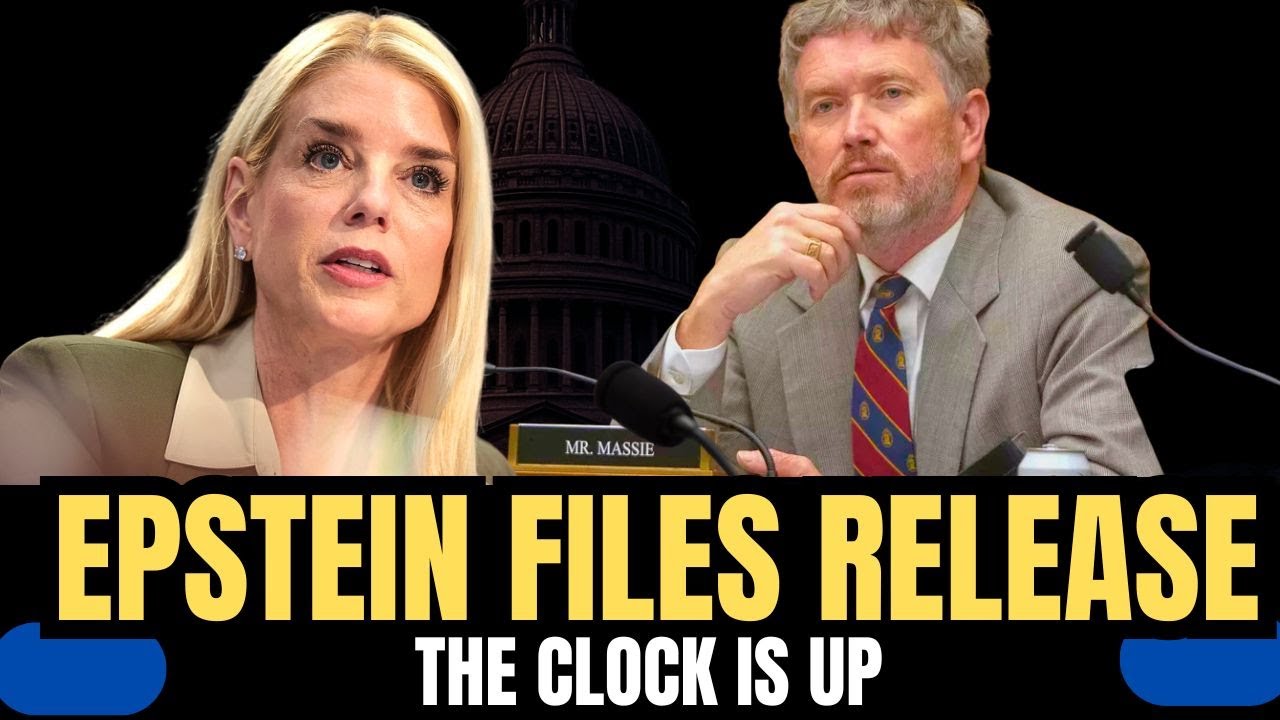
Supporters of the statute say that clarity was the point. Thomas Massie, one of the lawmakers who has emphasized the law’s mechanics, has argued publicly that compliance can be evaluated by a straightforward test: whether released materials include the categories of information the statute specifies, subject only to narrow protections already written into the text. In his view, the presence or absence of those materials will be immediately apparent.
The Justice Department has said little publicly as the deadline arrives. In past statements, officials have cited the need to protect victims’ privacy and to avoid compromising sensitive law-enforcement interests. Those considerations are common in cases involving sexual exploitation and high-profile defendants. But supporters of the law note that such concerns were addressed during drafting, with explicit allowances for victim protection and limited redactions.
What the statute does not allow, they argue, is blanket withholding.
Judges overseeing related proceedings have acknowledged the law’s authority, according to court filings, reinforcing the idea that compliance is not optional. Legal experts say that once a court recognizes a statute’s validity and applicability, the focus typically shifts from interpretation to enforcement.
“This is where explanations give way to remedies,” said a former federal prosecutor who has followed the dispute. “If the deadline passes and the agency hasn’t complied, the question becomes what mechanism compels it to do so.”
The implications extend beyond the Epstein records themselves. For years, the handling of information related to Epstein has symbolized a broader public concern: that systems of power can insulate themselves from scrutiny through delay, complexity and selective disclosure. Each missed deadline or heavily redacted release has reinforced skepticism, regardless of the legal justifications offered.

Victims’ advocates say that skepticism has real consequences. “Transparency isn’t abstract for survivors,” said an attorney who represents several victims. “It’s tied to whether institutions acknowledge what happened and how it was allowed to happen.”
At the same time, Justice Department officials face competing obligations. Over-disclosure can risk legal challenges, privacy violations or unintended consequences for unrelated cases. The department’s culture prizes caution, particularly in matters touching on ongoing or adjacent investigations.
The statute’s drafters say that tension was anticipated — and resolved — in favor of disclosure. By removing open-ended delay mechanisms, they sought to force a decision rather than a process.
Republican responses have been mixed. Some lawmakers have joined calls for full compliance, emphasizing that the law was bipartisan. Others have warned against politicizing sensitive records. Still, the binding nature of the statute limits how far partisan disagreement can go; the legal question remains the same regardless of political framing.
If the department is deemed noncompliant, lawmakers are expected to return to court seeking enforcement orders. Contempt proceedings, while uncommon, are not unheard of when statutory mandates are ignored. Judges could impose timelines, appoint special masters or require detailed justifications for any remaining redactions.

For the Justice Department, such an outcome would carry institutional costs. A court finding of noncompliance would not only affect the Epstein matter but could weaken the department’s position in future transparency disputes, where it often argues for deference.
For Congress, the moment represents a test of whether statutory oversight can succeed where informal pressure failed. “If this law doesn’t work,” said a congressional aide involved in its passage, “then it’s hard to see what would.”
As the deadline lands, the central issue is no longer speculation about what the files contain. It is whether the government will follow a law that leaves little room for maneuver. In that sense, the focus has shifted from Epstein himself to the durability of legal accountability.
The era of waiting for interest to fade may be ending — not because of public outrage, but because the clock has finally been made enforceable. What happens next will signal whether statutory transparency has real force when it becomes inconvenient, or whether even the clearest mandates can be bent.
The answer, once again, will come not from rhetoric, but from compliance — or from the courts.