The Arctic’s New Fault Line: How Greenland Became the World’s Most Dangerous Territory
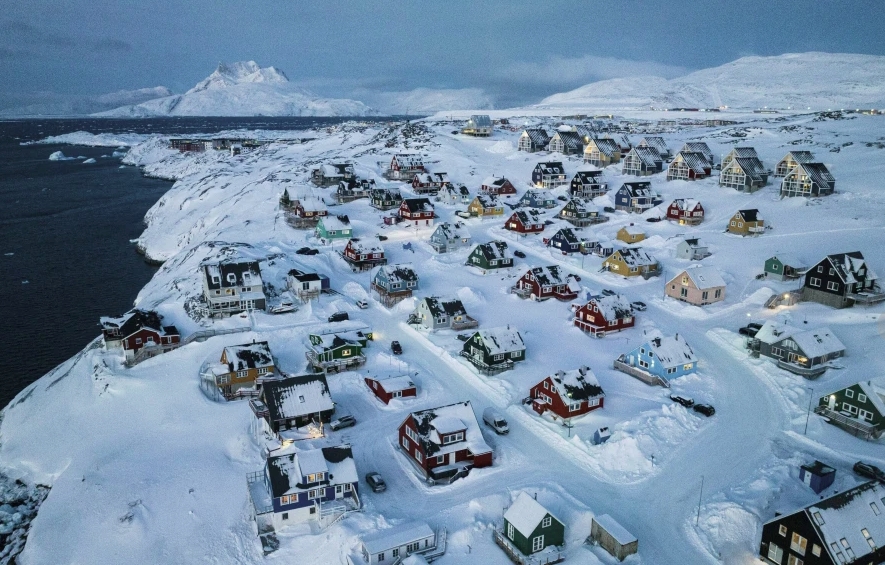
By early this year, a familiar but unsettling idea resurfaced across American and global media ecosystems: the notion that Greenland, the vast Arctic island long governed by Denmark, could again become a centerpiece of U.S. strategic ambition. What once sounded like a diplomatic curiosity has now, in the words of Russia-linked hardliners on social media, morphed into something far more ominous — “the beginning of the end of the world.”
The language is dramatic, even apocalyptic. But behind the rhetoric lies a genuine and deeply troubling reality: the Arctic is no longer a peripheral theater of global politics. It is rapidly becoming one of the most dangerous places on Earth.
Why Greenland Matters
Greenland is often imagined as a frozen expanse, remote and inert. Strategists know better. The island sits astride the shortest routes between North America, Europe, and Russia, making it a linchpin of modern military architecture. From its icy terrain, early-warning radar systems can track ballistic missiles launched across the Arctic. Satellite ground stations and space-tracking infrastructure positioned there can shape the future of missile defense and space warfare.
American analysts on platforms like X and Substack — including former Pentagon officials and defense scholars frequently featured by CNN and MSNBC — have noted that Greenland’s location makes it indispensable to any 21st-century missile detection and interception network. Control, or even expanded military access, would give Washington a powerful vantage point over both Russian and transatlantic airspace.
That strategic logic is precisely what alarms Moscow.
Russia’s Fear: A Shattered Nuclear Balance
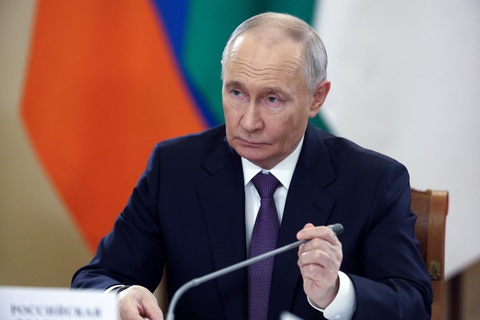
Russian nationalist commentators and defense bloggers, many with ties to hardline political circles, have reacted with fury to renewed discussion of U.S. ambitions in Greenland. Their core fear is not territorial loss, but strategic imbalance. If the United States were to transform Greenland into a fortified missile-defense hub, Russia’s nuclear deterrent — the backbone of its global power status — could be undermined.
The concern, echoed repeatedly on Russian Telegram channels monitored by Western researchers, is that Washington might gain the illusion of nuclear superiority. Even if such superiority were more theoretical than real, history shows that perceptions matter. The belief that one side can strike without fear of retaliation is often enough to destabilize decades of uneasy peace.
As one widely shared Russian post put it, “Missile shields invite missile wars.”
Denmark Pushes Back — and NATO Feels the Strain
Copenhagen’s response has been unequivocal. Danish officials, echoed by Greenland’s elected leaders, have reiterated that Greenland is not for sale, not for coercion, and not a bargaining chip in great-power rivalry. Any attempt to force the issue, they warn, would fracture NATO unity — the very alliance Washington depends on to project global strength.
European commentators, particularly in German and French media amplified by U.S. social platforms, see Greenland as a red line. An American move perceived as unilateral or aggressive could provoke political retaliation across Europe, weakening sanctions regimes, defense coordination, and trust at a moment when NATO cohesion is already strained by wars in Ukraine and the Middle East.
The Arctic as a Global Flashpoint
What makes the Greenland question uniquely dangerous is how quickly it could escalate. Unlike traditional battlefields, the Arctic compresses decision-making time. Missiles launched across polar routes leave leaders with minutes — sometimes seconds — to assess intent and respond. Add heightened militarization, mistrust, and domestic political pressures, and the risk of catastrophic miscalculation rises sharply.
U.S. defense experts interviewed on popular American podcasts and YouTube news channels have repeatedly warned that the Arctic is becoming “crowded, armed, and nervous.” Russia is expanding bases along its northern coast. China, calling itself a “near-Arctic power,” is investing heavily in polar infrastructure. The United States and its allies are responding in kind.
In such an environment, even symbolic moves — a base expansion, a radar upgrade, a diplomatic misstep — can take on outsized significance.
Lessons from History
Wars rarely begin with explosions. They begin with maps, with assumptions, with leaders convinced that geography grants destiny and technology guarantees control. The Arctic today resembles other pre-conflict zones of the past: strategically vital, poorly understood by the public, and increasingly framed in zero-sum terms.
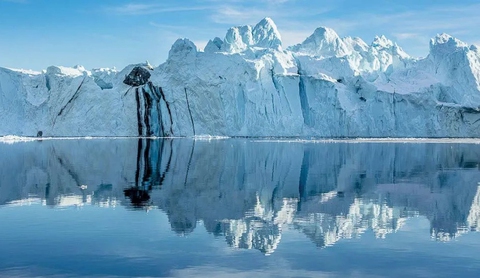
Greenland’s ice may look eternal, but the political ground beneath it is shifting fast. Whether the island becomes a stabilizing pillar of collective security or the spark of a global catastrophe will depend less on territory itself than on restraint, diplomacy, and the ability of nuclear powers to remember how close the world has come before.
The Arctic is no longer the world’s quiet frontier. It is its most fragile fault line.