Carney Draws a Line as Trump Escalates Tariff Fight, Testing North America’s Economic Foundations
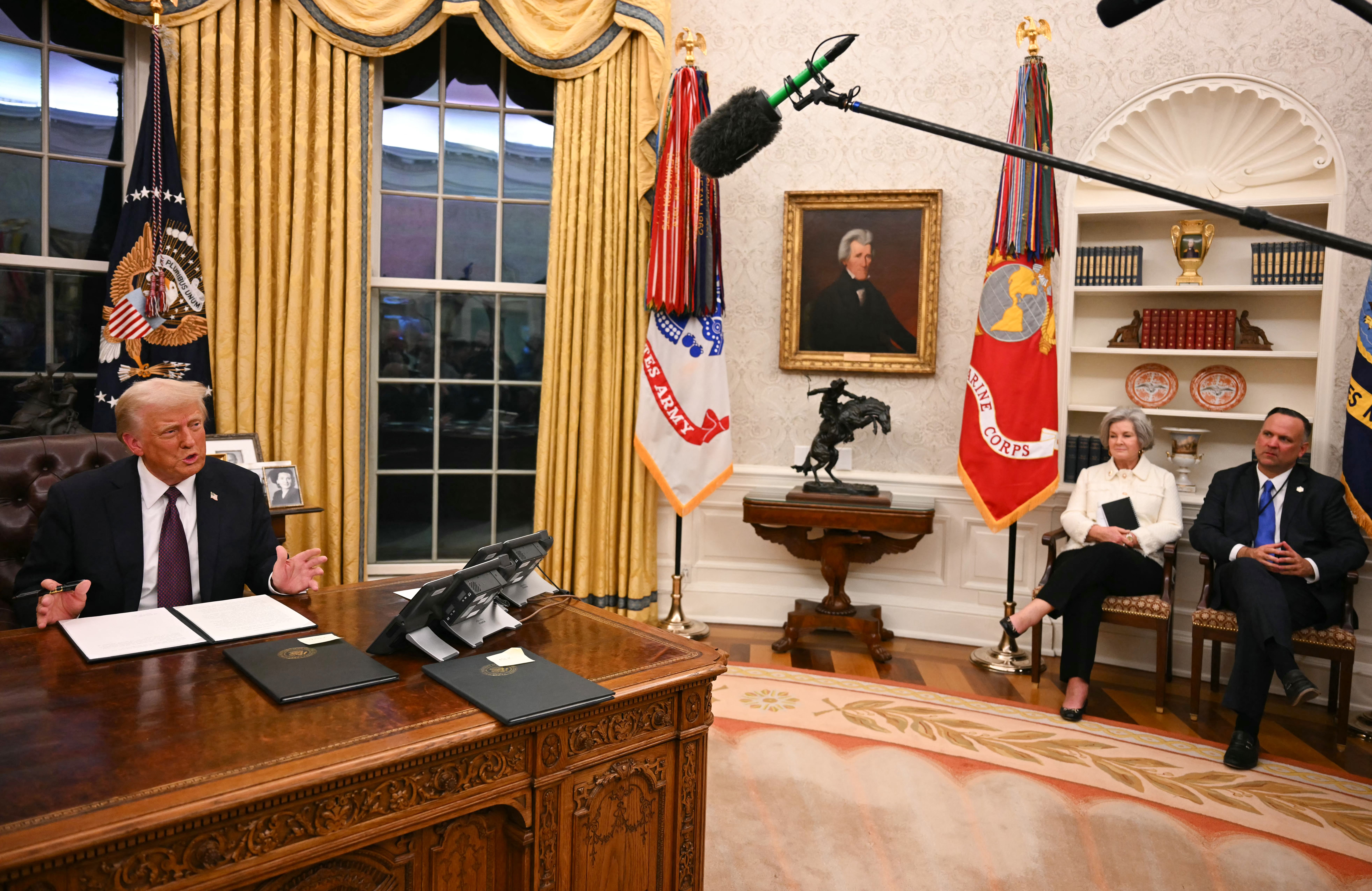
When Prime Minister Mark Carney uttered the words “not for sale” in the Oval Office, it was more than a rejoinder to President Donald Trump. It was a distillation of a widening conflict between two neighbors whose economies have been fused for generations — and whose political trajectories are now testing that integration.
The latest rupture came after the Supreme Court of the United States rejected the administration’s attempt to extend sweeping tariff authority under emergency powers. Within hours, Mr. Trump announced on Truth Social that he would raise the existing 10 percent worldwide tariff, framing the move as long-overdue retribution against countries that had, in his words, “been ripping the U.S. off for decades.”
Canada was not singled out by name. It did not need to be.
Since Mr. Trump’s return to the White House in January 2025, Canada has found itself at the center of a high-stakes experiment in economic leverage. One of the president’s first executive actions declared a national emergency at the northern border, invoking the International Emergency Economic Powers Act. The rationale cited fentanyl trafficking. A 25 percent tariff was imposed on most Canadian goods, along with a 10 percent tariff on Canadian energy exports.
The data told a more complicated story. According to U.S. Customs and Border Protection, only a small fraction of fentanyl seizures originated at the northern border. Nearly all came from the south. Ottawa responded swiftly nonetheless. It announced a $1.3 billion border security package, appointed a national fentanyl coordinator, designated criminal networks as terrorist entities and created a joint enforcement task force. Compliance did not forestall escalation. By late summer, tariffs on Canadian goods had risen to 35 percent.
For Mr. Carney, a former governor of both the Bank of Canada and the Bank of England, the lesson was less about narcotics policy than about asymmetry. If compliance did not moderate pressure, the dispute was not transactional but structural.
A second front opened around trade deficits, a long-running preoccupation of Mr. Trump’s. He has argued that America’s bilateral deficit with Canada represents economic exploitation. Economists note that deficits more often reflect macroeconomic fundamentals — consumption patterns, currency values, investment flows — than predatory intent. The two economies are deeply intertwined, particularly in sectors like automobiles, where components may cross the border multiple times before final assembly. Tariffs at each crossing introduce costs into a supply chain built on frictionless movement.
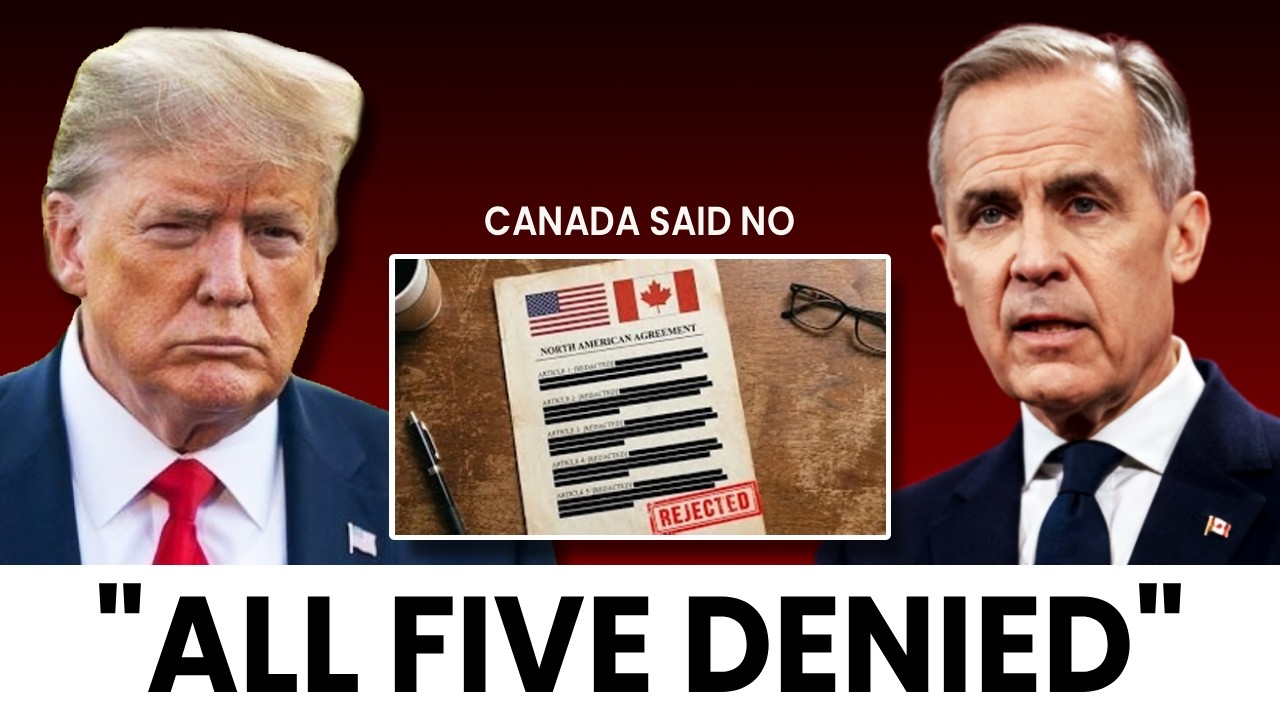
Mr. Carney’s response was calibrated. He signaled openness to revisiting aspects of the United States-Mexico-Canada Agreement during its scheduled 2026 review. Simultaneously, he launched an ambitious diversification campaign, announcing new trade initiatives across Europe and Asia. The objective was explicit: reduce reliance on a single market that had begun using access as leverage.
Tensions escalated further when Mr. Trump proposed what he called a “Board of Peace” at the World Economic Forum in Davos — a new international body he would chair, funded by $1 billion contributions from permanent members. Canada was invited. Mr. Carney publicly acknowledged the proposal, then delivered a speech warning against the weaponization of economic interdependence. Within hours, Mr. Trump withdrew the invitation, declaring that Canada’s prosperity depended entirely on the United States.
Behind the rhetoric, policy consequences multiplied. Washington signaled opposition to any Canadian trade accommodation with China. Ottawa proceeded with a limited, sector-specific arrangement aimed at cushioning industries hit by American tariffs. Mr. Trump threatened 100 percent tariffs should the agreement expand. The standoff hardened.
Then came the annexation talk. Over several months, Mr. Trump floated the idea of Canada becoming the 51st state, at times sharing digitally altered maps on social media. During a May meeting in the Oval Office, Mr. Carney invoked the language of real estate: some properties, he said, are simply not for sale. Mr. Trump replied that one should “never say never.” Mr. Carney silently mouthed “never” three times.
At home, the confrontation reshaped Canadian politics. Before the annexation rhetoric, Mr. Carney’s Liberal Party trailed in national polls. As sovereignty moved to the forefront, support consolidated. A $6 billion economic resilience package sought to buffer workers and industries from tariff shocks, including expanded employment insurance and large-employer loan facilities. Canada also dropped a proposed digital services tax and increased military and border spending — concessions that critics argue complicate the government’s assertive stance.
In Washington, resistance has surfaced in Congress. The House voted narrowly to terminate the national emergency underpinning the tariffs, though not by a margin sufficient to override a presidential veto. Analysts estimate the tariffs amount to one of the largest recent tax increases on American households, with costs borne by consumers, manufacturers and farmers.
All roads now lead to the 2026 review of the United States-Mexico-Canada Agreement. If a revised pact preserves supply chains while easing political tensions, Mr. Carney’s strategy may be remembered as disciplined containment. If demands intensify, Canada could accelerate efforts to reorient its economy away from its largest trading partner — a transformation that would take years and significant political will.
For decades, North America functioned less as three distinct markets than as a single production platform. That assumption no longer holds. Whether this episode marks a temporary rupture or a durable restructuring will depend on how much economic pain each side is prepared to absorb — and how firmly each defends its red lines.