Washington — The Justice Department’s failure to meet a court-backed deadline to release materials related to Jeffrey Epstein has set off a new confrontation between the executive branch and Congress, one that now appears headed toward judicial enforcement rather than political negotiation.
Late last week, the department released a tranche of documents just before the mandated cutoff. Lawmakers who reviewed the material said it fell far short of what the law required. Hundreds of pages were heavily redacted, obscuring names, dates and context. More significantly, Justice Department officials acknowledged that substantial categories of records covered by the mandate had not yet been produced.
That concession has become the central issue.
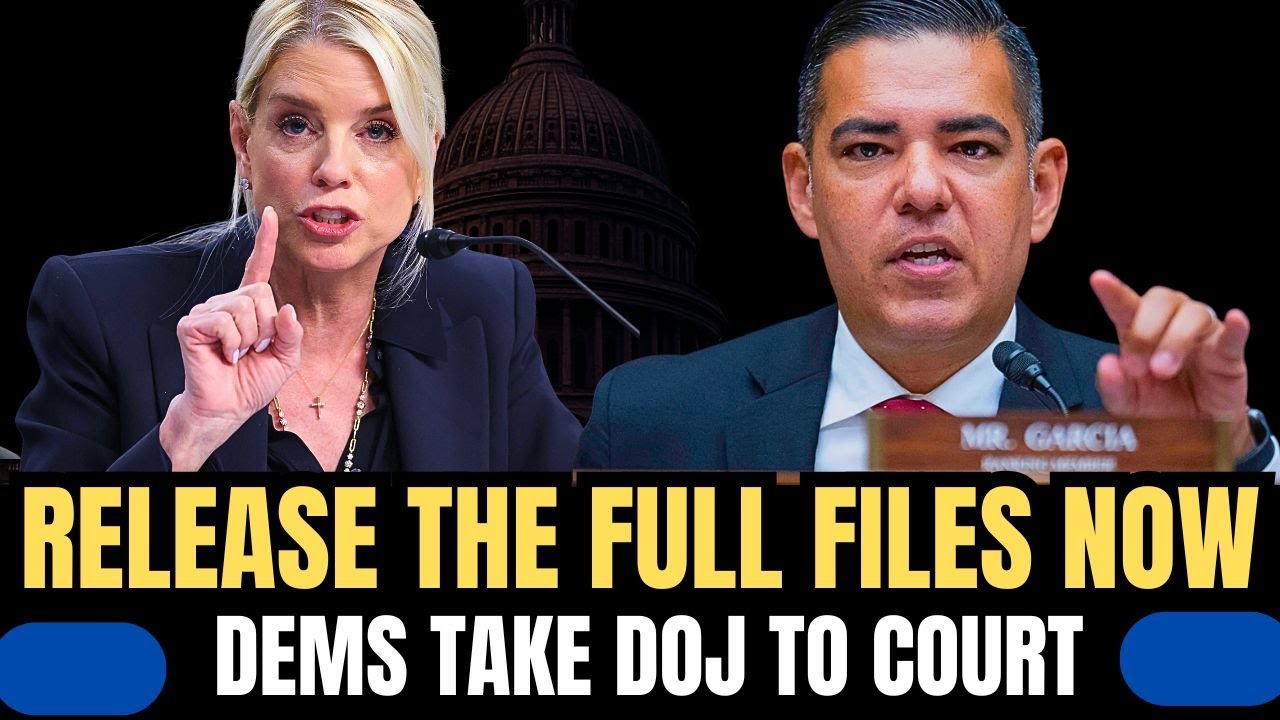
The disclosure requirement was not informal guidance or a symbolic resolution. It was embedded in a bipartisan statute, reinforced by court oversight, and drafted with specific instructions on scope, timing and redactions. In the view of Democratic lawmakers, missing the deadline — and then admitting continued noncompliance — moved the dispute from a disagreement over transparency into a question of legal defiance.
“This was not optional,” said one Democratic aide familiar with the statute’s drafting. “The department was told exactly what to produce and when.”
The Justice Department has not publicly detailed why it failed to meet the deadline. In a brief statement, officials said they were balancing transparency obligations with privacy protections and ongoing legal considerations, a familiar rationale in sensitive cases. The department declined to specify which materials remain withheld or when they might be released.
That lack of clarity has fueled frustration on Capitol Hill.
Members of Congress pressing the issue say the law already accounted for legitimate redactions, including for victim privacy and national security. What remains unexplained, they argue, is why so much material appears to have been withheld wholesale, rather than selectively redacted.
The dispute now centers on process as much as substance. Lawmakers want to know who approved the redactions, what standards were applied and whether political considerations influenced decisions that were supposed to be purely legal.
“This isn’t about sensational details,” said a Democratic lawmaker involved in the oversight effort. “It’s about whether the government can ignore a clear legal mandate when disclosure becomes uncomfortable.”

In response, Democrats are preparing to return to court, seeking enforcement orders and potentially contempt findings. Such moves are rare but not unprecedented when Congress believes the executive branch is disregarding statutory obligations.
Legal experts say the case could test the limits of judicial patience.
“When a court-backed deadline is missed and the agency acknowledges ongoing noncompliance, judges tend to focus less on explanations and more on remedies,” said a former federal judge. “The question becomes: what will force compliance?”
The Justice Department, for its part, faces a dilemma. Producing the remaining material could expose the department to criticism from privacy advocates or complicate related legal matters. Failing to produce it risks a judicial rebuke that could weaken the department’s credibility in future transparency disputes.
The stakes extend beyond the Epstein case itself. For years, the handling of Epstein-related records has been a symbol of perceived double standards in accountability — a belief that powerful figures are shielded while victims wait for answers. Each delay or redaction reinforces that suspicion, even if the underlying reasons are legally defensible.
Victims’ advocates say the ongoing secrecy has compounded harm.
“Transparency isn’t about punishment,” said an attorney representing survivors. “It’s about acknowledgment and trust. When the government withholds information without clear justification, it deepens the sense that the system protects itself first.”
Republicans have been more divided in their response. Some have echoed calls for full compliance, while others have accused Democrats of weaponizing the issue for political advantage. Still, the underlying statute was bipartisan, complicating arguments that the dispute is purely partisan.

The courts will ultimately determine whether the Justice Department’s actions violated the law and what remedies, if any, are appropriate. Possible outcomes range from extended deadlines under judicial supervision to more forceful orders compelling disclosure.
For now, the episode underscores a broader tension that has intensified in recent years: the balance between institutional caution and democratic transparency. Justice Department officials often argue that restraint protects legal integrity. Lawmakers counter that secrecy erodes public confidence.
“This is a stress test for the rule of law,” said a constitutional scholar at Columbia University. “Not because of what’s in the files, but because of what happens when the government misses a clear legal obligation.”
As the case returns to court, the focus is likely to shift from what the Epstein documents contain to whether the Justice Department can be compelled to follow the law as written. That outcome will shape not only this disclosure fight, but future battles over congressional mandates and executive compliance.
At its core, the dispute asks a simple but consequential question: when transparency becomes inconvenient, who decides how much the public is allowed to see — and who enforces that decision when the law says otherwise?
The answer now rests with the courts.