Ottawa — When Prime Minister Mark Carney addressed the situation in Venezuela, his words were notable less for what they declared than for what they withheld. There was no endorsement of intervention, no echo of Washington’s sharper rhetoric, and no attempt to claim moral authority through condemnation alone. Instead, Canada articulated a position grounded in restraint: support for international law, opposition to unilateral force, and insistence on multilateral process.
The message landed heavily in diplomatic circles precisely because of its calm. According to officials briefed on the reaction, Washington had expected closer alignment from one of its most reliable partners. Instead, Ottawa drew a careful boundary — signaling that alliance does not require automatic agreement, particularly when the use of force or coercive pressure is at issue.
Canadian officials describe the stance as an exercise in what they call “strategic sovereignty”: the ability to cooperate closely with allies while preserving independent judgment when core principles are implicated. Under Mr. Carney, that sovereignty is being framed not as defiance, but as risk management.

“This was not a rebuke,” said one senior Canadian diplomat, speaking on background. “It was a reminder that Canada’s credibility rests on consistency. If we argue for rules only when they are convenient, they stop protecting us when they matter.”
The immediate context is renewed debate over how the international community should respond to Venezuela’s political crisis, including questions about sanctions, recognition and the legitimacy of external pressure. While the United States has increasingly emphasized unilateral tools, Canada has opted to re-anchor its approach in multilateral forums, including the United Nations and the Organization of American States.
That choice reflects Canada’s broader assessment of the global environment. As unilateralism resurfaces — through trade pressure, sanctions and the threat or use of force — middle powers face a dilemma. Align reflexively with the strongest actor, or preserve room to maneuver by upholding shared rules even when powerful allies chafe at them.
Mr. Carney’s answer has been clear. Canada will not legitimize actions that bypass international law, even when doing so carries diplomatic cost. Officials say the government views that cost as manageable — and preferable to the long-term erosion of norms that historically protect countries without overwhelming military power.
The reaction in Washington, according to people familiar with the exchanges, ranged from surprise to frustration. U.S. officials privately questioned why Ottawa would complicate coordination at a sensitive moment. Canadian counterparts responded that coordination does not require uniformity, and that disagreement expressed early and calmly can prevent deeper fractures later.
Allies beyond North America took note. European diplomats said Canada’s stance echoed concerns widely held but less frequently voiced: that once the use of force becomes normalized outside multilateral authorization, smaller states lose the security that predictability provides. By articulating that concern, Canada effectively spoke for a broader constituency.
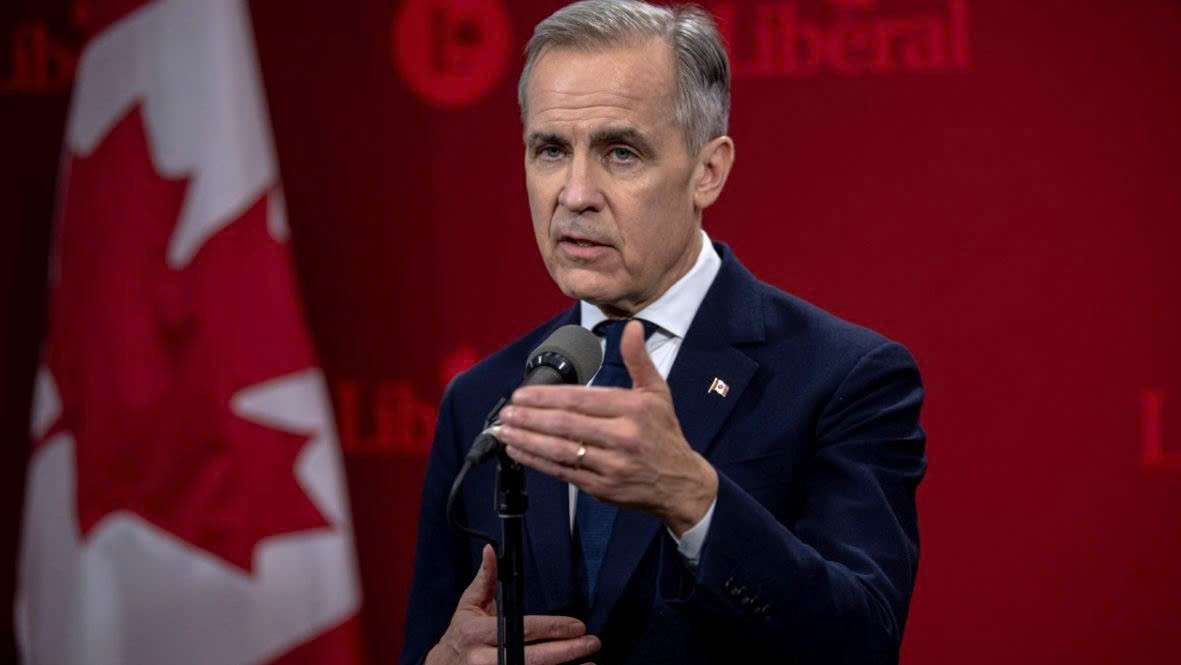
The move also carries domestic significance. Canadians have grown increasingly attentive to issues of foreign interference, sovereignty and the rule of law. By emphasizing process over pressure, the government positioned itself as defending not only international norms but national values — without inflaming public opinion or inviting escalation.
Critics argue that restraint risks irrelevance, particularly in crises where speed and leverage appear decisive. They contend that unilateral pressure can produce results when institutions stall. Canadian officials counter that such results are often short-lived and destabilizing, creating precedents that later rebound against those who set them.
History weighs heavily in that calculation. From Iraq to Libya, interventions framed as exceptional have reshaped expectations about acceptable behavior, often with unintended consequences. Canada’s leaders say the lesson is not paralysis, but discipline — knowing when to act, and when to insist that action occur through legitimate channels.
Mr. Carney’s leadership style reinforces that approach. A former central banker accustomed to crisis containment, he has avoided moral grandstanding in favor of institutional language. Terms like “sovereignty,” “proportionality” and “multilateral cooperation” recur in official statements. The vocabulary is deliberate, signaling seriousness rather than sentiment.

The implications extend well beyond Venezuela. If Canada is willing to diverge on an issue with relatively limited direct stakes, analysts say, it suggests a readiness to do so elsewhere when principles are tested. That does not imply a weakening of the U.S.–Canada relationship, but a more explicit one — grounded in defined limits rather than assumption.
“This is what mature alliances look like,” said a former Canadian ambassador. “You agree often, you disagree sometimes, and you make clear why.”
Whether the stance reshapes policy outcomes remains uncertain. Venezuela’s crisis is complex, and no single actor holds decisive leverage. But diplomatically, the signal has been sent: Canada will not trade long-term credibility for short-term alignment.
In a global order increasingly defined by pressure and precedent, that choice may prove consequential. For now, Ottawa’s line is quiet but unmistakable. It is not a challenge to allies, but a reminder — that rules still matter, and that some countries will continue to act as if they do.