By XAMXAM
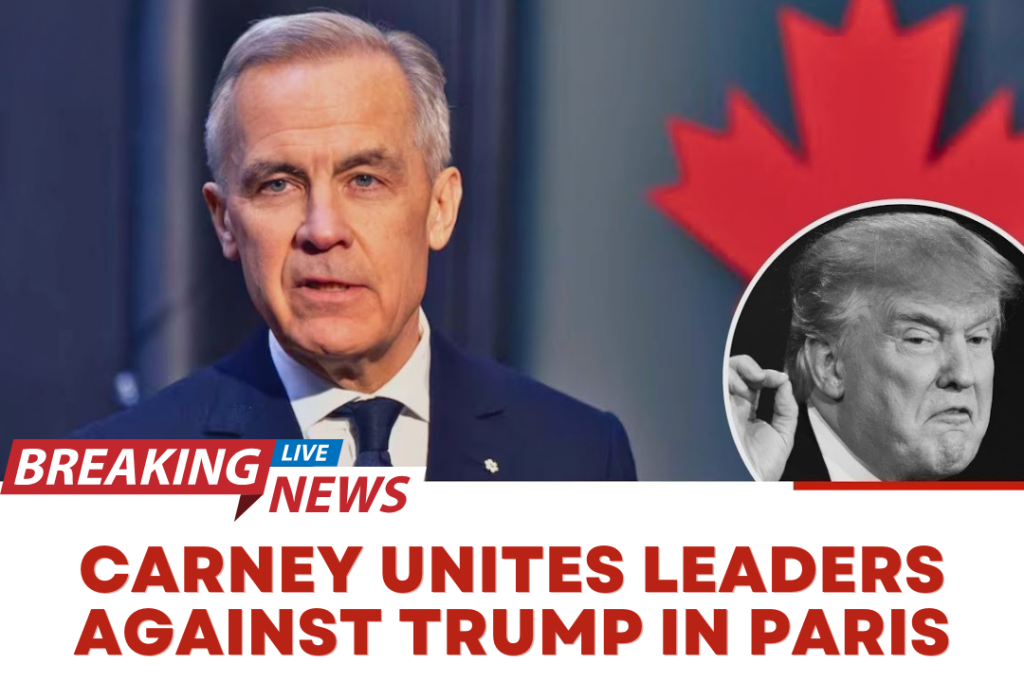
When Prime Minister Mark Carney arrived in Paris this week, the trip was officially billed as routine diplomacy. It became anything but. Within hours, what had been scheduled meetings on trade and security hardened into emergency consultations with European leaders, driven by a growing conviction in Ottawa that the world could no longer treat Donald Trump’s rhetoric as mere provocation.
The immediate catalyst was Greenland. Trump’s recent comments—raising the prospect of annexation—landed with particular force in Europe, where Greenland’s status as part of the Kingdom of Denmark makes it inseparable from NATO’s security architecture. For Canada, the issue carried a deeper resonance. Greenland is not an abstract outpost; it sits across the Arctic from Canadian territory, tied by geography, shipping routes and defense planning. What Trump framed as leverage sounded, in Ottawa, like a test of whether boundaries still mattered.
Standing alongside Denmark’s prime minister, Carney spoke with unusual directness. Greenland’s future, he said, belongs “exclusively” to Greenland and Denmark. The phrasing was careful, but the message was unmistakable. Sovereignty, self-determination and territorial integrity were not bargaining chips. They were principles Canada would defend publicly and collectively.
The tone marked a shift. Only a year earlier, European leaders tended to downplay Trump’s threats as negotiating theater. Canada, having already endured talk of becoming a “51st state,” had learned to read those signals differently. As Carney told reporters, threats become dangerous not when they are carried out, but when they are normalized. Greenland, in that sense, was less an endpoint than a warning.
The urgency of Carney’s visit intensified as questions turned to NATO. Would military force against Greenland, reporters asked, amount to the end of the alliance? Carney avoided dramatics. He reiterated fundamentals: NATO is a mutual defense pact grounded in respect for borders. The Arctic, he argued, is no longer a peripheral concern but part of NATO’s western flank—an area demanding greater investment and coordination as climate change opens new routes and rival powers press northward.
His remarks echoed a conversation already underway in European capitals. Russia has spent years building Arctic infrastructure. China, styling itself a “near-Arctic” state, has expanded its presence through research missions and investment. Against that backdrop, Trump’s language introduced a new instability—not from outside the alliance, but within it.
Carney’s response was not to confront Washington directly, but to internationalize the issue. By meeting European leaders and NATO officials in rapid succession, Canada signaled that annexation talk was not a bilateral irritant but a collective risk. If democracies responded piecemeal, Carney suggested, each would be more vulnerable than the last.
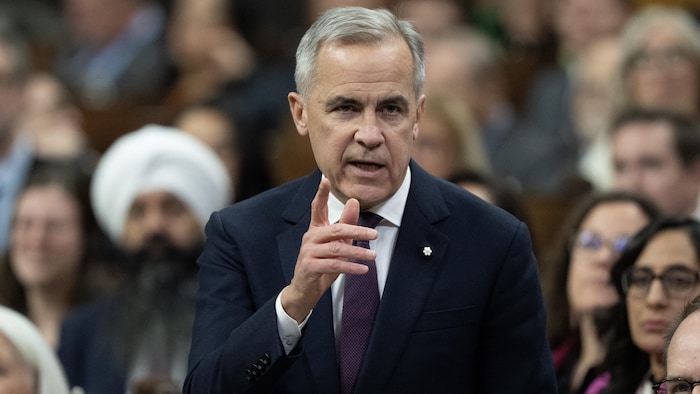
The symbolism mattered. Carney appeared beside Jens Stoltenberg, praising NATO’s efforts to adapt to what he called a “new threat environment.” The image conveyed alignment rather than defiance. Canada was not freelancing; it was reinforcing the architecture that has underpinned transatlantic security for decades.
Energy policy added another layer. Asked whether Trump’s actions in Venezuela—justified by the pursuit of oil—would reshape Canada’s own energy calculus, Carney offered a measured reply. A stable, democratic Venezuela, he said, would be good for its people and for the hemisphere. But Canada’s energy position did not depend on instability elsewhere. Canadian oil, he argued, was competitive precisely because it was low-risk, increasingly low-carbon and produced under the rule of law.
The point was subtle. Where Trump has sought leverage through force and disruption, Canada was presenting itself as a reliable alternative in an unpredictable world. As volatility rises, Carney implied, stability becomes a strategic asset.
This approach reflects a broader recalibration in Ottawa. Rather than reacting to each new provocation, Canada is working to shape the environment in which those provocations land. That means investing in Arctic capabilities, deepening ties with Nordic partners, and anchoring its responses in alliances rather than unilateral moves.
The gamble is that collective pressure can succeed where bilateral diplomacy fails. By drawing Europe into the conversation early, Canada hopes to ensure that boundaries are reinforced before they erode. The risk, of course, is escalation—forcing allies to choose sides in a dispute they would rather avoid.
Yet Carney appears convinced that the greater danger lies in hesitation. Once annexation threats become routine, he warned, no country is too friendly or too close to be tested next. Greenland may be the immediate focus, but the precedent extends far beyond the Arctic.
In Paris, Carney was not making headlines with threats of his own. He was doing something quieter, and potentially more consequential: reminding allies that rules endure only if they are defended together. In an era of loud declarations and sudden moves, Canada’s decision to build a collective front may prove its most decisive statement yet.