What was expected to be a routine congressional hearing on homeland security oversight instead erupted into a moment of high political drama on Capitol Hill this week, after Homeland Security Secretary Kristi Noem abruptly left the hearing room just as questioning intensified. Within minutes, footage of her departure—and her subsequent reappearance in the hallways outside—was spreading rapidly online, igniting accusations that she had evaded accountability at a critical moment.
The hearing, convened to examine recent actions and priorities of the Department of Homeland Security, had proceeded largely along predictable lines until lawmakers began pressing Noem on a series of unresolved issues. According to attendees, the tone shifted as questions became more pointed. Then, without warning, Noem stood up and exited the chamber, cameras capturing her departure in real time.
Lawmakers from both parties appeared momentarily stunned. Several could be seen conferring with staff, while others openly questioned whether the secretary intended to return. The confusion deepened when word spread that Noem had cited a previously scheduled meeting as the reason for her exit—an explanation that, according to multiple congressional aides, did not align with the committee’s understanding of her schedule.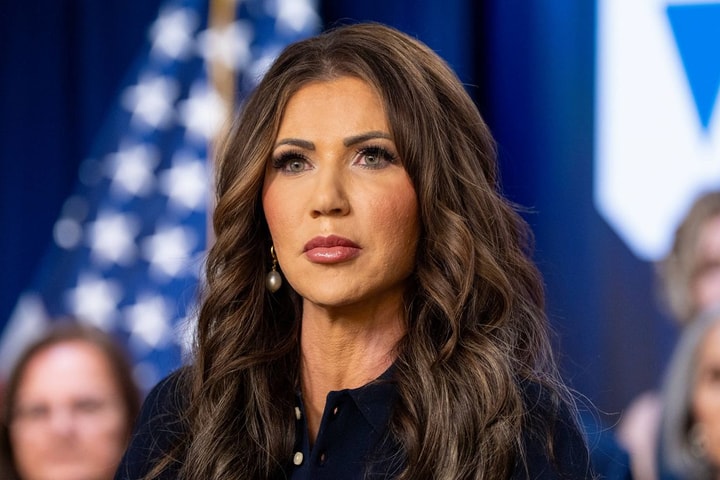
Minutes later, reporters and cameras spotted Noem in the hallways outside the hearing room, speaking briefly with aides. The optics proved damaging. Critics seized on the images as evidence that the exit was less about logistics and more about avoiding further scrutiny. Clips of the moment ricocheted across social media platforms, framed by commentators as a rare instance of a Cabinet secretary walking away mid-grilling.
“This is not how oversight is supposed to work,” said one Democratic lawmaker, who accused Noem of undermining Congress’s constitutional role. “When questions get tough, the response cannot be to leave the room.”
Republicans offered a more cautious defense, with some suggesting the situation had been mischaracterized online. A senior GOP aide said the secretary had informed staff in advance that her time was limited, though acknowledged that the execution “could not have gone worse.”
Behind the scenes, according to people familiar with the matter, DHS staffers scrambled to contain the fallout. The abrupt exit reportedly triggered tense exchanges between committee staff and department aides, as lawmakers debated whether to formally request Noem’s return for additional testimony. The confusion was compounded by the rapid spread of speculation online, where users dissected every frame of hallway footage.
Adding to the controversy was what several witnesses described as an “unexpected prop” moment outside the chamber, when Noem appeared holding documents meant to underscore her stated reason for leaving. Rather than clarifying the situation, the gesture only fueled skepticism, with critics accusing her of attempting to retroactively justify the exit.
The incident comes at a sensitive time for the Department of Homeland Security, which has faced sustained criticism over immigration enforcement, border security, and compliance with court orders. For opponents, the hearing walkout became symbolic of broader concerns about transparency and accountability within the department.
Media analysts noted that while officials often manage tight schedules on Capitol Hill, perception can be as consequential as substance. “In the current environment, images matter enormously,” said a political communication scholar. “Walking out under pressure—even briefly—creates a narrative that is very hard to reverse.”
By the end of the day, several lawmakers were publicly calling for answers, and some signaled that additional hearings could follow. Noem’s office issued a brief statement reiterating that scheduling constraints prompted her departure and denying any intent to avoid questioning.
Still, as the clips continue to circulate and commentary intensifies, the episode has taken on a life of its own. What began as a standard oversight hearing has now evolved into a broader debate about accountability, credibility, and the conduct of senior officials under scrutiny.
Whether the controversy fades or escalates further may depend on what comes next—both from Congress and from the secretary herself. For now, the images of a Cabinet official exiting a hearing room remain fixed in the public imagination, raising questions that linger well beyond the Capitol hallways.