Canada’s Quiet Rise in the Global Defense Supply Chain
In a development that surprised many inside Washington’s defense establishment, Canada has begun to assume a more prominent role in the North American military supply network — a shift underscored by a recent contract win that placed a Canadian manufacturer ahead of several longstanding U.S. defense giants. While the deal itself was modest in scale compared with the Pentagon’s largest procurement programs, its symbolism was unmistakable: Canada, traditionally viewed as a secondary player in defense manufacturing, is now emerging as a more assertive and increasingly indispensable partner.
The catalyst was a $110 million contract awarded in late 2024 to Rolls-Royce Canada for the OK-410 handling and stowage system, a critical component used to deploy towed sonar arrays capable of detecting hostile submarines at great distances. These systems, typically operated by the U.S. Navy’s most advanced undersea warfare units, play an increasingly important role as submarine quieting technology improves and the challenge of deep-ocean detection accelerates. That a Canadian operation secured such a contract over multiple U.S. competitors, including divisions of General Dynamics and Lockheed Martin, reflected a deeper trend rather than a one-off anomaly.
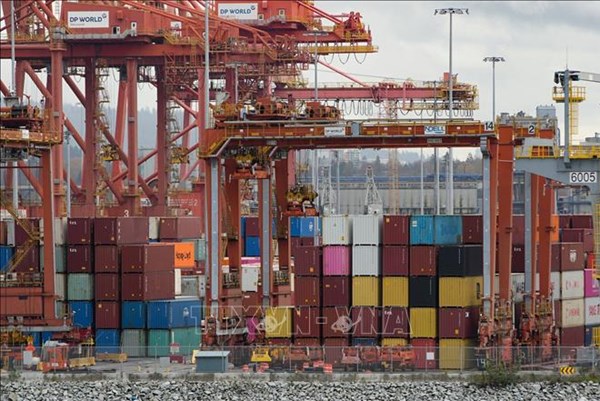
For more than a decade, Canadian defense firms have expanded their share of U.S. procurement through the Defense Production Sharing Agreement, a framework dating back to 1956 that allows Canadian suppliers to bypass some restrictions foreign firms typically face. In fiscal year 2024, Canadian companies earned more than $1 billion in U.S. Department of Defense contracts — a 22 percent increase over the previous year and nearly 25 percent higher than in 2022. The trajectory has been steady but unmistakable: Canadian engineering, once concentrated primarily in niche sectors, is now woven into multiple layers of the U.S. military’s supply base.
The recent contract win came at a moment of wider transition within Canada’s own national strategy. After years of criticism from NATO partners regarding limited defense spending, the Canadian government announced plans to reach the alliance’s 2 percent benchmark five years earlier than previously scheduled. It also committed to raising defense investment to 5 percent of GDP by 2035 — a dramatic shift for a country whose military budgets have historically lagged behind those of its closest allies.

At the same time, Canada secured entry into the European Union’s €150 billion defense procurement program — a milestone that expands its industrial access well beyond North America. The agreement allows Canadian firms to participate in EU-funded joint weapons development and compete for contracts across 23 member states, though with certain restrictions on the percentage of non-EU components allowed in highly sensitive systems. European officials described the move as a way to strengthen transatlantic cooperation while diversifying supply chains in an era when geopolitical uncertainty has forced nations to rethink long-standing procurement patterns.
Yet these steps have not come without friction. A July 2025 review revealed that a Canadian night-vision procurement appeared tailored to favor a U.S. supplier, prompting objections from a European defense firm that argued the specifications were written in a way that excluded fair competition. The incident highlighted a longstanding tension in Canadian procurement policy: while the country seeks greater alignment with Europe, it remains structurally intertwined with the United States, upon whom it relies for much of its advanced military hardware.

With global military spending now exceeding $2.7 trillion annually, and with underwater detection capabilities rising to the top of many nations’ priority lists, Canada’s growing role in sonar technologies and related systems has drawn renewed attention. Firms such as MDA Space, CAE, and Kraken Robotics are expanding rapidly, building a domestic industrial base that is expected to grow alongside Canada’s rising budgets. The U.S. has also increasingly depended on Canadian subsidiaries for critical manufacturing, from ammunition to aircraft engines and armored vehicles.
Some analysts view Canada’s shift as a natural evolution. Others argue it reflects a broader recalibration of power within the defense supply chain — one that could reshape how alliances function, who supplies what, and how procurement is distributed across closely connected economies. While the contract awarded to Rolls-Royce Canada may seem modest in financial terms, officials and industry observers widely agree that it represents something larger: evidence that Canada is positioning itself not merely as a reliable partner but as a competitive force capable of shaping future defense innovation.
Whether this momentum continues remains to be seen. Canada’s push to accelerate spending toward NATO benchmarks will require significant internal reform, particularly in a procurement system often criticized for delays and bureaucratic obstacles. But for now, the trajectory is clear enough to command attention on both sides of the Atlantic: a country long viewed as a secondary supplier is stepping with increasing confidence into a more central and strategic role.
If you want, I can write a shorter tabloid-style summary or a YouTube description based on this article.