By XAMXAM
In Washington, arguments about sovereignty are often conducted in legal briefs and diplomatic notes. In the Arctic, Canada has chosen a different language: steel, ports, and icebreakers.
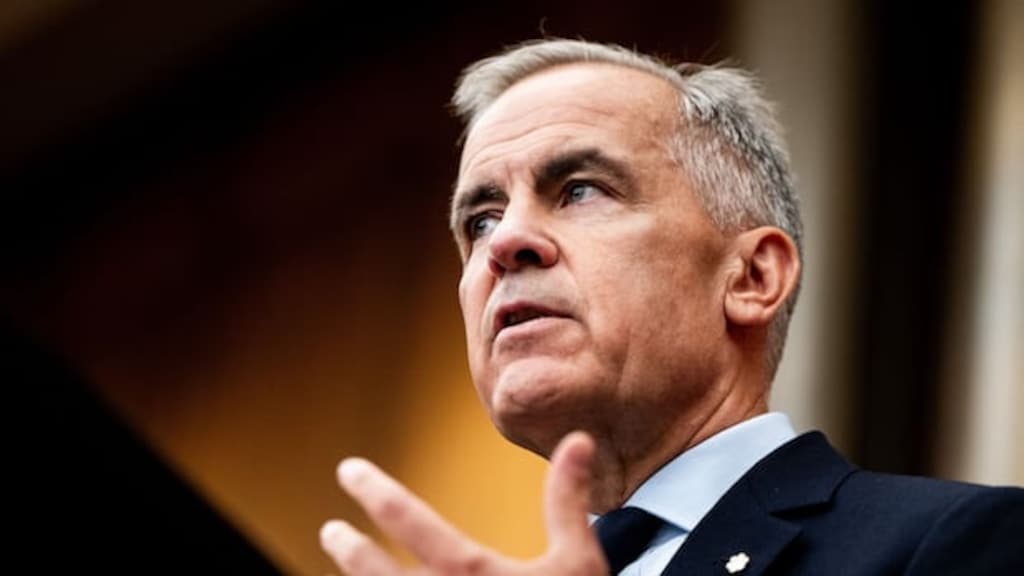
This week, Prime Minister Mark Carney announced a sweeping expansion of Canada’s Arctic capabilities, including billions for heavy icebreakers, ports, and surveillance. The message was not framed as a provocation, yet it landed as one. Control, Carney suggested, is not what is asserted on paper but what can be exercised in practice. For a country long accustomed to defending its Arctic claims rhetorically, the pivot marks a decisive change.
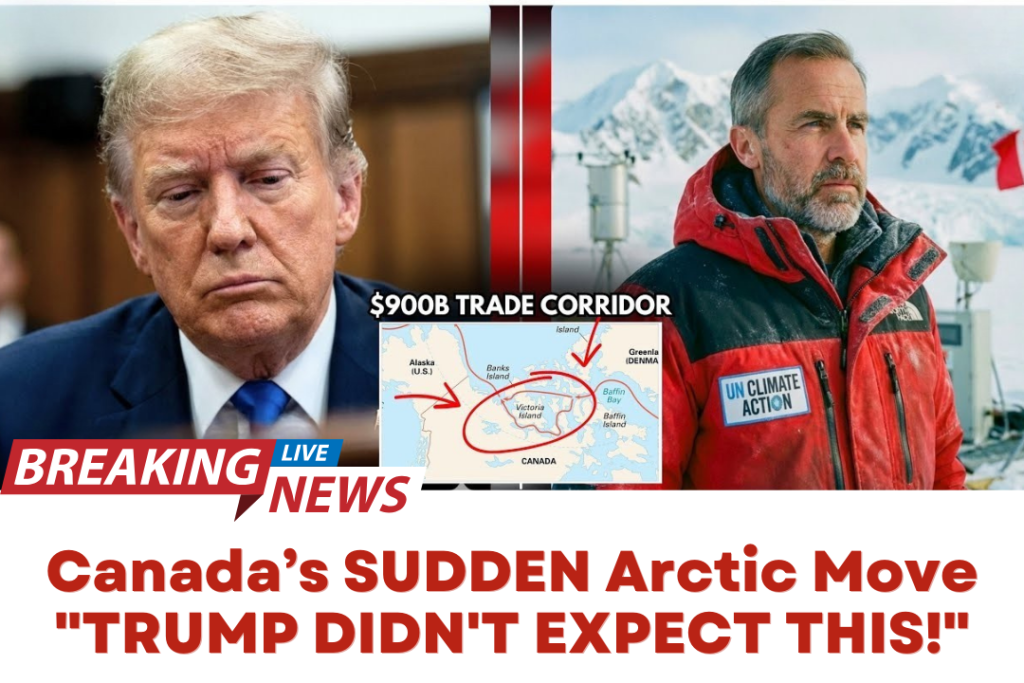
At the center of the shift lies the Northwest Passage, a maze of waterways threading through Canada’s Arctic archipelago that links the Atlantic and Pacific Oceans. For centuries, the route was more legend than infrastructure, locked in ice and explored at terrible human cost. Climate change has altered that calculus. As summer ice retreats, the passage is becoming navigable for longer stretches each year, cutting thousands of kilometers off voyages between Asia and Europe.
The economic stakes are vast. Even modest diversion of global shipping toward the Arctic would represent hundreds of billions of dollars in trade over coming decades. The strategic stakes are larger still. Beneath and around the route lie critical minerals—nickel, copper, rare earths—essential to energy transition and defense industries. For decades, those resources remained largely stranded by geography. Infrastructure changes that equation.
Canada has claimed the Northwest Passage as internal waters since the mid-20th century. The United States has never accepted that claim, maintaining that the route constitutes an international strait open to free transit. For years, the dispute was academic. Ottawa lacked the means to monitor traffic, provide services, or enforce regulations. American vessels passed through with little more than diplomatic protest.
That era is ending. Canada’s plan is not to litigate sovereignty anew but to operationalize it. New polar-class icebreakers will patrol year-round. Ports will offer refueling, repairs, and pilotage. Surveillance and military facilities will extend Canada’s reach beyond the brief Arctic summer. The logic is blunt: ships comply with the authority that can guide them safely, service them reliably, and inspect them credibly.
The timing is not accidental. Former President Donald Trump spent much of his return to national politics wielding economic pressure against allies, Canada included. Tariffs and threats were meant to extract concessions. Instead, they accelerated Ottawa’s search for alternatives—diversified trade routes, new partners, and strategic autonomy in the North.
In that sense, Canada’s Arctic build-out is less a confrontation than a hedge. It reflects a calculation that reliance on goodwill is a vulnerability, especially as melting ice transforms the Arctic from frontier to corridor. Infrastructure converts uncertainty into leverage.

The move also complicates alliance politics. Canada and the United States are bound by defense cooperation and shared security interests, particularly through NATO and continental defense arrangements. Yet on the Northwest Passage, allies disagree. European partners have generally been sympathetic to Canada’s legal position, wary of precedents that could weaken their own maritime claims. Washington’s insistence on freedom of navigation, however, has long prevailed within alliance forums.
Canada is navigating that tension carefully. It has deepened cooperation with Nordic allies experienced in Arctic operations while avoiding overt challenges to American leadership. Strategic ambiguity buys time. As long as the alliance does not force a binary choice, Canada can continue building capacity and asserting de facto control without triggering a rupture.
There is an irony at the heart of the American position. Treating the Northwest Passage as an international strait strengthens not only U.S. navigation rights but those of Russia and China, both eager Arctic players. Moscow has invested heavily in icebreakers and northern ports. Beijing styles itself a “near-Arctic” state, dispatching research vessels and courting partnerships. If Washington insists that no permission is required to transit Canadian waters, it invites competitors to make the same claim.
Some American strategists have begun to acknowledge the dilemma. Continental security, they note quietly, may be better served by supporting Canadian control than by clinging to a doctrine that dilutes it. But recalibration requires admitting that decades of policy misread the future value of the Arctic. Politics rarely rewards such candor.
For Canada, the bet is that facts on the water will matter more than arguments on land. As icebreakers launch and ports expand, the abstract becomes tangible. Fees can be levied, rules enforced, services denied or granted. Sovereignty accrues through use.
The broader lesson extends beyond the Arctic. Power is shifting toward those who invest early in systems that turn change into advantage. Canada’s move does not announce a new order with fanfare. It builds one quietly, piece by piece, in a region long ignored until it began to open.
In Washington, the shock is not that Canada claims a route worth hundreds of billions. It is that Canada no longer asks permission to make the claim real.