Washington has sent shockwaves across the global stage by explicitly naming Canada in its newly released National Security Strategy—and the tone is sharper than anything seen in years. Gone are the soft diplomatic pleasantries. Instead, the document frames America’s allies, including Canada, as nations that must be “encouraged” to align with U.S. economic and strategic priorities.
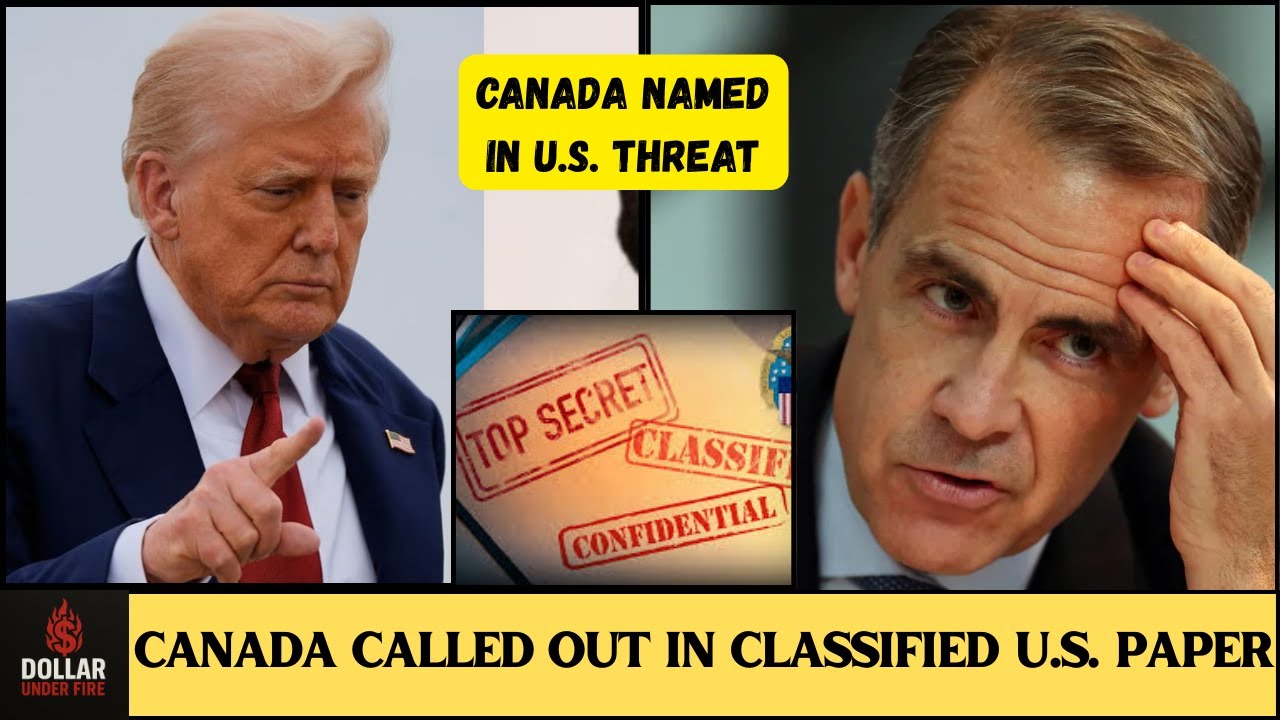 This is not partnership; it is hierarchy. A clear reminder that, in Washington’s eyes, alliances are no longer a table of equals but a list of states expected to stand where the U.S. tells them to. The move thrusts Canada directly into the center of the U.S.–China confrontation and exposes a deeper shift in how the United States sees its role in a world increasingly shaped by Asia’s rise.
What surprises many is that Prime Minister Mark Carney predicted this moment months ago. From his earliest briefings, Carney warned that the era of U.S.-led free-trade stability was collapsing. And instead of waiting for Washington to adjust, Canada began crafting a quiet but ambitious defensive realignment: deepening ties with Japan, South Korea, and Southeast Asia; upgrading Pacific export infrastructure; and restructuring supply chains to reduce dependence on the U.S. Moves that once seemed overly cautious now look like strategic foresight. The United States may have just confirmed exactly what Carney was preparing for.
The National Security Strategy does more than mention Canada. It signals a deeper—and more troubling—shift: Washington now views Canada’s critical mineral reserves, energy assets, and transport corridors as elements tied directly to U.S. national security. That framing opens the possibility of economic pressure, trade restrictions, or diplomatic intervention if Ottawa chooses to sell key resources to Asian partners instead of the United States. At the same time, vague sections on “foreign influence,” “information threats,” and “instability risks” create a broad legal and political space for Washington to challenge virtually any Canadian policy it deems contrary to U.S. interests—even if the decision involves tourism, media, domestic regulation, or bilateral trade.
This leaves Canada facing a clearer choice than ever:
follow the path defined by Washington, accepting increasingly assertive demands on trade, minerals, energy, and economic alignment;
or pursue the independent trajectory Carney has mapped out—one built on diversification, Asian markets, strategic autonomy, resource sovereignty, and a reduced reliance on an American superpower struggling to maintain its postwar dominance.
Analysts warn that the tone of this new U.S. strategy marks a turning point. It is not just a policy document. It is a boundary line. A declaration that American leadership will now be enforced through pressure, compliance expectations, and strategic leverage rather than mutual benefit. And in this new geopolitical architecture, Canada is no longer shielded by shared history or cultural similarity. It is viewed through the same lens as every other nation in Washington’s orbit: useful when aligned, problematic when independent.
The implications reach far beyond trade. Canada’s technology partnerships, energy decisions, immigration policies, Arctic sovereignty, and Asia-Pacific engagement are now subject to heightened U.S. scrutiny. And because the document merges economics with security, even routine commercial decisions—like port expansion or rail investments—could be interpreted as national-security concerns if they benefit non-U.S. markets.

The reality is becoming impossible to ignore: no country can pursue full sovereignty while simultaneously accepting the role of a dependent junior partner. For decades, Canada walked a tightrope, balancing cooperation with autonomy. But the new U.S. strategy removes the middle ground. It forces a decision.
In a world reshaped by shifting power, rising Asia, and declining American influence, Canada must now define its identity:
a compliant extension of U.S. strategic interests,
or an independent middle power charting its own future.
This document didn’t just name Canada.
It revealed the crossroads.