Former President Donald Trump has ignited a political firestorm after a stunning and chaotic interview on Fox News, in which he appeared to confirm a U.S. military invasion of Venezuela, openly linked the operation to oil interests, and dismissed constitutional concerns. The remarks immediately triggered bipartisan fury in Washington and sharp condemnation from foreign leaders, raising alarms about international law, executive overreach, and the risk of global instability.
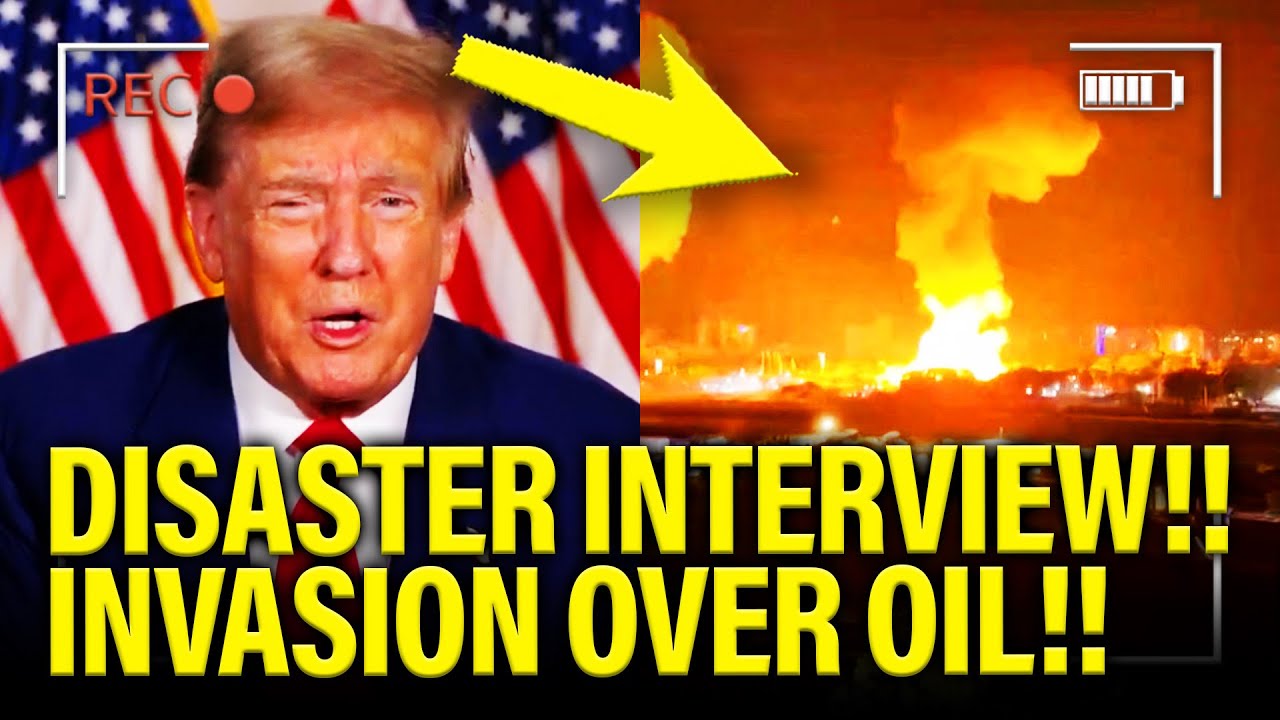
According to reporting cited during the broadcast, U.S. special forces allegedly captured Venezuelan President Nicolás Maduro and his wife, Cilia Flores, in a late-night raid described by Trump as “lethal” and “powerful.” He claimed the operation involved Delta Force, resulted in no American deaths, and led to the couple’s transfer to a U.S. ship bound for New York, where federal indictments have reportedly been filed. At the same time, questions remain about civilian casualties, as Maduro-aligned governors and senior officials insist they retain control over key regions of the country.
A major point of controversy came from Trump’s repeated emphasis on oil. He stated that the United States would now be “very strongly involved” in Venezuela’s oil industry, framing the invasion as both a strategic and economic move. When asked about Chinese envoys who were reportedly meeting with Maduro just hours before the attack, Trump dismissed any concern, saying China would still “get oil” and insisting that U.S. military power was unmatched. Critics say such language echoes authoritarian justifications for conquest and dangerously undermines international norms.
The reaction in Congress was swift and severe. Senator Mark Warner, the top Democrat on the Senate Intelligence Committee, said neither the Senate nor the House had been briefed and warned that the operation violated the U.S. Constitution. Warner argued that asserting a right to invade another country and seize its leader sets a precedent that could be exploited by China, Russia, or other authoritarian regimes, even while acknowledging Maduro’s long record of corruption and repression.

Trump further inflamed tensions with rhetoric that many observers described as disturbing. He said he watched the invasion unfold “like a television show,” praising its “speed” and “violence,” and suggested special forces were eager to carry it out. He attacked Democrats for questioning the legality of the action, revived false claims about the 2020 U.S. election, and escalated fears by suggesting Mexico could be next, alleging that drug cartels effectively run the country.
International backlash followed quickly. France’s foreign minister warned that the operation contravened the principle of non-use of force under international law, while uncertainty spread inside Venezuela as residents reportedly lined up at grocery stores in anticipation of instability. With indictments unsealed, regime figures still at large, and global powers closely watching, Trump’s interview has turned a purported military operation into a worldwide controversy—one that could reshape debates over U.S. foreign policy and the limits of presidential power.