The North American steel crisis did not begin with factory closures or mass layoffs. It began far more quietly — with a policy decision. When the United States announced a sharp increase in steel and aluminum tariffs, many assumed it was just another familiar trade confrontation. But beneath the headlines, a supply chain that had been tightly integrated between the U.S. and Canada for decades began to fracture, and Detroit was the first to feel the shock.
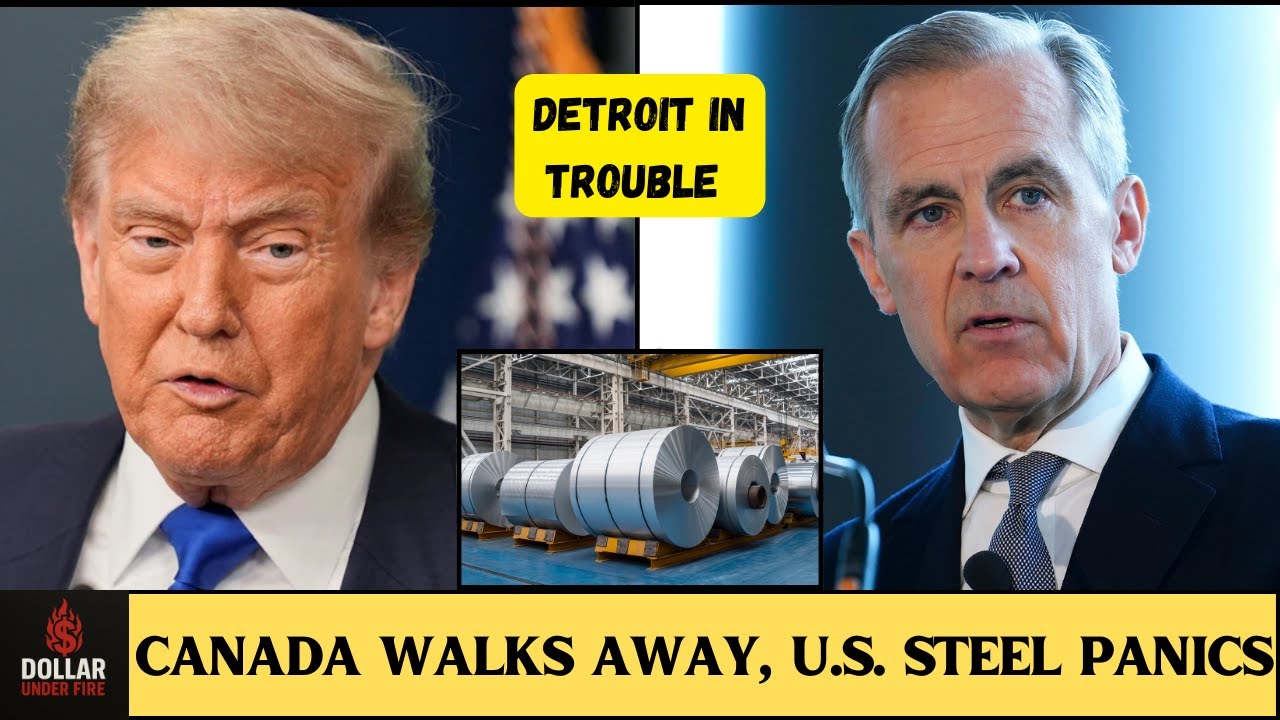
For years, the American auto industry has relied deeply on Canadian steel. Millions of tons flow annually from Canadian mills directly into production lines across Michigan, Ohio, and the broader Midwest. When tariffs jumped from 25 percent to 50 percent, markets didn’t wait for political debate. Hot-rolled coil prices surged, orders froze, and contracts once considered stable suddenly became uncertain within weeks.
Detroit quickly faced material shortages. Steel yards slowed shipments, rail deliveries stalled, and some stamping operations were forced to pause due to missing inputs. Production costs climbed sharply, putting pressure on vehicle pricing and employment. What had once been a technical trade dispute on paper turned into a tangible disruption affecting factories, workers, and communities.
Meanwhile, Ottawa responded in a very different way. Canada did not escalate tensions or issue loud retaliatory threats. Instead, it moved strategically. The government announced major investments to modernize domestic steel production, shifting toward electric arc furnaces and low-emissions manufacturing powered by clean energy. Publicly, the move was framed as climate leadership. Structurally, it was a strategic repositioning.

Cleaner steel placed Canada ahead of tightening global emissions standards, particularly in Europe and parts of Asia. As the European Union prepared to fully enforce its Carbon Border Adjustment Mechanism, Canadian steel quickly became more attractive than higher-emissions alternatives. New export contracts followed — not as short-term stopgaps, but as multi-year commitments aligned with future regulatory frameworks.
At the same time, Canada tightened import controls on steel from non-free-trade partners, introducing duties and quotas to protect its domestic market. Federal and provincial procurement rules were adjusted to prioritize Canadian-made steel for infrastructure, housing, energy, and transportation projects. Value chains shortened, domestic demand stabilized, and dependence on a single external buyer steadily declined.
While the U.S. grappled with rising costs, unstable supply, and political pressure from manufacturers, Canada quietly redirected steel flows toward global markets. Material that once crossed into Detroit began moving east and west instead — not as retaliation, but as alignment with long-term demand trends.

Crucially, none of these shifts violated existing trade agreements. Canada remained compliant with USMCA obligations while reshaping access through emissions standards, investment policy, and procurement rules. Its role in the North American steel system fundamentally changed — from a dependent supplier to a strategic gatekeeper controlling where and how steel moved.
The contrast between the two approaches became increasingly clear. One side relied on tariffs to exert immediate pressure. The other invested in future capacity, diversified buyers, and regulatory readiness. Detroit’s disruption was not sudden or accidental; it exposed structural vulnerabilities built on assumptions of frictionless cross-border trade.

This steel shock illustrates how economic power is increasingly defined not by confrontation, but by preparation. Canada’s quiet revolution reshaped leverage without escalation, shifting influence through compliance, stability, and foresight. What Detroit lost was not just a steady supply of steel — but the security of a system that no longer matched the direction of global markets.
This is not merely a story about steel or tariffs. It is a lesson in how industrial policy, emissions standards, and supply chain strategy now intersect to redefine competitiveness. Canada did not announce its revolution loudly — but its impact is already reshaping North American industry.