Washington has seen many impeachment dramas, but few have unfolded with the peculiar blend of panic, performance, and misinformation that now surrounds President Trump’s latest confrontation with Congress.
As the Senate prepares for opening arguments, the atmosphere on Capitol Hill feels less like a sober constitutional ritual and more like a high-stakes television pilot—one in which every actor is acutely aware of the cameras, the audience, and the stakes.
The week began with breathless claims ricocheting across cable news and social media that federal courts were somehow “uniting” to push President Trump toward impeachment. The phrase caught fire almost instantly. It suggested a historic turning point: judges coordinating behind the scenes, the judiciary rising as a collective force against the executive. For Trump’s critics, it sounded like long-awaited accountability. For his allies, it was proof of a shadowy conspiracy. Neither interpretation, however, was rooted in constitutional reality.
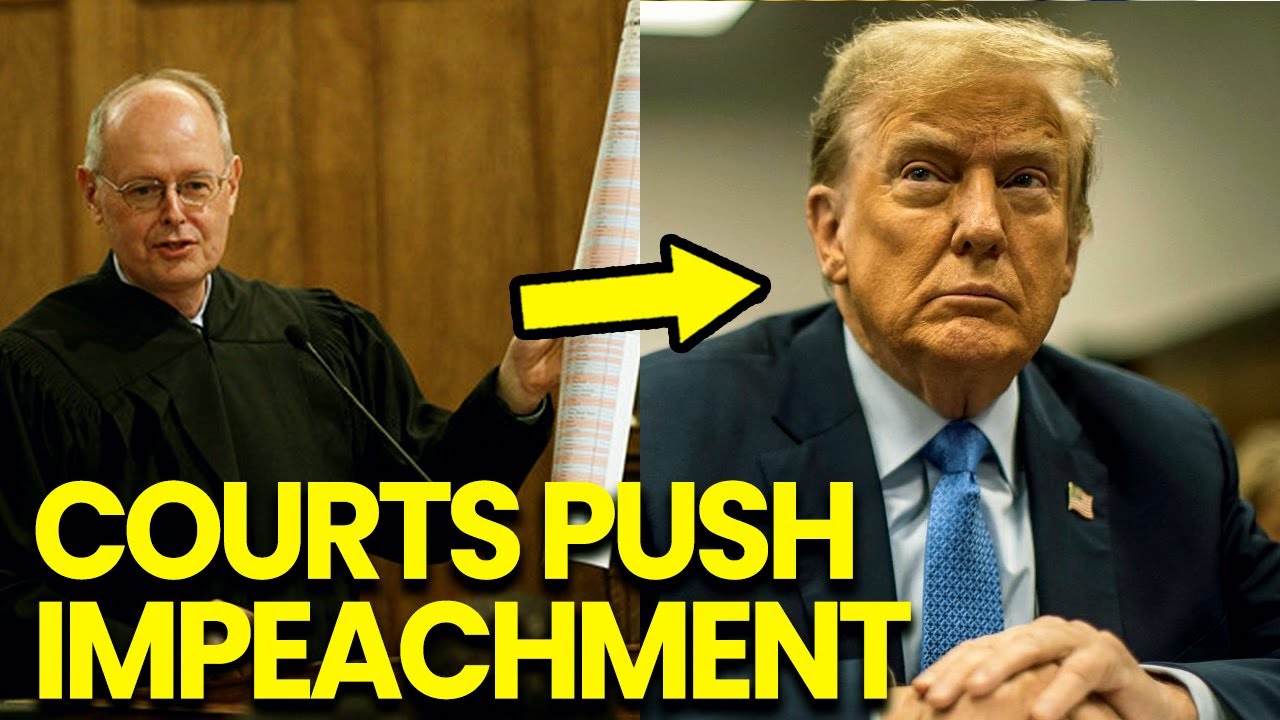
Impeachment, as the Constitution makes clear, is not a judicial function. It is a legislative one. The House has the sole power to impeach; the Senate alone may convict and remove. Judges do not vote. They do not initiate proceedings. They do not huddle to decide a president’s political fate. And yet, the myth of a coordinated judicial uprising has proven remarkably durable—less because it is plausible, and more because it is narratively irresistible.
President Trump’s response has been characteristically combative. His legal team released a memo over the weekend dismissing the articles of impeachment as a “brazen and unlawful” attempt to overturn the 2016 election. The language was sweeping, defiant, and unmistakably aimed at an audience beyond the Senate chamber. This was not merely a legal brief; it was a campaign document, a rallying cry designed to harden loyalties and frame the trial as an existential threat to democratic choice rather than a reckoning over conduct.
Republican leadership has echoed that posture. Senate Majority Leader Mitch McConnell has argued forcefully against calling new witnesses, insisting that the House had its chance and failed to make its case. He has also signaled a desire for speed—a quick trial, minimal deviation, and an outcome that restores political normalcy as efficiently as possible. Democrats, by contrast, have intensified their demands, pressing for testimony they say is essential to uncovering the full truth. The standoff has turned procedure into spectacle.
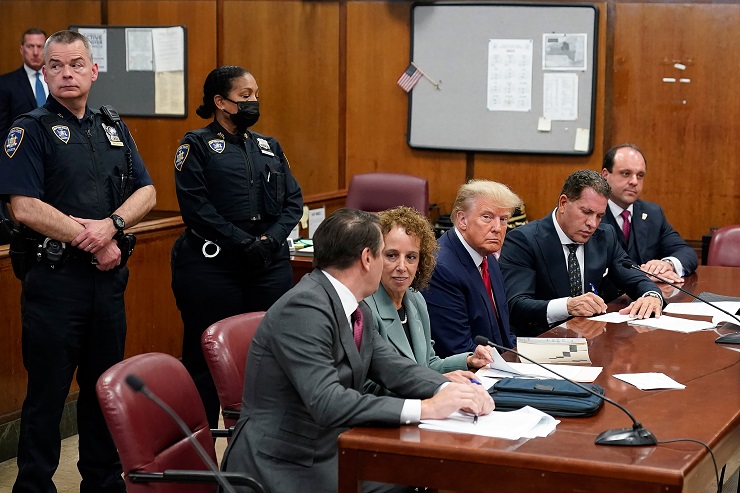
Lost amid the noise is a simpler explanation for why impeachment momentum appears stalled: Congress has already spoken. A recent House vote on an impeachment resolution ended in defeat, with a clear majority voting against moving forward. Even within Democratic ranks, support was not unanimous. Some members voted “present,” others opposed the measure outright, wary of political backlash or skeptical of the timing. The result underscored an uncomfortable fact for impeachment advocates: the votes are not there.
Meanwhile, the courts are doing what they have always done—quietly, unevenly, and case by case. Federal judges continue to rule on challenges to Trump administration policies, sometimes limiting presidential authority, sometimes affirming it. One judge investigates potential contempt related to deportations; another court pauses that inquiry. The Supreme Court hears arguments over the president’s firing power and issues emergency orders, many of them favorable to Trump. This is not coordination. It is the ordinary churn of the judicial system.
Behind the scenes, aides and operatives describe an environment of constant recalibration. Talking points are revised overnight. Legal arguments are stress-tested against polling data. Lawmakers glance at their phones as often as at briefing books. In this climate, perception can feel as consequential as fact, and narratives—however flawed—take on lives of their own.
What makes this moment distinct is not the mechanics of impeachment, which remain unchanged, but the way political conflict now travels. Constitutional processes are filtered through viral clips, partisan newsletters, and algorithmic outrage. A misunderstanding about judicial power can metastasize into a dominant storyline within hours, shaping public expectations even as experts scramble to correct the record.
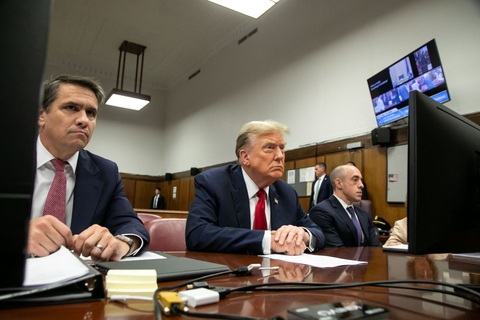
As the Senate trial opens, the question is not whether the courts will remove a president—they cannot—but whether Congress will rise above the din it has helped create. The trial may ultimately hinge less on new revelations than on entrenched loyalties, procedural maneuvering, and the broader electoral calendar looming ahead.
For now, Washington waits. The cameras are on, the rhetoric is escalating, and the constitutional firestorm—real or imagined—shows no sign of cooling. In an era when politics so often mimics entertainment, the impeachment trial is poised to deliver exactly what the country has come to expect: drama, division, and a debate over power that extends far beyond the Senate floor.