Paris, January 6, 2026 — In a moment that may redefine Arctic geopolitics for decades, Canadian Prime Minister Mark Carney delivered a blunt message the White House did not expect and could not ignore.
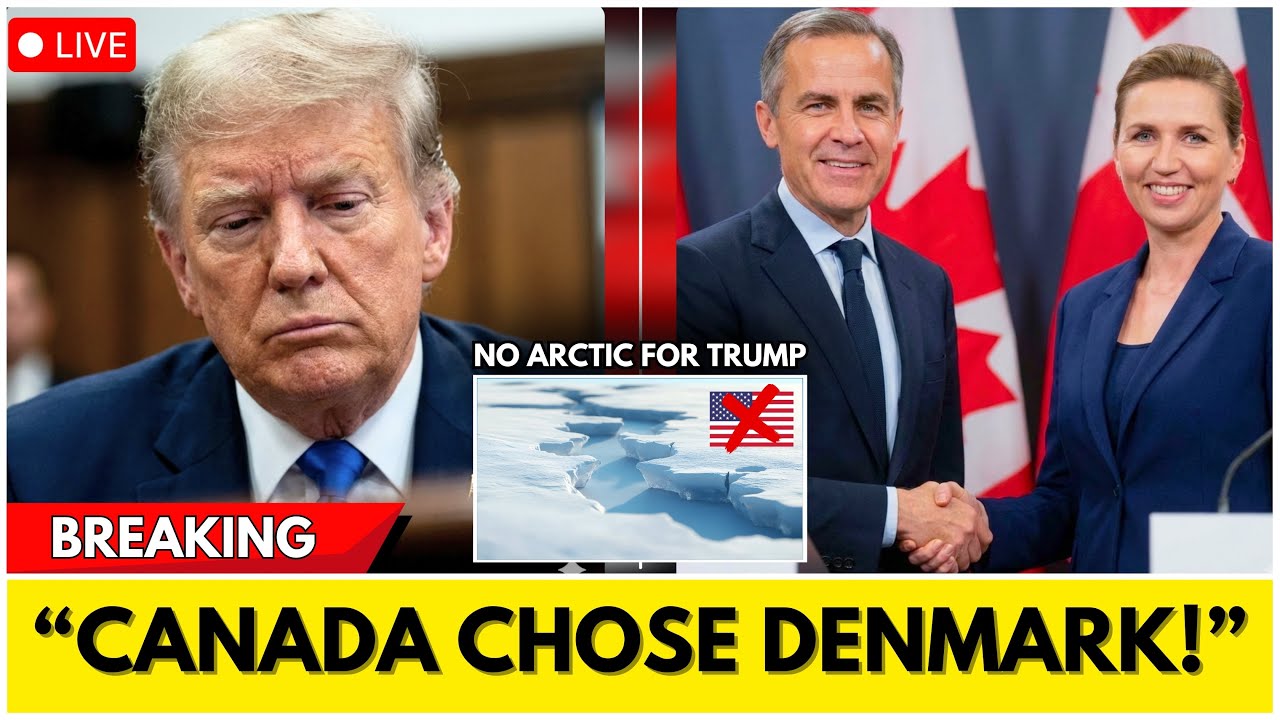
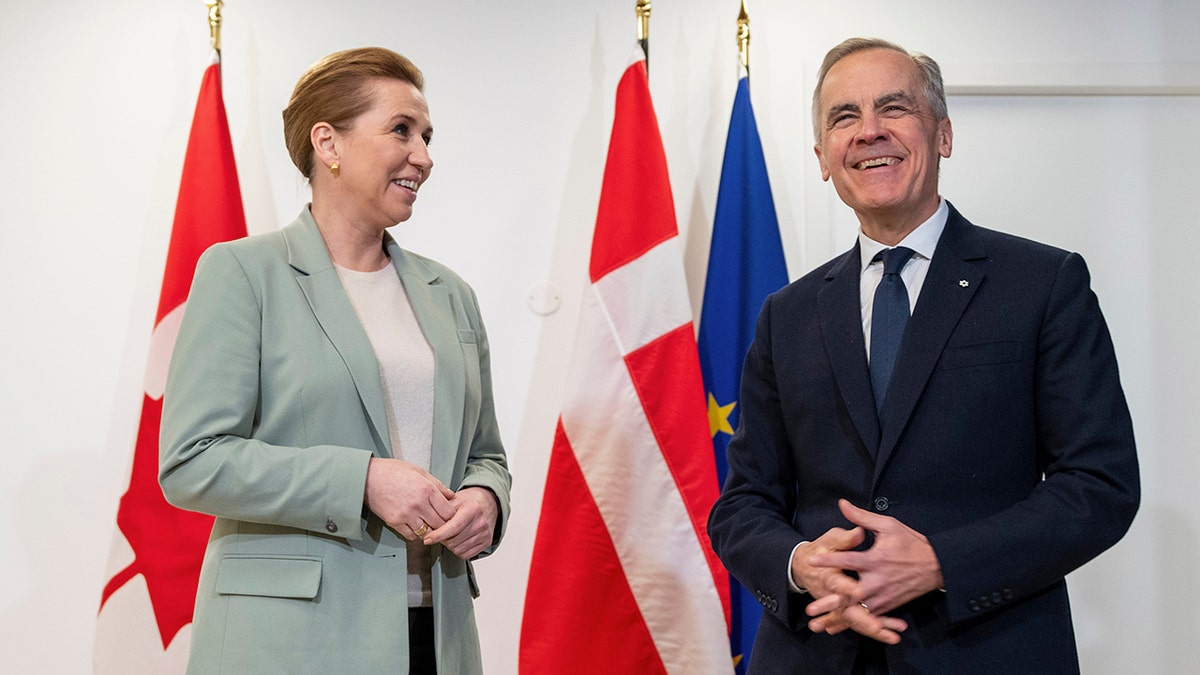
Standing beside Danish Prime Minister Mette Frederiksen at the Canadian Embassy in Paris, Carney declared that the future of Greenland will be decided solely by the people of Denmark and Greenland, not by threats, not by military force, and not by any country that believes territorial sovereignty is negotiable.
He then made that position unmistakably concrete: Canada will open a consulate in Nuuk, Greenland’s capital.
The timing was no accident.
Just hours earlier, Donald Trump renewed explicit threats to annex Greenland, including the use of military force if necessary. Not diplomatic rhetoric. Not ambiguity. A direct challenge to Danish sovereignty and, by extension, to NATO itself.
Canada’s response was swift, public, and historic.
For decades, Arctic geopolitics rested on an unspoken understanding.
The United States led. NATO allies deferred. Russia was the shared adversary. Greenland remained Danish territory, hosting an American military presence without controversy.
That equilibrium collapsed when Trump decided Greenland should belong to the United States.
During his first presidency, Trump floated the idea of purchasing Greenland. Denmark rejected it politely. The issue faded.
But in his second term, Trump returned with a harder edge. He appointed a special envoy tasked explicitly with integrating Greenland into the United States, and the White House openly stated that military force was always an option.
With that statement, Arctic diplomacy crossed a red line.
Threatening to seize territory from a NATO ally was not strategic signaling. It was a declaration that sovereignty itself was conditional on American power.
Most Canadian prime ministers would have hedged.
They would have expressed concern, urged dialogue, avoided choosing between the United States and Denmark.
Mark Carney did the opposite.
He explicitly sided with Denmark against the United States, using language designed to reject American claims at their foundation.
“Self-determination,” “sovereignty,” and “territorial integrity” were not abstract phrases.
They were deliberate contradictions of Trump’s position.
Carney went further. He announced that Canada’s Governor General, Mary Simon, and Foreign Affairs Minister Anita Anand would travel to Greenland in February to formally open the consulate.
This was not symbolic diplomacy.
This was cabinet-level action.
Greenland is vast — over 2 million square kilometers, 80 percent covered by ice, home to roughly 56,000 people, most of them Inuit. But its strategic value is enormous.
Greenland sits between North America and Europe, controlling access to Arctic shipping routes.
The United States operates Pituffik Space Base (formerly Thule Air Base), a cornerstone of North American missile defense.
The island holds massive deposits of rare earth minerals essential for batteries, electronics, and defense systems. As Arctic ice melts, offshore oil and gas become increasingly accessible.
Trump frames Greenland as a national security necessity. But his rhetoric revealed something deeper: a belief that power justifies territorial acquisition, even at the expense of allied sovereignty.
That belief terrified Europe.
Denmark heard Trump’s message clearly: if the United States would threaten Greenland, no NATO ally’s territory was truly secure.
Canada’s response unlocked something unprecedented.
Denmark, Canada, and France, Germany, the United Kingdom, Italy, Poland, and Spain issued a joint statement declaring that Greenland belongs to its people, and that only Denmark and Greenland may decide its future.
There was no hedging.
No diplomatic softening.
Seven NATO allies flatly rejected American territorial demands.
Prime Minister Frederiksen went further, warning that an American annexation of Greenland would spell the end of NATO. European leaders took that warning seriously.
Instead of accommodating Washington, they coordinated to isolate it.
For generations, Arctic security meant American leadership by default. That assumption no longer holds.
Canada and Denmark are now coordinating Arctic security with European and Nordic partners, conspicuously without deferring to Washington.
Finland and Sweden’s recent NATO accession brought serious Arctic capabilities. Norway controls access to the Barents Sea. Iceland anchors North Atlantic shipping lanes.
Together with Greenland and Canada’s Northwest Passage, this emerging Nordic–Canadian Arctic bloc controls critical geography — without relying on American leadership.
The United States is not being defeated militarily.
It is being worked around.
Sending Governor General Mary Simon, an Inuk and former ambassador for circumpolar affairs, to Greenland was a masterstroke.

Greenland’s population is overwhelmingly Inuit. Trump’s annexation rhetoric ignores indigenous self-determination entirely.
Canada’s message is the opposite: Arctic indigenous peoples have rights, voices, and transnational connections that predate modern borders.
If the United States attempts to seize Greenland against the will of its people, it would not only violate Danish sovereignty — it would assault indigenous autonomy across the Arctic.
Canada is signaling that it will stand with Arctic indigenous communities, even when that means confronting Washington.
Trump wanted Greenland.
Instead, he triggered:
-
A unified European rejection of American territorial ambitions
-
Canada’s open alignment with Denmark against the United States
-
Independent Arctic security coordination that sidelines Washington
-
A collapse of trust among NATO allies on sovereignty
Most damaging of all, he demonstrated that the United States under his leadership is willing to threaten allied territory. That lesson will not be forgotten.
Allies who question reliability begin building alternatives. Once that process starts, it does not reverse easily.
Greenland is not becoming U.S. territory.
But the Arctic is becoming a region where American leadership is no longer automatic.
Canada chose Denmark.
Europe backed that choice.
And Trump found himself shut out — not by force, not by sanctions, but by allies deciding they would rather cooperate without him.
This is not just a Greenland story.
It is a warning about power, trust, and what happens when threats replace diplomacy.
And the Arctic, once assumed to be America’s strategic backyard, has just become a place where the United States must now ask — not demand.
“NOTE: This is not an official announcement from any government agency or organization. The content is compiled from publicly available sources and analyzed from a personal perspective.