Canada Confronts General Motors, Signaling a New Phase in North American Economic Politics
When General Motors confirmed it would end production at its BrightDrop electric-van facility in Ingersoll, Ontario, the announcement appeared, at first, to be another chapter in the slow retreat of North American manufacturing. But the political reaction that followed—shaped by calculation rather than outrage—marked a quiet turning point in Canada’s approach to multinational power, continental trade, and domestic economic sovereignty.
The closure itself was abrupt. The company had received billions in federal and provincial support to convert the plant into a hub of next-generation clean-vehicle production. Workers had anticipated years of stability, and officials publicly celebrated the project as a symbol of industrial renewal. But by the fall of 2025, GM’s assurances that the plant would restart production “in May” had grown increasingly hollow. The restart never occurred. Instead, the company issued a curt notice: operations were over.

The economic shock was immediate, but the political shock proved far more consequential. For decades, Canada has been seen—fairly or not—as the quiet partner in North American industrial negotiations: willing to offer subsidies, eager to maintain cross-border supply chains, and reluctant to confront corporate decisions made in Detroit or Washington. In this case, that assumption produced a miscalculation.
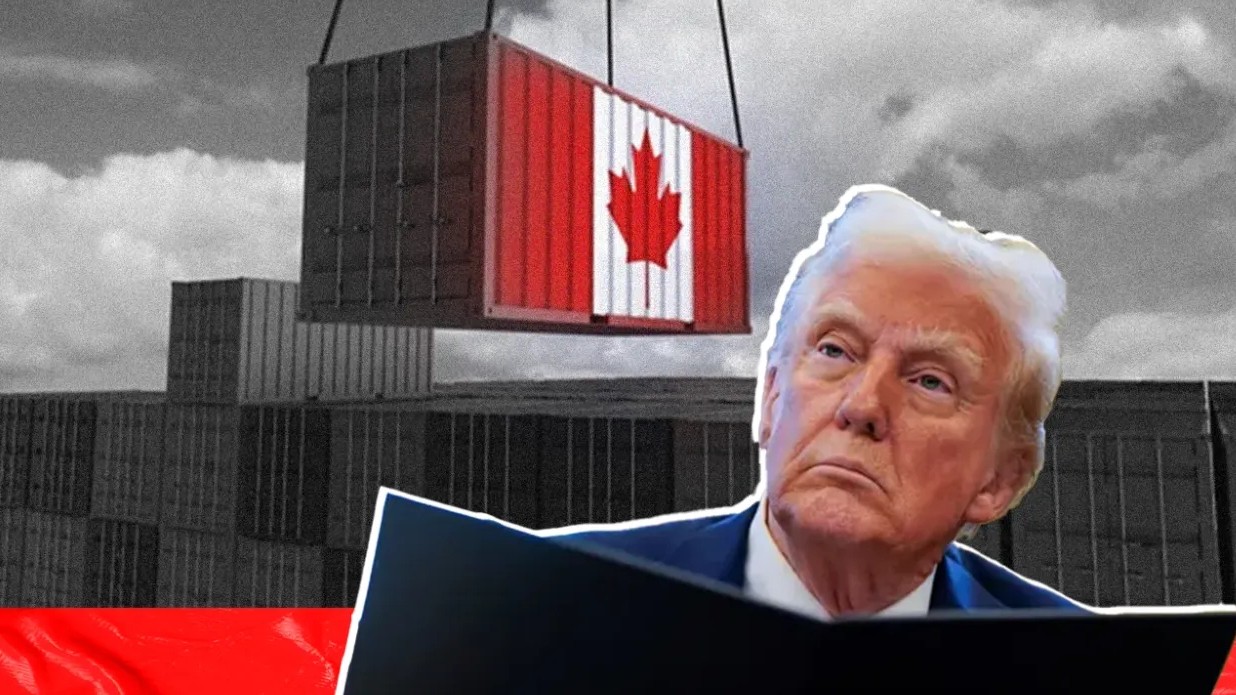
What followed was not a press conference or a symbolic gesture. It was a policy activation. Ottawa invoked the auto-diminishment framework, a tariff mechanism designed to penalize automakers that accept public funding but later abandon Canadian production. Few believed it would ever be used. Fewer still believed it would be used with full force.
Within days, Canada imposed a mandatory 25 percent tariff on U.S.-built vehicles manufactured by companies that had sharply reduced Canadian output. GM’s duty-free quota was reduced by 24.2 percent. Stellantis, which had relocated Jeep production to Illinois months earlier, saw its quota cut in half. Vehicles that once entered Canada at competitive prices suddenly arrived burdened with steep costs. Dealers complained. Consumers walked away. Inventory systems across the border strained under unexpected pressure.
The move carried an even deeper political resonance. Foreign automakers—accustomed to negotiating with Canadian governments willing to avoid confrontation—realized the landscape had shifted. And they took notice of the figure at the center of the change: Foreign Affairs Minister Mélanie Joly.
Joly delivered an ultimatum to GM: present a credible production plan for the Ingersoll plant within 15 days or face additional penalties. The notice was legalistic, direct, and devoid of diplomatic cushioning. It struck corporate boardrooms as an uncharacteristically sharp message from Ottawa. But it reflected a broader reorientation inside Canada’s governing apparatus—one shaped not by emotion but by strategy.
Behind the scenes, officials had spent years laying the groundwork for a more assertive industrial framework. Conditions tied to federal funding, automatic tariff triggers, and national procurement systems were designed as protective architecture for a country long dependent on industries headquartered outside its borders. When GM walked away, the framework activated exactly as designed.
The economic consequences reverberated quickly. U.S. dealers reportedly struggled with shortages of electric delivery vans that had once been expected from Ontario. Attempts to divert additional U.S.-built models toward Canada, to stabilize revenue, collided with the tariff barrier. Vehicles piled up in Midwest lots. Profit margins contracted. Analysts noted that restarting the Ontario plant—or negotiating some form of compromise—might be less costly for GM than absorbing the longer-term impact of the penalties.
Union officials in Canada, often accustomed to one-directional communication from corporate leadership, began receiving calls from executives looking for solutions. The shift in tone was subtle but unmistakable.
For working families in Ingersoll, however, the political maneuvering did little to soften the reality of lost wages, fading benefits, or the uncertainty clouding their community. The closure upended routines built around stable shifts and long-planned retirements. It pulled away the infrastructure of daily life in a town that once viewed the plant as an economic anchor.
Still, for many Canadians, the government’s response carried moral weight. It signaled that public investment was not a one-sided bargain and that multinational partners would be held to their commitments. In a political climate where populist rhetoric often lacks structural follow-through, Ottawa’s actions represented a rare instance of policy translating into measurable leverage.

The broader significance may lie beyond the auto sector. Aerospace firms, pharmaceutical companies, and multinational suppliers have reportedly begun reassessing their long-term strategies in Canada—not out of fear, but out of respect for a framework that now appears far more predictable and enforceable than before. Corporations tend to avoid uncertainty; Canada’s new posture, paradoxically, offers clarity.
On the continental stage, the episode has introduced questions about how the United States, and particularly Donald Trump’s administration, will respond to a Canada more willing to enforce its own economic boundaries. For the first time in years, Canada appears prepared to negotiate from an elevated, not subordinate, position.
The outcome of GM’s dilemma remains uncertain. But what is clear is that Canada’s response has marked the early movement in a broader redefinition of its economic identity—one in which the rules are written not in the shadow of larger neighbors, but with a clear, deliberate assertion of national interest.