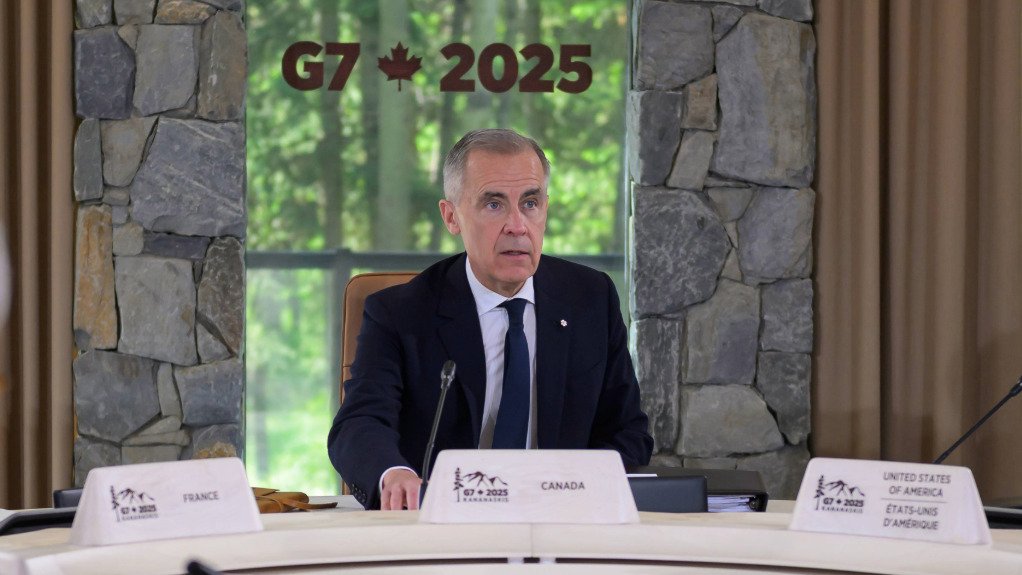
Canada has just executed one of the most consequential economic strategy shifts of the decade, locking in critical mineral partnerships that could sideline the United States from a projected $400 billion global electric vehicle (EV) battery market. Speaking bluntly at the G7 summit, Prime Minister Mark Carney signaled that Canada is no longer waiting for Washington to lead. Instead, Ottawa is reshaping the entire Western supply chain for EV minerals—without putting the U.S. at the center.
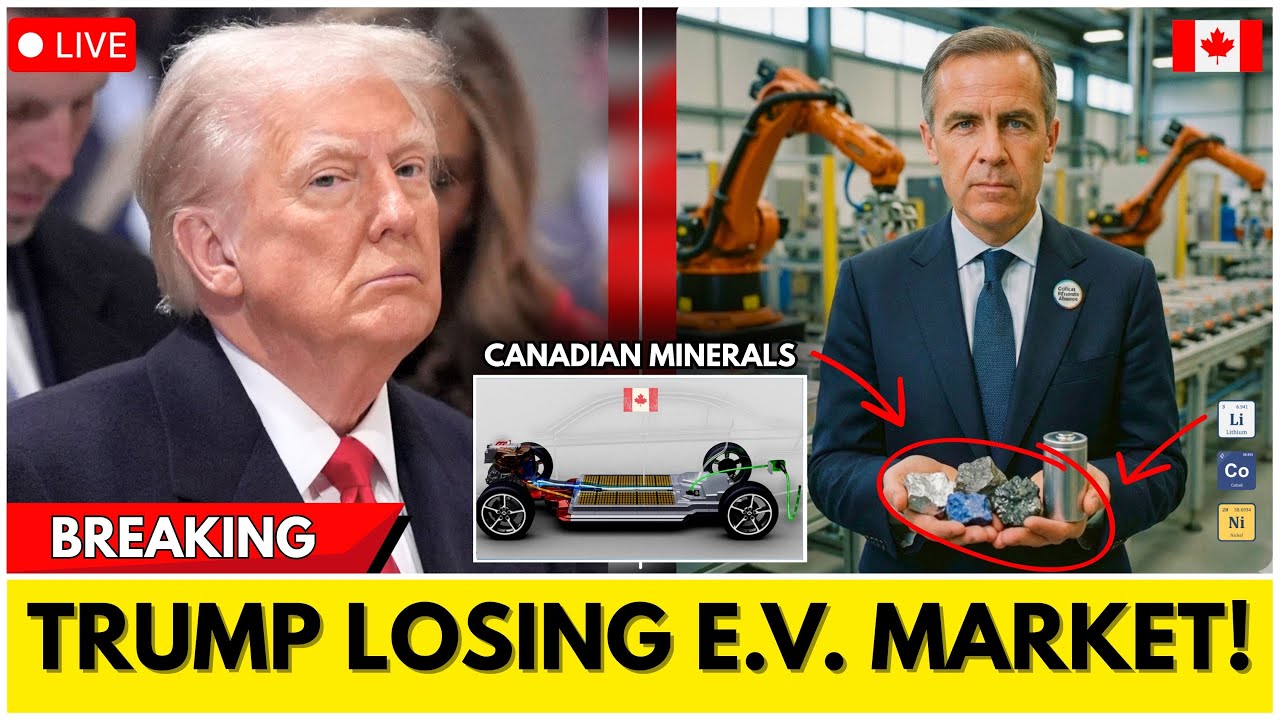
For decades, the assumption was clear: Canada had the raw resources, but the United States controlled the capital, processing, and coordination. That model collapsed after repeated trade threats and sovereignty rhetoric from Donald Trump. Canada reassessed its leverage and reached a stark conclusion—it is the only Western country with all the minerals required to build EV batteries end-to-end, including lithium, nickel, cobalt, graphite, and rare earth elements.
The timing could not be more critical. China currently dominates global mineral refining, controlling over 90% of graphite and cobalt processing, while Russia and Indonesia dominate nickel. As EV demand explodes, supply chain security has become a national priority for Europe and Asia. Canada stepped into that vacuum, signing $6.4 billion in partnerships with nine countries, including Germany, France, Japan, Australia, and others—notably without U.S. leadership.
These agreements go far beyond mining. Canada is rapidly building domestic processing and refining capacity, capturing the most valuable segment of the battery supply chain. Refined battery-grade materials account for up to 40% of total battery costs, far more lucrative and strategically important than raw ore exports. By anchoring processing at home and coordinating directly with global manufacturers, Canada is positioning itself as the new hub of Western EV supply chains.
The implications for the United States are profound. While American firms may still buy Canadian materials, they will no longer control the flow, pricing power, or strategic coordination. Long-term supply agreements between Canadian producers and European and Japanese manufacturers are already in place, making the shift difficult to reverse. What was once assumed to be U.S.-led industrial dominance is now being built next door—on Canada’s terms.
Ultimately, this is not just about minerals or EVs. It is about industrial power in the 21st century. By leveraging stability, comprehensive resources, and genuine partnerships, Canada has transformed geology into geopolitics. Trump’s pressure tactics were meant to force compliance—but instead, they accelerated Canadian independence. The result: a future-defining EV supply chain where Canada is in the driver’s seat, and the United States is no longer calling the shots.