🚨🔥 JUST IN: Mark Carney Moves Forward With Major Cross-Border Bridge Project — Strategic Signals Ripple Across North American Trade Routes 🌉
A new international bridge spanning the Detroit River, designed to strengthen one of the world’s busiest trade corridors, briefly became the center of an unexpected political dispute after a social media post by Donald Trump questioned whether the project should be allowed to open.
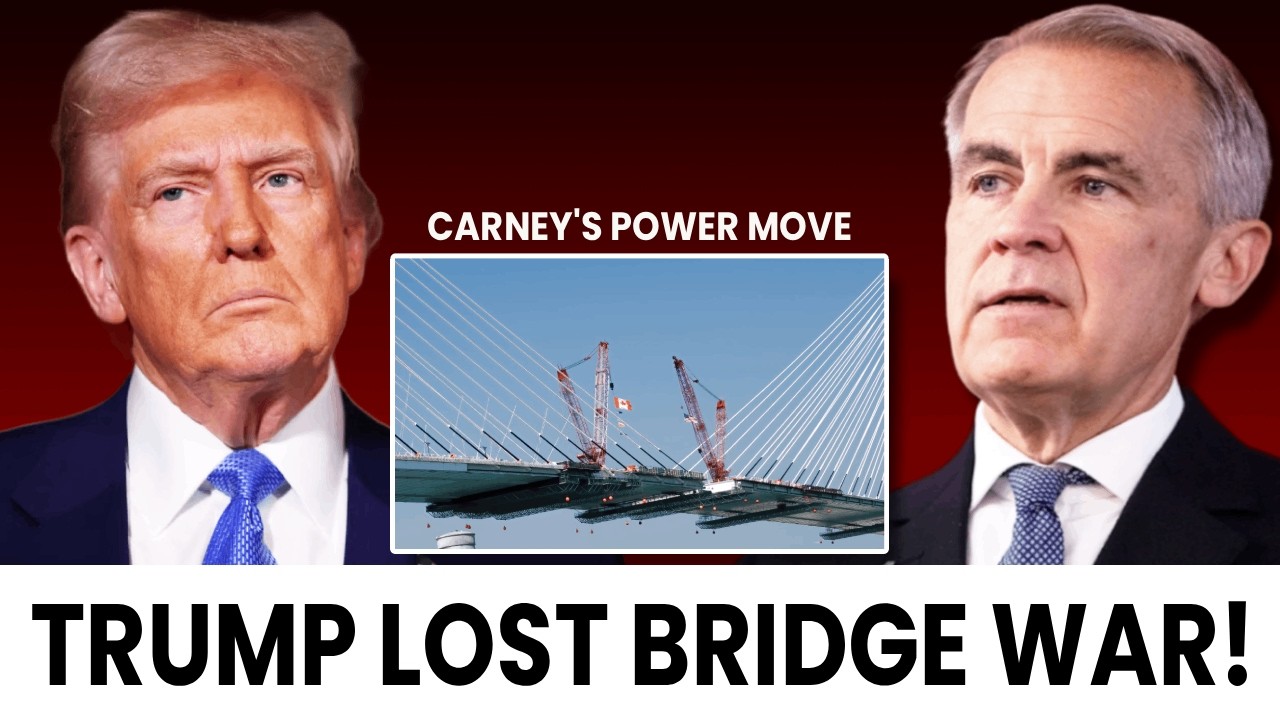
The structure at the heart of the controversy — the Gordie Howe International Bridge — is nearing completion after more than a decade of planning and construction. Connecting Detroit with Windsor, the bridge is expected to carry roughly 8,000 commercial trucks per day and serve as a critical artery between two highly integrated economies.
But in early February, Mr. Trump wrote on social media that he would seek to block the bridge’s opening, arguing that the United States was being treated unfairly by Canada in broader trade disputes. The remark surprised officials on both sides of the border, in part because the project had previously received bipartisan support and federal authorization during Mr. Trump’s own administration.
The bridge was approved through a 2012 agreement between the Canadian government and the state of Michigan. Under that arrangement, Canada financed the roughly $6.4 billion project — covering construction of the span, customs facilities and highway connections in both countries. In exchange, Michigan would receive joint ownership of the completed bridge and eventually share in toll revenues once Canada recovers its initial investment.
The deal was negotiated openly and signed when Rick Snyder, a Republican, served as governor of Michigan. Federal approval followed the next year when the United States Department of State issued the required presidential permit allowing construction to proceed.
The project later received additional federal support. In 2019, Mr. Trump signed legislation that included funding for customs infrastructure tied to the bridge, and the administration described the crossing as an important economic link between the two countries.
That history made the February post particularly striking.
Mr. Trump suggested that Canada owned both sides of the bridge and implied that the United States should receive compensation before it opened. He also pointed to broader trade grievances, including Canadian dairy protections and recent tensions involving Canadian export policies.
Officials in Michigan and Canada quickly pushed back, noting that the ownership structure Mr. Trump described did not reflect the terms of the agreement.
Canada does not control the entire project. Michigan holds half ownership under the 2012 deal and will receive a share of toll revenue once the Canadian government recoups its investment.
Mr. Snyder publicly reiterated those details in an opinion column in The Detroit News, writing that the agreement had been designed to provide Michigan long-term economic benefits without requiring the state to finance construction.
Using the bridge as leverage in trade disputes, he argued, would primarily harm Michigan’s own economy.
“This project brings jobs, improves supply chains and strengthens our connection to Canada,” Mr. Snyder wrote, adding that delaying it would undermine the state’s auto industry and manufacturing sector.
The economic significance of the crossing is difficult to overstate. Roughly a quarter of all merchandise trade between the United States and Canada moves through the Detroit–Windsor corridor, a supply chain that supports North America’s automotive industry.
For decades, most truck traffic in the region has relied on the Ambassador Bridge, a privately owned span built in 1929. Because the nearby Detroit–Windsor tunnel prohibits heavy trucks, the Ambassador Bridge has effectively served as the primary commercial crossing for nearly a century.
Supporters of the Gordie Howe bridge argue that adding a second crossing will improve reliability and reduce congestion. Trucks approaching the Ambassador Bridge from Canada must currently navigate city streets in Windsor before reaching highways, a bottleneck that often slows commercial traffic.
The new span will connect directly to Highway 401 and Interstate 75, creating a continuous freeway-to-freeway route between the two countries.
A study by the University of Windsor estimated that the improved connection could reduce truck transit times by as much as 20 minutes per trip. Over several decades, those efficiencies could translate into billions of dollars in savings for manufacturers, farmers and logistics companies.
The project also provides redundancy. With only one truck-capable bridge in the region, disruptions — whether mechanical problems, accidents or protests — can quickly halt cross-border freight traffic.
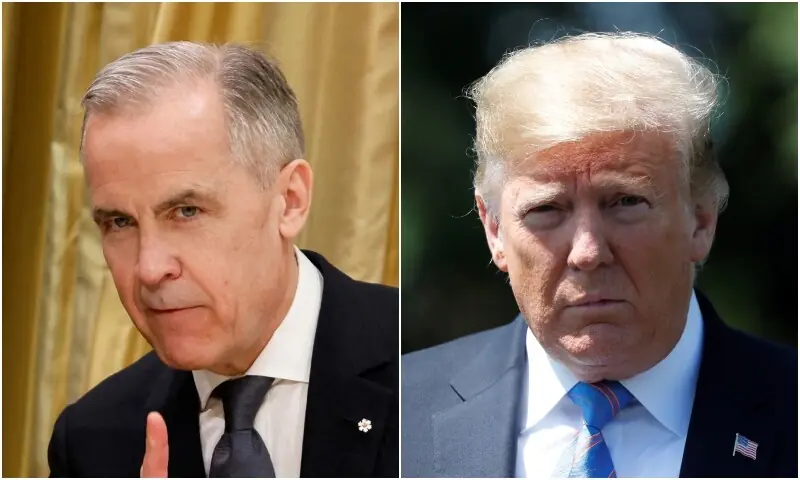
Canadian officials responded to Mr. Trump’s comments with measured language. Mark Carney emphasized that the bridge was designed as a symbol of cooperation between two closely linked economies and said he expected it to open as planned.
“The project reflects years of collaboration and shared economic interest,” Mr. Carney told reporters.
Construction on the bridge has continued uninterrupted, and the legal framework governing its ownership and financing remains unchanged. When the crossing opens, thousands of commuters are expected to travel daily between Windsor and Detroit, and thousands of trucks will move goods through one of North America’s most important trade routes.
In the end, the dispute highlighted how infrastructure projects can become entangled in broader economic and political debates. Yet the bridge itself — anchored by agreements signed more than a decade ago — appears likely to stand as originally planned: a new gateway linking two economies that depend heavily on one another.