F-35 or Gripen? Canada’s Fighter Jet Showdown Puts U.S. Ties — and 10,000 Jobs — on the Line
A Swedish royal motorcade rolled through Ottawa in late 2025, but beneath the ceremony lay a proposal with consequences far beyond pageantry. Sweden arrived not just with King Carl XVI Gustaf and Queen Silvia, but with defense officials and aerospace executives carrying a pointed offer: Build Sweden’s Saab Gripen E fighter jet in Canada — and create up to 10,000 jobs in the process.
The pitch has reignited a high-stakes debate over Canada’s future air force, its industrial sovereignty and the durability of its military alignment with the United States.
At the center of the controversy is Canada’s 2022 decision to purchase 88 F-35 fighter jets from U.S. defense giant Lockheed Martin. Initially estimated at 19 billion Canadian dollars, the acquisition was framed as the cost of maintaining seamless interoperability with the United States and NATO allies. But projections have since climbed dramatically. Canada’s auditor general reported in 2025 that acquisition costs had risen to 27.7 billion Canadian dollars, with full life-cycle expenses — including infrastructure, maintenance and upgrades — potentially approaching 33 billion.
Schedule pressures have compounded fiscal concerns. The advanced Block 4 upgrade package tied to Canada’s configuration has faced billions in overruns and multi-year delays. Although initial F-35 deliveries remain slated for 2028, full operational capability may not arrive until the early 2030s, leaving Canada in a prolonged transition period.
Beyond cost and timing lies a more sensitive issue: sovereignty. The F-35 operates within a centralized digital ecosystem managed by the United States, linking aircraft globally through shared logistics, maintenance diagnostics and mission data systems. Supporters argue that this architecture ensures unmatched interoperability across NATO. Critics counter that reliance on U.S.-managed software and logistics networks embeds long-term dependency into Canada’s most advanced military asset.
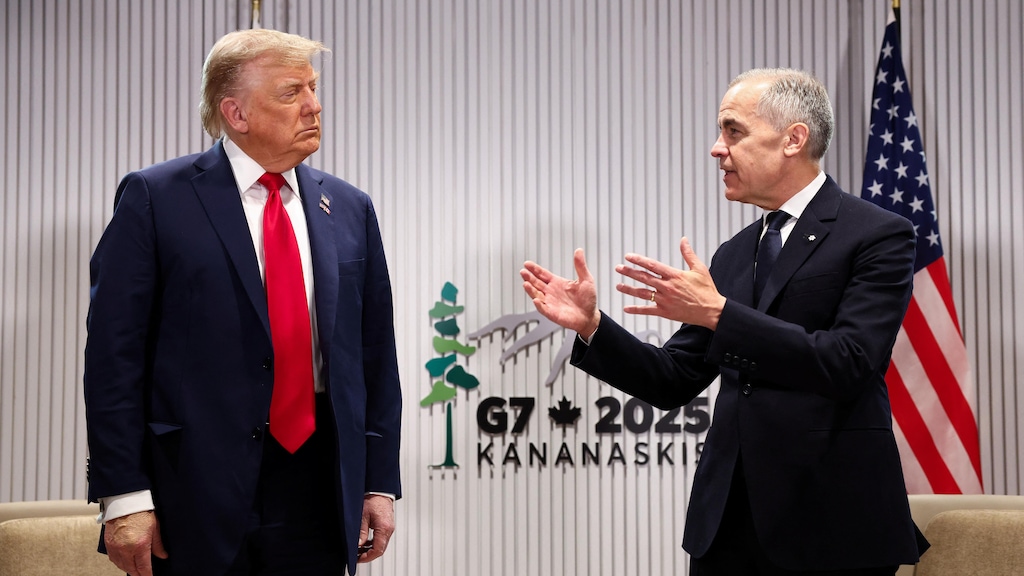
When Prime Minister Mark Carney ordered a review of the F-35 program in early 2025 amid escalating trade tensions with Washington, a door that once seemed firmly shut reopened.
Enter Saab.
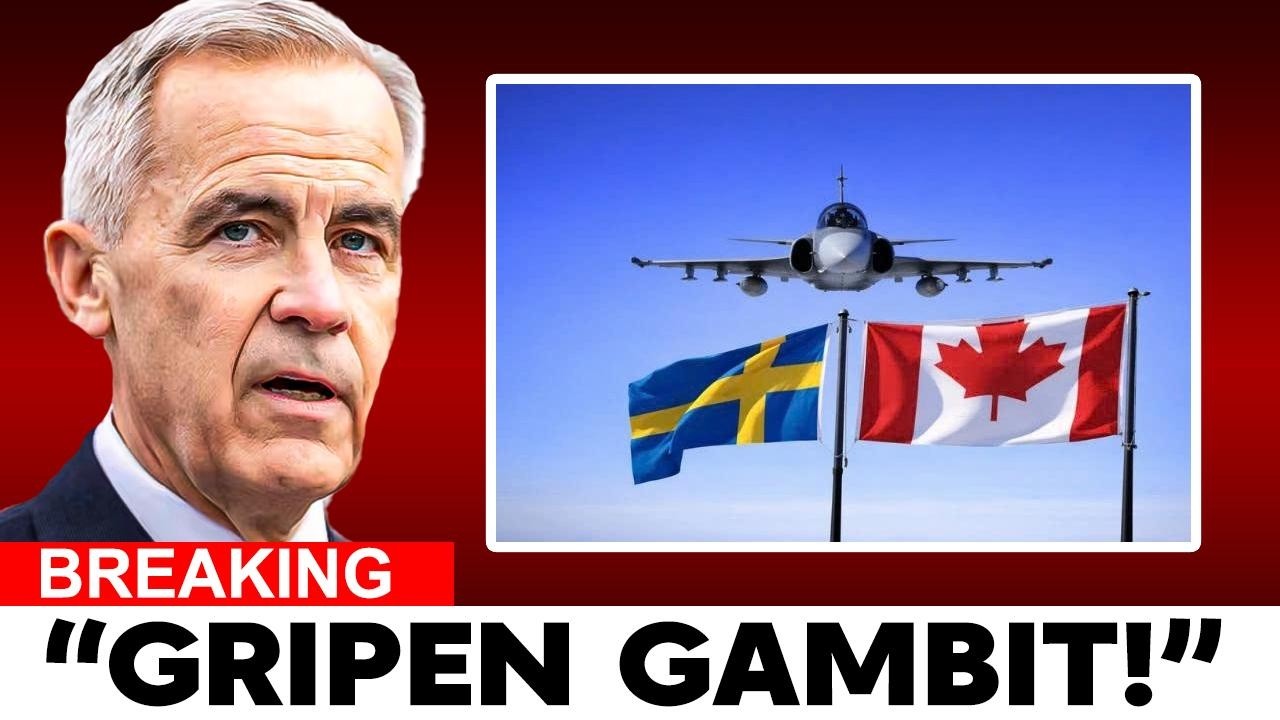
The Swedish aerospace firm returned with an updated proposal centered on the JAS 39 Gripen E, a 4.5-generation multirole fighter known for agility, cost efficiency and operational flexibility. But Saab’s offer extends well beyond aircraft specifications. The company has proposed final assembly in Canada in partnership with Bombardier, alongside significant technology transfer — enabling Canada to conduct upgrades, produce components domestically and maintain greater control over its fleet.
Such an arrangement, Saab says, could support as many as 10,000 manufacturing and research jobs.
The industrial appeal is tangible. Saab and Bombardier have already collaborated on the GlobalEye airborne early warning aircraft, demonstrating that cross-Atlantic aerospace production can function smoothly. For a country with a robust aerospace workforce and ambitions to deepen its defense manufacturing base, domestic assembly of a frontline fighter represents more than symbolism.
Strategically, the Gripen offers attributes tailored to Canada’s geography. Designed during the Cold War for Sweden’s dispersed defense strategy, the aircraft can operate from shorter runways and even reinforced highways — a feature attractive for a nation whose northern airfields are often remote and exposed to harsh Arctic conditions.
The debate intensified further when Sweden signaled potential large-scale Gripen sales to Ukraine. If Canada were to host a production line, it could supply both its own fleet and potentially contribute to European security efforts, tying Canadian industry directly to NATO’s eastern flank at a pivotal moment.
Washington has not remained silent. The U.S. ambassador to Canada publicly suggested that reducing the F-35 order could affect NORAD interoperability, raising questions about continental air defense coordination. Critics in Ottawa described the remarks as political pressure, while others underscored that shared airspace defense has linked the two countries since 1957.
Public opinion appears to be shifting. A late-2025 survey found that a substantial majority of Canadians favored at least incorporating the Gripen into the Royal Canadian Air Force, whether as a replacement or part of a mixed fleet. While polling does not dictate procurement decisions, it shapes the political environment in which they are made.
Complicating matters further is Canada’s broader recalibration of global trade relationships. Prime Minister Carney’s outreach to Beijing secured the suspension of several punitive Chinese tariffs on Canadian agricultural exports, including canola meal and seafood. At the same time, Ottawa pledged to admit thousands of Chinese electric vehicles under favorable tariff rates, signaling a willingness to diversify economic partnerships beyond the United States.
In that context, the fighter jet decision transcends aviation. It has become a test case for how Canada balances alliance commitments with economic autonomy.
Proceeding fully with the F-35 reinforces deep integration with U.S. defense architecture and preserves seamless NATO interoperability. Pivoting toward the Gripen could strengthen domestic industry and reduce reliance on U.S.-controlled systems, but risks friction within alliance structures increasingly standardized around the F-35 platform.
There is no cost-free path. One choice prioritizes strategic cohesion with a superpower neighbor. The other emphasizes industrial leverage and sovereign flexibility in a volatile geopolitical climate.
As Ottawa weighs billions in expenditures against questions of independence, the outcome will reverberate beyond the Royal Canadian Air Force. Middle powers around the world are watching closely.
In an era when software ecosystems and supply chains carry as much strategic weight as engines and airframes, Canada’s fighter jet decision may ultimately define not only how it patrols its skies — but how it defines its place in an increasingly fragmented world order.