Senator Mark Kelly Sues Defense Secretary, Escalating Clash Over Military Speech and Civil-Military Boundaries

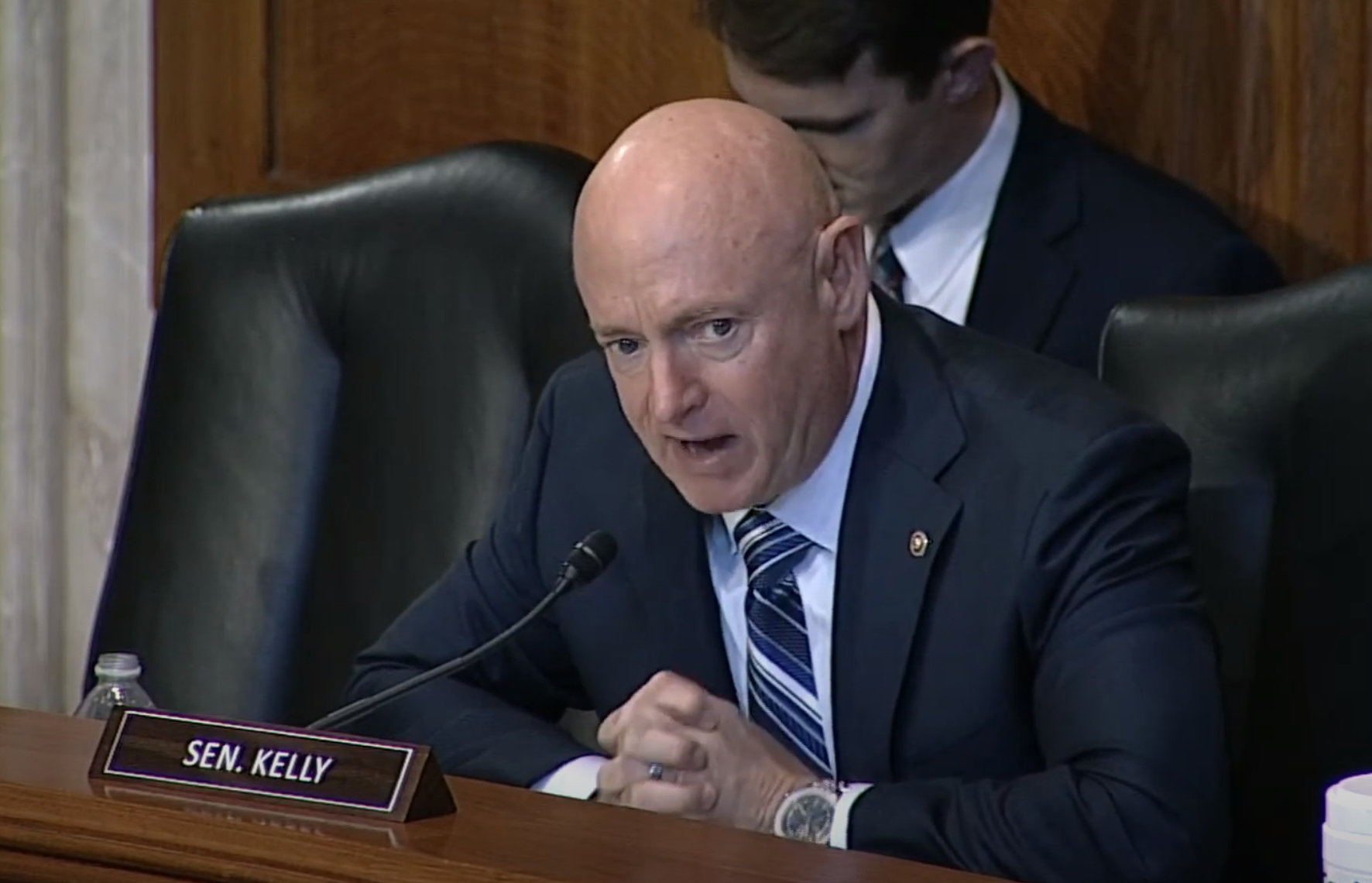
WASHINGTON — Senator Mark Kelly of Arizona filed a federal lawsuit on Monday against Defense Secretary Pete Hegseth, intensifying a rare and consequential confrontation between a sitting member of Congress and the Pentagon over free speech, military discipline and the constitutional limits of executive power.
The suit, filed in U.S. District Court for the District of Columbia, asks a federal judge to block what Mr. Kelly describes as an unlawful effort by the Defense Department to reopen administrative proceedings related to his retirement status and rank, actions he argues are retaliatory and unconstitutional.
At stake, Mr. Kelly and his allies say, is not only his own military record — earned over 25 years of service as a Navy pilot and astronaut — but the broader principle of whether retired service members and elected officials can be punished for expressing views critical of the administration.
“This is about protecting the rights of the very Americans who defended this country,” Mr. Kelly said in a statement announcing the lawsuit. “The idea that a secretary of defense can threaten rank, pay or honor years after service ends, simply because he dislikes what someone says, is incompatible with the Constitution.”
From Warning to Lawsuit
The dispute stems from a video Mr. Kelly released earlier this year addressing active-duty service members. In it, he reminded troops that they have not only the right but the legal obligation to refuse unlawful orders — a principle grounded in U.S. military law and reinforced since the Nuremberg trials after World War II.
Soon after, Defense Department officials under Mr. Hegseth signaled they were considering administrative action against Mr. Kelly, including a review of his retirement grade and a formal letter of censure. At various points, rhetoric surrounding the controversy escalated dramatically in online spaces aligned with the administration, with some commentators calling for extreme punishments — language later disavowed by Pentagon officials.
The department has since narrowed its actions to administrative reviews rather than criminal proceedings. But Mr. Kelly’s lawsuit argues that even these steps represent an abuse of power designed to intimidate critics.
Legal experts say the case could test the boundaries of civilian control of the military — and whether that control can be wielded against political dissent.
“Administrative processes can be used legitimately,” said one constitutional law scholar familiar with the matter. “But when they are selectively applied to punish speech, especially speech by an elected official, courts tend to look very closely.”
Chilling Effects Beyond One Senator
Veterans’ advocates argue that the Kelly case reflects a broader climate of intimidation affecting retired officers and former officials who have spoken out against the current administration.
Chris Goldsmith, an Army veteran and founder of the advocacy group Veterans Fighting Fascism, said in a recent interview that administrative punishments are often deployed when evidence for formal charges is lacking.
“You don’t get your day in court,” Mr. Goldsmith said. “These decisions are made internally, and when the secretary of defense has already signaled the outcome he wants, the process itself becomes the punishment.”
He and others say the threat of financial consequences — loss of retirement pay, reputational damage, diminished opportunities for board service or speaking engagements — has caused many former senior officers to retreat from public debate.
Several high-profile military leaders, including retired Gen. Mark Milley and former Defense Secretary Jim Mattis, warned publicly before the 2024 election about what they viewed as authoritarian tendencies within the Trump movement. Since then, many have largely withdrawn from public commentary.
“It’s not because they stopped caring,” Mr. Goldsmith said. “It’s because they’re afraid — and they have reason to be.”
Political Pressure as Strategy
The Kelly lawsuit also highlights a broader pattern described by critics: the use of investigations, threats of enforcement and public denunciations to impose personal costs on opponents, even when formal charges never materialize.
General Michael Flynn, a former national security adviser who remains influential in pro-Trump circles, has publicly called for investigations into administration critics, including Mr. Goldsmith himself. Such statements, while not official directives, can still carry consequences, former officials say, by encouraging scrutiny from agencies or emboldening harassment by private individuals.
Recent reporting has documented similar pressures faced by state and local officials. Gov. Tim Walz of Minnesota, a former congressman and Army National Guard veteran, recently announced he would not seek another term. While official explanations cited governance priorities, associates have pointed to escalating threats and harassment targeting his family.
“The personal cost is becoming unbearable for some people,” said a former Pentagon official who spoke on the condition of anonymity. “That’s not how a healthy democracy functions.”
Constitutional Questions Ahead

Mr. Kelly’s complaint asks the court to declare the Defense Department’s actions unlawful, vacate any related determinations, and permanently enjoin their enforcement. It also frames the case as a separation-of-powers issue, arguing that executive retaliation against a senator undermines Congress’s role as a co-equal branch.
“This lawsuit is as much about Congress as it is about me,” Mr. Kelly said. “If this stands, it sends a message that oversight comes with a price.”
The Defense Department declined to comment on pending litigation but has previously stated that it is acting within its authority to maintain good order and discipline and to prevent political influence within the armed forces.
Supporters of the department argue that even retired officers retain obligations to avoid statements that could be interpreted as encouraging disobedience. Mr. Kelly counters that his message did precisely the opposite: reinforcing lawful conduct.
A Precedent in the Making
The outcome of Kelly v. Hegseth could reverberate well beyond Washington. A ruling in favor of the senator could limit the Pentagon’s ability to use administrative mechanisms against critics. A ruling for the department could embolden future secretaries to exert similar pressure.
For now, the case underscores a growing tension in American public life: how to balance civilian control of the military with constitutional protections for speech — especially when those powers intersect with partisan politics.
“This isn’t about left or right,” Mr. Kelly said. “It’s about whether we still believe that no one is above the Constitution — and no one should be punished for telling the truth.”
As the court considers the case, veterans’ groups, civil liberties organizations and lawmakers on both sides of the aisle are watching closely, aware that the decision may help define the boundaries between dissent and discipline in a deeply polarized era.