TRUMP’S AGGRESSIVE ATTACKS ON CANADA AND MEXICO BACKFIRE AS BOTH NEIGHBORS OUTSMART HIM ECONOMICALLY

Donald Trump’s confrontational trade and tariff strategy toward Canada and Mexico is rapidly unraveling, producing the opposite of his intended effect as both countries emerge as clear economic winners heading into 2026. Rather than bending to pressure, Mexico and Canada—under the leadership of Claudia Sheinbaum and Mark Carney—have turned Trump’s economic aggression into a strategic advantage, strengthening their positions in global trade while exposing serious flaws in Trump’s economic playbook.
Mexico has been the most striking success story. Exports from Mexico to the United States surged more than 9% year-over-year, with non-auto goods jumping an extraordinary 17%. While Trump’s high tariffs crushed trade with China, Mexico stepped in to fill the gap, capturing market share once dominated by Chinese suppliers. With an effective tariff rate of just 4.3%—compared to China’s staggering 37.1%—Mexico became the obvious choice for U.S. companies desperate to keep shelves stocked and costs down. The result is nearly $500 billion in Mexican exports to the U.S. this year alone.
President Claudia Sheinbaum’s leadership has been central to this shift. A scientist by training and a disciplined strategist, she balanced firm resistance to U.S. interference with tactical cooperation where it benefited Mexico’s sovereignty and economy. By cracking down on cartel leadership, imposing a 25% tariff on Chinese cars to protect domestic manufacturing, and subtly but effectively standing her ground against Trump’s rhetoric, Sheinbaum positioned Mexico as both stable and indispensable. Her now-viral response to Trump’s attempt to rename the Gulf of Mexico underscored her confidence—and Mexico’s growing leverage.
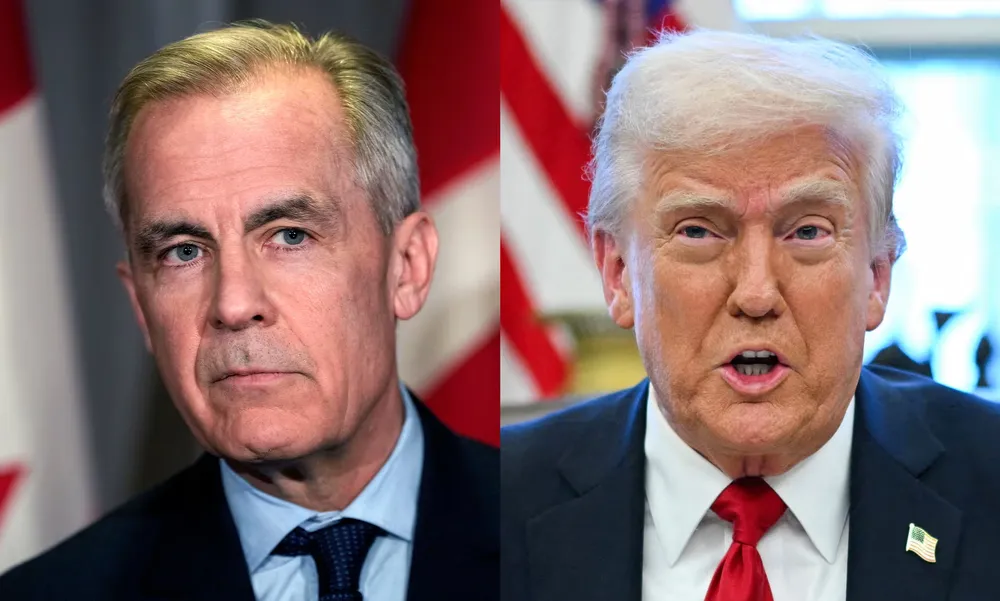
Canada’s challenge has been different but no less consequential. With roughly two-thirds of its economy tied to trade and nearly three-quarters of exports flowing to the United States, Trump’s erratic policies posed a serious threat. Enter Prime Minister Mark Carney, a former central banker who led both Canada’s and the UK’s central banks. Carney moved swiftly to pursue trade diversification, reducing Canada’s dependence on an unpredictable U.S. administration by expanding trade ties with India, China, and other underexplored markets.
Under Carney’s leadership, Canada has shifted its focus toward long-term resilience. Ministers are prioritizing trade over domestic political distractions, targeting “low-hanging fruit” in global markets Trump has alienated. Canada’s vast natural resources—especially energy critical to the AI-driven economy—have become a cornerstone of this strategy. Carney’s firm but diplomatic message is clear: Canada is not for sale, but it is open for serious partnerships built on mutual respect.
Together, Mexico and Canada offer two powerful case studies in how Trump’s aggressive economic nationalism has backfired. While Trump attempted to strong-arm allies through tariffs and insults, Sheinbaum and Carney responded with discipline, intelligence, and strategic patience. As the global economy recalibrates, it is increasingly clear that Trump’s approach weakened U.S. influence—while empowering the very neighbors he sought to dominate.