In recent months, the first signs of strain appeared at the edges of the map: a dip in Canadian weekend trips to Florida, fewer European tour buses idling near Times Square, softer hotel bookings in Las Vegas. Now, what began as a bilateral chill between Washington and Ottawa appears to have widened into something more consequential — a coordinated pullback by dozens of countries issuing updated travel advisories for the United States.
Governments including Canada, Germany, Denmark, Finland and the United Kingdom have revised guidance for citizens traveling to the United States, citing stricter immigration enforcement and heightened political tensions under President Donald Trump. Several Asian and Pacific nations, among them Japan and Australia, have also updated travel language in recent months. While advisory wording varies — some urge strict compliance with entry rules, others highlight policy changes affecting certain groups — the cumulative effect has been measurable.
Industry forecasts compiled by the U.S. Travel Association project a multibillion-dollar decline in international visitor spending in 2025. Independent analysts at Tourism Economics anticipate an 8 percent drop in overseas arrivals, reversing a post-pandemic recovery that had only recently regained momentum. In a global tourism market that has otherwise rebounded, the United States stands out as an outlier.
The shift did not emerge in a vacuum. Earlier this year, Canada — historically the largest source of international visitors to the United States — recorded a steep drop in cross-border travel. Statistics Canada reported double-digit declines in both air and land return trips compared with the previous year. Airlines quietly reduced U.S.-bound capacity while expanding routes to Mexico and Europe. What some policymakers in Washington initially described as a temporary reaction has proven more persistent.
For many countries, the updated advisories are procedural responses to evolving immigration enforcement policies, not explicit political rebukes. Yet tourism economists say perception matters as much as regulation. International travelers weigh risk, hospitality and diplomatic tone alongside cost and convenience. When multiple governments simultaneously caution citizens about entry requirements or enforcement climates, that caution can reshape booking decisions.
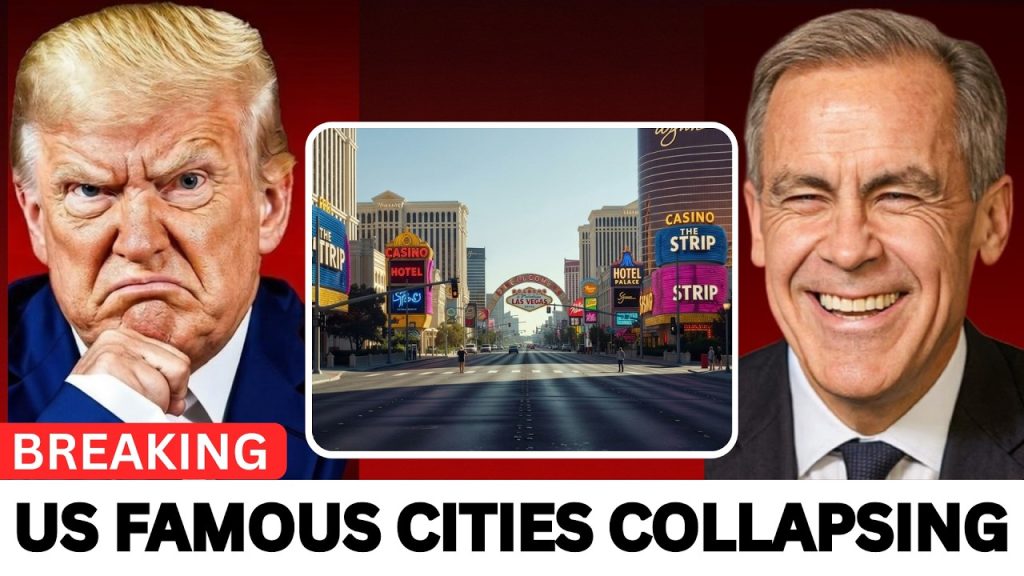
The impact is uneven but visible. In Las Vegas, union representatives for hospitality workers report softer occupancy rates and slower hiring. In New York, hotel revenue per available room has dipped modestly in neighborhoods reliant on overseas visitors. In Los Angeles and Miami, travel industry executives describe a broad-based cooling in long-haul bookings from Europe and Asia layered atop earlier Canadian declines.
What distinguishes the current moment from prior diplomatic disputes is scale. A single country’s advisory can be dismissed as symbolic. When advisories or cautionary updates span much of the European Union and key Pacific allies, the aggregate signal becomes harder to ignore. Each nation acts independently, but their conclusions converge: the United States feels less predictable to visit.
Analysts caution against overstating the permanence of the downturn. Mega-events such as the 2026 FIFA World Cup — which the United States will co-host — and the nation’s 250th anniversary celebrations are expected to produce short-term surges in arrivals. Major sporting events historically generate millions of incremental visits and billions in spending. The open question is whether temporary spikes can offset what may be a structural adjustment in traveler sentiment.
The deeper issue may not be advisories themselves but global confidence. Surveys such as Gallup’s World Poll have tracked fluctuations in approval of U.S. leadership over time. While approval ratings do not directly determine tourism flows, they contribute to the broader reputational climate that shapes business investment, academic exchange and discretionary travel.
Officials in Washington have defended current immigration policies as necessary for national security and border control. Supporters argue that clear enforcement reduces uncertainty and ensures orderly entry processes. Critics contend that the tone and execution risk alienating visitors who contribute significantly to local economies.
Tourism is a multiplier industry: spending at a hotel circulates to restaurants, transportation providers, retail shops and tax bases. A sustained 5 or 6 percent contraction in international arrivals can ripple through municipal budgets and employment figures. Cities most dependent on foreign travelers feel the effects first, but secondary impacts reach suppliers and service sectors far beyond coastal hubs.
For Canada, the episode underscores how consumer behavior can function as informal leverage. No official boycott was declared, yet aggregate decisions by travelers and airlines reshaped revenue projections across the border. Other governments appear to have drawn their own conclusions, responding to domestic concerns about traveler treatment rather than coordinating a formal bloc.
Whether the United States faces a temporary cooling or a longer reorientation will depend on policy stability and diplomatic tone in the months ahead. Tourism markets are elastic but sensitive. Travelers adapt quickly to perceived risk and just as quickly to renewed confidence.
The advisory updates may read like bureaucratic footnotes in foreign ministries. On the ground, they translate into quieter concourses and thinner reservation books. In a global economy where perception travels at the speed of a booking app, even subtle diplomatic signals can compound into tangible economic shifts — not through sanctions or tariffs, but through the collective calculus of millions of would-be visitors deciding where to spend their next vacation.