A Massive Protest in New York Over Stephen Colbert’s Cancellation
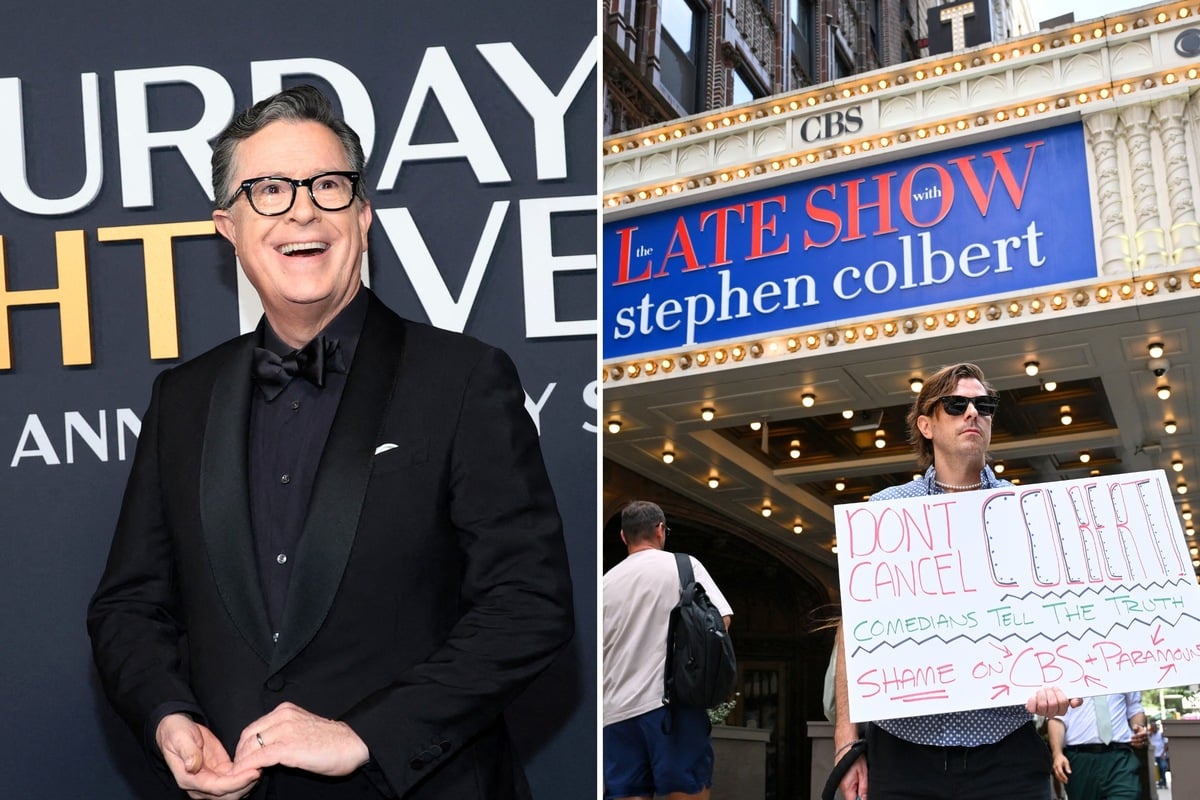
In a stunning display of public outcry, tens of thousands of New Yorkers flooded the streets outside the Ed Sullivan Theater on July 21, 2025, to protest the abrupt cancellation of The Late Show with Stephen Colbert by CBS. The announcement, made just days prior on July 17, sent shockwaves through the entertainment world, as Colbert’s top-rated late-night program was set to end in May 2026, concluding a 33-year franchise. The massive demonstration, dubbed “Colbert Stays! Trump Must Go!” by organizers, saw fans, celebrities, and political activists unite in a defiant stand against what many perceived as a politically motivated attack on free speech. Protesters not only voiced their support for Colbert but also took bold actions—staging sit-ins, projecting anti-CBS messages onto buildings, and launching a viral social media campaign—that have reverberated across the nation, signaling a broader fight for the future of independent media.
The protest’s scale was unprecedented for a television-related cause. Organizers estimated that over 30,000 people gathered in Midtown Manhattan, spilling from Broadway to nearby streets, with placards reading “Save Colbert!” and “CBS Sucks!” Videos shared on X captured a sea of demonstrators chanting, “We want truth!” while others held signs with the number “8647,” a cryptic reference to anti-Trump sentiment. The crowd included diverse voices—longtime fans, young activists, and even late-night hosts like Jimmy Fallon and Seth Meyers, who made surprise appearances to rally the crowd. The emotional core of the protest was Colbert’s role as a cultural touchstone, with his sharp political satire and fearless critiques of President Donald Trump resonating deeply in a polarized climate. For many, his cancellation felt like an assault on free expression, especially given its timing.

The backdrop to the protest was CBS’s claim that the cancellation was “purely a financial decision” due to The Late Show losing tens of millions annually, a narrative met with skepticism. Reports from sources like The New York Times and CNN Business confirmed the show’s high production costs—over $100 million annually with a staff of 200—but its consistent ratings dominance, averaging 2.4 million viewers in 2025, undermined the financial excuse. The timing, just three days after Colbert called Paramount’s $16 million settlement with Trump over a 60 Minutes lawsuit a “big fat bribe,” fueled suspicions of political interference. Paramount, CBS’s parent company, is seeking Trump administration approval for an $8.4 billion merger with Skydance Media, and critics, including Senators Adam Schiff and Elizabeth Warren, demanded transparency, questioning if the cancellation was a concession to curry favor.

Protesters took dramatic steps to make their voices heard. A group of activists staged a sit-in outside the theater, vowing to remain until CBS issued a public explanation. Others used high-powered projectors to beam messages like “Colbert Speaks Truth” and “Paramount Bows to Trump” onto the theater’s facade and nearby buildings, creating a visual spectacle that dominated social media. A hashtag, #SaveLateNight, trended globally, with over 1.2 million posts on X amplifying the protest’s message. Fans also organized a boycott of CBS advertisers, targeting brands like AT&T and Pfizer, with early reports suggesting a 10% drop in ad engagement. The Writers Guild of America joined the fray, calling for a New York state investigation into potential bribery tied to the merger, echoing sentiments that Colbert’s outspoken criticism of Trump made him a target.
The protest wasn’t just about Colbert; it was a rallying cry for the embattled late-night genre. As The Washington Post noted, the decline of linear television—down to 59% of Americans watching in 2024—has made late-night shows like Colbert’s economic liabilities. Yet, protesters argued that these programs remain vital for cultural discourse, offering a shared space for satire and truth-telling. Demonstrators like Elizabeth Kott, a 48-year-old teacher, called the cancellation “a betrayal of democracy,” emphasizing Colbert’s role in challenging power. The presence of figures like Jamie Lee Curtis, who declared, “They’re trying to silence us, but we’ll get louder,” underscored the protest’s broader stakes.

Despite the passion, questions linger about the protest’s impact. CBS has stood firm, with executives like George Cheeks insisting the decision was financial, not political. The lack of concrete evidence tying the cancellation to Trump’s influence has led some, like Fox News’ Greg Gutfeld, to dismiss the uproar as overblown. Moreover, the logistics of sustaining such a large movement are daunting, with some X posts mocking the protesters’ fervor as “pathetic.” Still, the demonstration’s scale and creativity—especially the viral projections and social media blitz—have kept the pressure on CBS, with rumors swirling that Colbert may join CNN or another platform to continue his work.
The protest in New York was more than a reaction to a TV show’s end; it was a stand against perceived corporate capitulation and a defense of comedic voices in a fracturing media landscape. Whether it forces CBS to reconsider or propels Colbert to new heights, the movement has already reshaped the conversation, proving that tens of thousands will fight for the right to laugh, critique, and speak freely.