Canada’s Fighter Jet Dilemma: Independence or Integration in a Shifting Alliance
In the quiet corridors of defense policy in Ottawa, a debate once thought settled has quietly reopened. Canada’s plan to purchase 88 F-35 stealth fighters, a deal announced in 2022 and valued at roughly 19 billion Canadian dollars, is now being reassessed against a backdrop of rising costs, shifting geopolitics and questions about technological sovereignty.
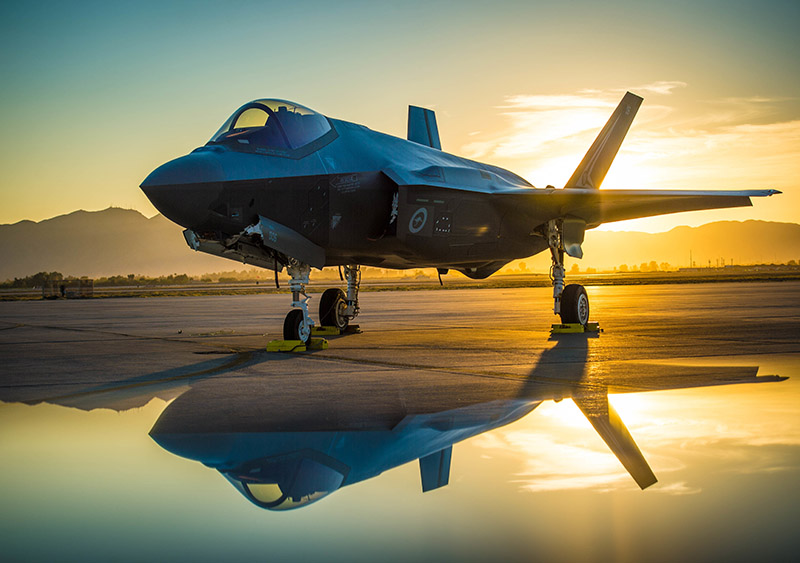
The F-35 program, led by Lockheed Martin, represents the cornerstone of Western air power in the 21st century. Designed as a fifth-generation fighter with advanced stealth, sensor fusion and networked warfare capabilities, the aircraft promises deep integration with allied military systems. For Canada, that integration is particularly important because of its role in NORAD, the joint U.S.–Canadian command responsible for defending North American airspace.
Yet the price of that integration has grown.
By mid-2025, Canada’s auditor general estimated the cost of the F-35 procurement at 27.7 billion Canadian dollars, a figure that could climb to roughly 33 billion when infrastructure, maintenance and weapons systems are fully accounted for. The rising costs alone might not have been enough to reopen the debate. But the political environment has changed.
Tensions between Canada and the United States during the Trump administration have complicated a relationship that had long been assumed to be stable in defense matters. Tariffs, disputes over economic policy and broader concerns about national sovereignty have prompted policymakers in Ottawa to reconsider how dependent Canada should be on American defense technology.
In that environment, another aircraft has quietly returned to the conversation: the Gripen E, produced by the Swedish aerospace company Saab.
At first glance, the Gripen E is not a direct equivalent to the F-35. It lacks the same level of stealth capability and does not belong to the fifth-generation category that has come to dominate modern fighter design. But the aircraft offers advantages that resonate with Canada’s unique geographic and strategic realities.
The Gripen was built around a different philosophy of air power. Swedish military doctrine has long assumed that large fixed air bases would be vulnerable in the early hours of a conflict. As a result, the aircraft was designed to operate from dispersed locations, including ordinary highway strips as short as 800 meters.
For Canada, with vast Arctic territories and limited military infrastructure in its northern regions, that capability is more than a technical curiosity. It addresses a real operational challenge: maintaining air patrols across thousands of kilometers of remote coastline and frozen terrain.
Cold-weather operations have also become part of the discussion. The F-35 has successfully undergone controlled testing in extremely low temperatures, including trials at the McKinley Climatic Laboratory in Florida where aircraft systems were tested down to –40 degrees Celsius. However, Pentagon assessments have noted that in real-world Arctic environments, certain battery and electronics systems encountered reliability issues that could limit mission readiness under extreme conditions.
None of this means the F-35 cannot operate in the Arctic. It can, and it already does in several northern deployments. But it raises questions about how consistently the aircraft can perform in Canada’s harshest environments.
The Gripen’s advocates also point to its modular design, which allows countries to modify avionics and software systems more easily than in the tightly controlled F-35 program. Under the F-35 structure, major software changes require coordination with Lockheed Martin and the multinational Joint Strike Fighter program.
Saab has emphasized a different model. The company has proposed assembling the aircraft in Canada, potentially creating a domestic production line and transferring certain technological capabilities to Canadian industry. Saab has suggested the arrangement could support roughly 10,000 jobs, though that estimate comes from the company itself and has not been independently verified.
Still, the broader appeal of the offer lies less in employment numbers and more in technological control. Access to source code, engineering data and the ability to maintain or upgrade aircraft domestically could give Canada a degree of autonomy rarely available in modern fighter procurement.
But the Gripen option has its own complications.
The current Gripen E uses the General Electric F414 engine, an American-made powerplant subject to U.S. export controls under the International Traffic in Arms Regulations. In practical terms, that means Washington retains veto authority over exports involving the aircraft.

Some analysts have speculated about a potential workaround: replacing the American engine with a European alternative such as the Rolls-Royce EJ200 or a derivative like the EJ230. Such a modification could theoretically place the aircraft outside U.S. jurisdiction.
However, that idea remains speculative. Re-engineering a fighter jet to accept a different engine would require structural redesign, extensive testing and years of certification work.
More importantly, Canada’s decision is not purely technological.
The F-35 ties Canada tightly into the defense architecture of its closest ally. Walking away from the program could raise difficult questions about interoperability within NORAD and the broader intelligence-sharing relationships that underpin North American security.
In other words, the choice facing Ottawa is not simply between two aircraft. It is between two models of security: one built on deep alliance integration and another that places greater emphasis on national autonomy.
Neither path is without cost. And as Canada weighs its options, the outcome will reveal much about how middle powers navigate an era when technological dependence and political independence increasingly collide.