The Iron Bypass: How Canada’s Direct Rail to Mexico Just Dissolved America’s Greatest Trade Lever
KANSAS CITY — For nearly a century, the geography of North American trade was defined by a singular, unyielding truth: if you wanted to move the bounty of the Canadian Prairies to the world, you had to pay the “American Toll.” Whether through the grain terminals of the Pacific Northwest or the sprawling ports of the Gulf Coast, Canadian exports were a captive audience for U.S. inspectors, U.S. fees, and—most crucially—U.S. political leverage.
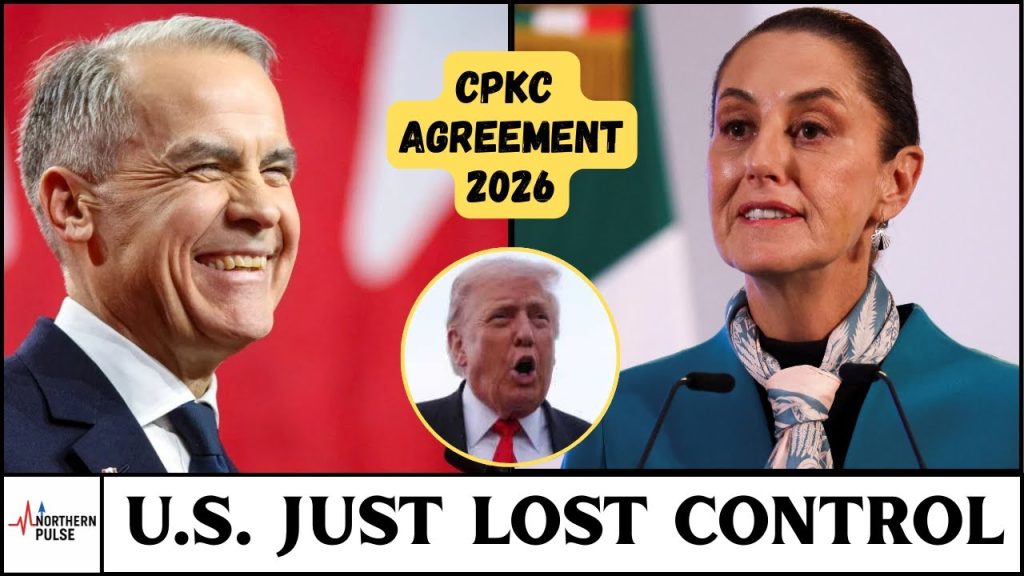
But in the spring of 2026, that century-old choke point has quietly evaporated. What began as a $31 billion corporate merger has transformed into a sovereign exit strategy. With the completion of a $500 million expansion of the Canadian Pacific Kansas City (CPKC) network, a single, uninterrupted steel artery now stretches from the wheat fields of Saskatchewan to the bakeries of Mexico City. For the first time in history, Canada has built a way around the United States while passing directly through it.
The Single-Line Revolution
The creation of CPKC in April 2023 was more than a logistical milestone; it was a structural earthquake. Spanning over 32,000 kilometers of track, it is the only single-line rail network on the continent. In the world of global trade, “single-line” is synonymous with “invulnerable.”
By removing the need for interchanges or operator handoffs at the border, Canada has eliminated the friction points where American policy often becomes a weapon. Grain loaded in Manitoba now rolls into Guadalajara under one bill of lading and one operator. There are no U.S. port delays to navigate, no terminal fees to absorb, and no “inspection slowdowns” that can be triggered by a late-night social media post from Washington.
The Collapse of Port Leverage
The impact on American infrastructure has been immediate and structural. Historically, the U.S. captured massive margins by handling the certification and shipping of Canadian value. Today, those volumes are vanishing.
By the end of the 2024-2025 crop year, CPKC moved a staggering 27 million metric tons of Canadian agricultural products directly to Mexico. Every ton that bypasses Seattle, Portland, or New Orleans represents a direct loss of American revenue and, more importantly, a loss of American oversight. Under the terms of the USMCA, these “in-transit” trains are effectively sovereign bubbles; they pass through U.S. territory like aircraft flying at 30,000 feet—present, but untouchable by domestic tariffs or regulatory whims.
Mexico’s Search for Certainty
The pivot is being met with open arms in Mexico City. For a nation of 130 million people, food security is not a political talking point—it is a survival mandate. Decades of reliance on U.S. suppliers have left Mexican buyers wary of the “uncertainty tax” that often accompanies American trade rhetoric.
In Canadian wheat, Mexico has found a premium, consistent partner that doesn’t threaten mid-contract tariffs. The direct rail corridor has turned what was once a logistical nightmare into a frictionless supply chain. From the Mexican perspective, the CPKC line is a risk-management miracle; from the Canadian perspective, it is a declaration of independence executed in diesel and steel.
The Trillion-Dollar Lock-In
Critics in Washington initially dismissed the rail pivot as a temporary workaround to the current political climate. But infrastructure operates on a different clock than diplomacy. The $500 million CPKC investment includes over 100 new Tier 4 locomotives and thousands of high-capacity hopper cars—assets designed to remain in service for 30 to 40 years.
“You don’t build a 3,000-mile direct artery for a single election cycle,” noted one trade analyst. “You build it for the next half-century.” As exporters sign long-term contracts and commercial teams specialize in this new “North-South” axis, the trade patterns are becoming irreversible. The relationships being forged today between Canadian producers and Mexican consumers are deepening into a bond that functions regardless of the mood in the Oval Office.
Sovereignty Without Shouting
The genius of the “Iron Bypass” lies in its quietude. While headlines focused on heated parliamentary exchanges and Davos speeches, Canada was engineering a physical reality that made those arguments moot. Leverage only exists when there is a choke point; by creating a bypass, Canada has made American pressure structurally irrelevant.
The lesson for 2026 is clear: In the 21st century, true sovereignty is not found in declarations or confrontations. It is found in routes that cannot be blocked. As the CPKC trains roll quietly through the American heartland without stopping, they carry a message that Washington is only now beginning to hear: The “American Toll” is no longer mandatory, and once a nation learns to operate without a gatekeeper, it never goes back to waiting for permission.