The Middle Power Axis: How a Quiet Australia-Canada Alignment is Redefining Global Power
CANBERRA / OTTAWA — For decades, the global hierarchy followed a predictable script: great powers dictated the terms, and middle-sized nations adapted. But in the spring of 2026, that script is being rewritten. What began as a series of “polite” speeches at Davos has crystallized into a seismic strategic pivot, as Australia and Canada move to forge a new axis of cooperation that bypasses traditional dependencies on Washington and Beijing.
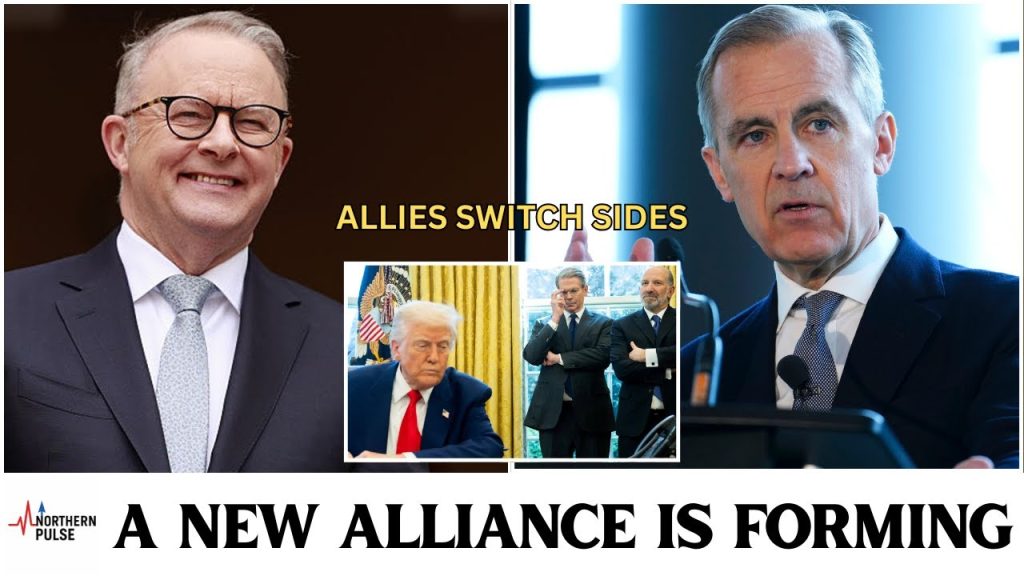
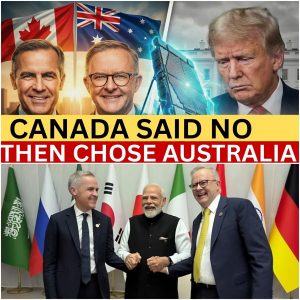
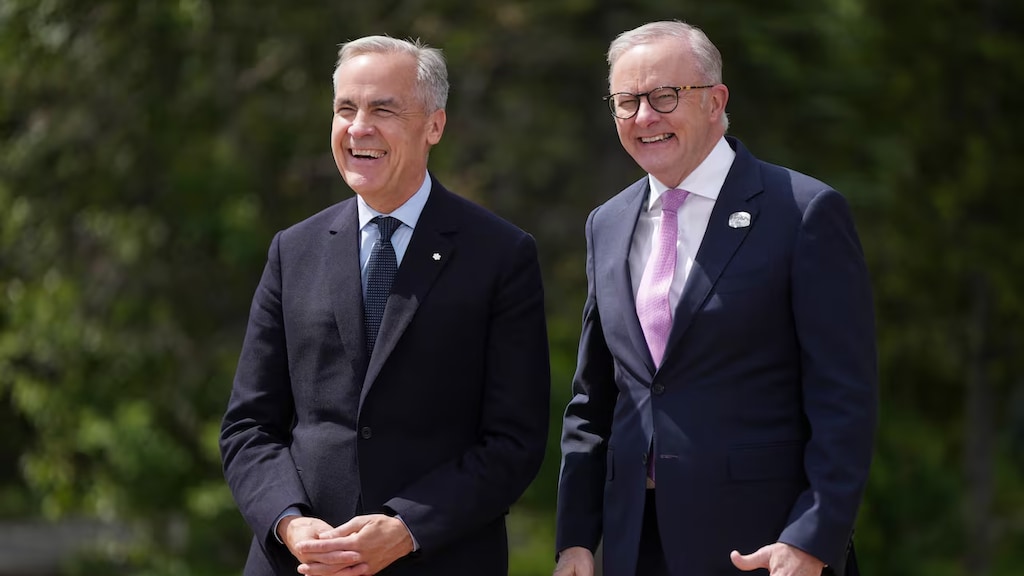
The catalyst for this shift arrived in the form of an extraordinary invitation: Australian Prime Minister Anthony Albanese has asked Canadian Prime Minister Mark Carney to address the Australian Parliament this month. In the world of high diplomacy, such an invitation is not a mere courtesy; it is a validation of a shared worldview. By stating simply, “I agree with him,” Albanese didn’t just praise Carney’s vision—he signaled that the “Carney Doctrine” of strategic autonomy is now the official policy of two of the world’s most significant resource economies.
The Minerals of Sovereignty
Beneath the diplomatic pleasantries lies a foundation of hard industrial reality. Three months ago, Ottawa and Canberra quietly signed a deepened cooperation agreement on critical minerals—the raw materials that power everything from electric vehicle batteries to advanced radar systems.
While the deal initially escaped major headlines, its strategic weight is now undeniable. China currently dominates the processing of these minerals, while the United States has increasingly used market access as a tool of political leverage. Together, Australia and Canada are constructing a “third option.” By aligning their supply chains, they are creating a redundancy that ensures their economic survival does not depend on the permission of a single foreign capital.
Breaking the Dependency Trap
For Canada, this alignment represents an “insurance policy” against its historic structural vulnerability. For over half a century, nearly three-quarters of Canadian exports have flowed south to the United States. This concentration created immense prosperity, but it also created an exposure that has been weaponized by successive U.S. administrations through tariff threats and sudden policy shifts.
Carney’s strategy is not a rejection of the American market, but a break from dependency on it. Australia serves as a signal to the world that Canada has options. When you add Mexico’s manufacturing base and the resource-rich economies of the Indo-Pacific into the equation, Canada begins to sit at the center of a diversified network rather than at the edge of a single U.S. supply chain.
The Rise of the ‘M50’?
Diplomatic circles are now buzzing with speculation about a broader coordination of middle-sized powers—a concept some analysts have loosely labeled the “M50.” While no formal charter exists, the mindset has clearly shifted. Middle powers like Brazil, Indonesia, South Korea, and South Africa share a common grievance: they are tired of being “on the menu” during great power confrontations.
A coordinated middle power framework could focus on practical, non-ideological goals: aligning mineral stocks, building alternative trade corridors, and reducing exposure to economic coercion. The G7 and G20 have often proven too fragmented to move decisively; a smaller, more focused alignment of middle powers could fill that gap.
The Domestic Connection
Critics at home have questioned whether this global focus comes at the expense of domestic priorities like the cost of living. However, the Carney administration has argued that international strategy is domestic policy. Diversifying trade protects Canadian jobs from sudden foreign tariffs, and critical mineral partnerships secure the long-term future of the resource sector.
As Carney prepares to take the floor in Canberra, the world is watching a rare moment of geopolitical maturation. The old framework, where middle powers waited for protection or permission, no longer fits the reality of 2026. Whether through the “M50” or a series of deep bilateral anchors, Australia and Canada are proving that sovereignty in the 21st century is built on coordination, not isolation.
The cooperation may appear technical on the surface, but the message hidden inside the exchange is clear: the era of the Great Power monopoly is over, and the middle powers are finally ready to lead.