Africa Weighs Boycott of 2026 World Cup as Trump Travel Ban Blocks Fans from Eight Qualifying Nations
JOHANNESBURG — The prospect of an African boycott of the 2026 FIFA World Cup has gained sudden momentum after President Donald Trump’s expanded travel restrictions barred citizens from eight of the continent’s nine qualifying teams from easily entering the United States, the tournament’s primary host. The policy, which now affects 39 countries and includes financial bonds of up to $15,000 and processing times stretching hundreds of days, has transformed what was meant to be a landmark celebration of football’s global reach into a flashpoint over dignity, equity and access.
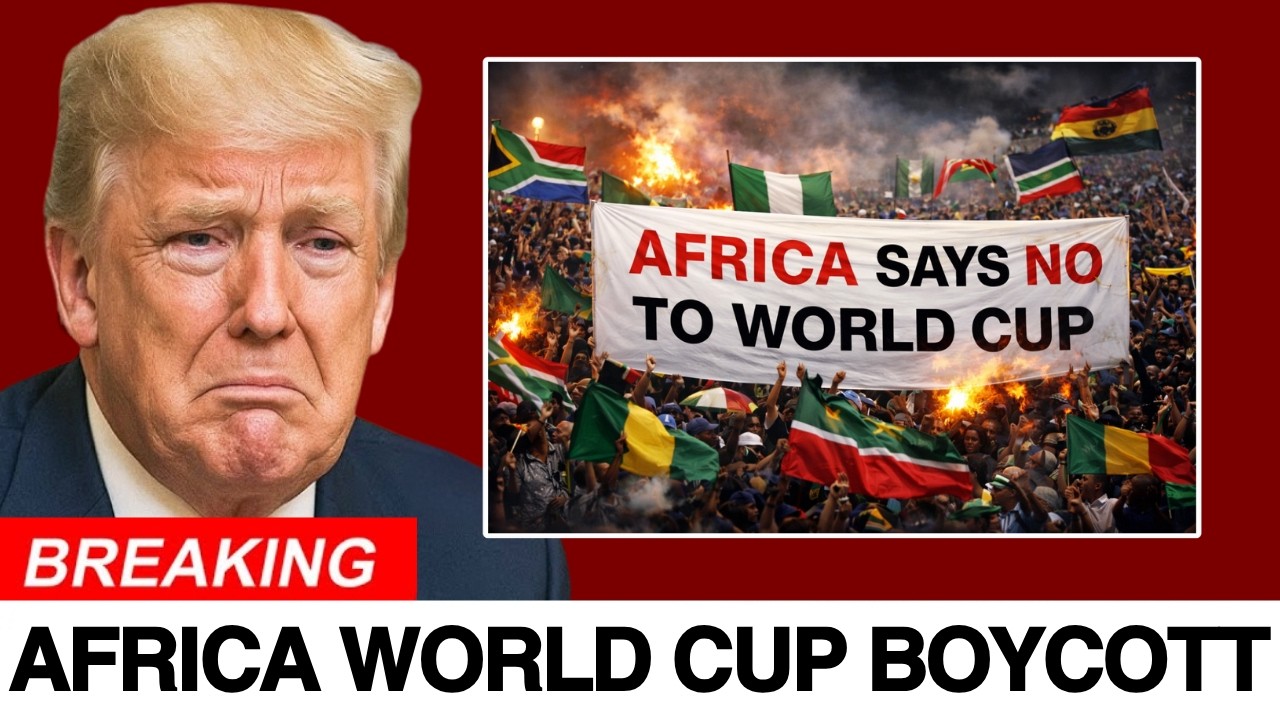
Senegal, Ivory Coast, Algeria, Morocco, Ghana, Egypt, Tunisia and Cape Verde all secured qualification for the expanded 48-team tournament, a historic high for African representation. Yet their fans face formidable barriers. Visa applicants must post substantial bonds with no guarantee of approval, even with tickets in hand. For many, the cost and uncertainty render travel impossible. A father in Dakar who saved for years to watch Senegal play may receive only a rejection notice — no explanation, no appeal, just a closed door.
The backlash has been swift and vocal. Julius Malema, leader of South Africa’s Economic Freedom Fighters, compared the restrictions to apartheid-era isolation and called for a boycott, declaring “Buffalo should not set foot in the United States.” Sepp Blatter, the former FIFA president who oversaw the organization for nearly two decades, urged fans to avoid matches on U.S. soil, arguing the host country’s policies are “tearing at the soul of the tournament.” British lawmakers have formally urged sports bodies to reconsider U.S. hosting rights, while Iran — whose delegation was denied visas for the official draw — threatened to boycott the ceremony entirely.

Behind closed doors, the Confederation of African Football has remained officially silent, but discussions in Cairo and Johannesburg are intensifying. The central question is whether Africa should walk away from its largest-ever World Cup presence or participate despite the exclusion of its supporters. The stakes are enormous. Prize money, sponsorships and broadcast rights make the tournament the single biggest financial event in a four-year cycle for African federations. Withdrawal would mean forfeiting those revenues and denying players a once-in-a-lifetime stage.
Yet the moral calculus is equally weighty. The World Cup has long sold itself as a festival for all humanity, a place where nationality, religion or income should not bar entry to the stands. If fans wearing Senegal, Morocco or Algeria jerseys are forced to watch from afar while their teams compete, that promise collapses. Sponsors, sensitive to brand risk, have reportedly begun shifting activations toward Canada and Mexico, where entry policies are seen as more open and predictable. Empty U.S. stadium sections tied to images of denied visas would be a public-relations disaster.
The crisis exposes deeper geopolitical currents. Africa in 2025 is increasingly assertive. The Sahel Alliance — Mali, Burkina Faso and Niger — has expelled Western military bases, signaling a rejection of external dominance. More nations have joined BRICS, the bloc reshaping global finance and trade. In this context, the travel ban is not merely bureaucratic; it is viewed as systemic injustice rooted in a postcolonial order where wealthy nations set rules and others must seek permission to participate.
Some analysts argue that presence itself is the strongest form of pressure. African teams competing under global television scrutiny could force the United States to confront its own policies in real time. A boycott, while symbolically potent, risks punishing players and federations that have already earned their place. The threat alone, however, carries leverage. Sources indicate FIFA is quietly pressing the U.S. State Department to ease visa restrictions, recognizing that a World Cup without Africa would be diminished to a regional event on a larger stage.
The tournament, co-hosted by the United States, Canada and Mexico from June 11 to July 19, 2026, is projected to inject $17.2 billion into the U.S. economy through tourism, hospitality and temporary jobs. That figure rests on the assumption that the world will come. When millions of African fans are stopped at the border, that assumption fractures. Sponsors do not want logos tied to exclusion; broadcasters do not want empty stands in prime-time slots.
The question now rests with Africa’s football leaders, players and supporters. A boycott would send an unmistakable message: dignity is non-negotiable. Participation under these conditions risks legitimizing a system that treats some fans as unwelcome. Either path carries profound consequences for the sport’s global promise.
As stadiums near completion and schedules finalize, the 2026 World Cup faces its first true test not on the pitch but at the visa window. Whether Africa chooses to walk away or to show up under unequal terms will shape not only this tournament but the credibility of football’s most sacred claim: that the game belongs to everyone.