TORONTO — Conservative Leader Pierre Poilievre delivered a direct and unambiguous message on Canadian sovereignty during his February 26, 2026, keynote address to the Economic Club of Canada, explicitly ruling out both absorption into the United States and any strategic reorientation toward a Beijing-centered global order.
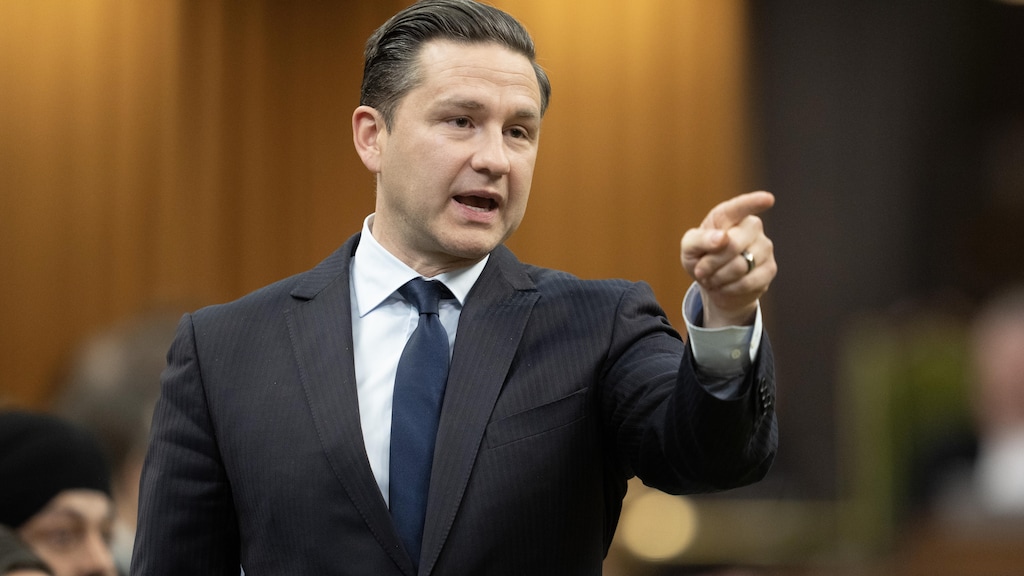
In one of the most quoted passages of the speech, Poilievre stated: “There is zero chance that Canada will ever become part of the United States. But neither will we replace our relationship with the American people, our closest neighbour and biggest customer, with a New World Order led by Beijing.”
The remarks were delivered against the backdrop of prolonged U.S. tariffs on Canadian goods — including 25% duties on steel, aluminum, softwood lumber, and automobiles — and persistent uncertainty surrounding the mandated 2026 review of the Canada-United States-Mexico Agreement (CUSMA). They also arrive amid ongoing domestic debate over the direction of Canada’s international economic strategy under Prime Minister Mark Carney’s minority Liberal government.
Poilievre’s statement on U.S. integration directly addressed months of speculation triggered by repeated public comments from U.S. President Donald Trump suggesting Canada could benefit from closer union or even statehood. While such remarks have been largely dismissed in Ottawa as rhetorical rather than policy-driven, they have nonetheless fueled nationalist sensitivities and prompted questions about how Canadian leaders should respond. Poilievre’s categorical rejection — “zero chance” — aimed to close that line of discussion decisively while maintaining a tone of realism about the indispensable nature of the bilateral economic relationship.
The second half of the formulation targeted what Poilievre portrayed as an emerging risk in Liberal foreign policy: an over-correction toward China that could diminish Canada’s long-term alignment with its primary trading partner. He referenced Prime Minister Carney’s January 2026 visit to Beijing, during which Carney spoke positively of a “new world order” shaped by predictable partnerships with China, contrasting that stability with volatility in U.S. relations. Poilievre argued that such language, combined with new bilateral agreements on select goods and public statements framing China as a necessary counterweight, risked eroding Canada’s negotiating leverage in North America.

Poilievre reminded listeners that Carney had previously described China as “the biggest threat” to Canada during his time outside elected office — a point he used to question consistency in the government’s current approach. He insisted that Canada’s prosperity and security remain “inseparable from a stable relationship with the United States,” urging policymakers to avoid actions that could lead to a “permanent rupture” in favour of alternative power centres.
Beyond the sovereignty declaration, the speech outlined a suite of practical measures intended to strengthen Canada’s hand in future negotiations. These included:
- Immediate pursuit of a renewed North American auto pact featuring tariff-free trade and shared rules of origin that exclude Chinese content;
- Securing permanent exemptions from U.S. “Buy America” provisions for Canadian suppliers;
- Accelerating domestic critical minerals development and establishing a strategic national reserve;
- Relaunching stalled energy infrastructure projects, including pipelines to non-U.S. markets;
- Creating an all-party parliamentary working group dedicated to CUSMA preparation;
- Reducing interprovincial trade barriers to improve internal economic efficiency.
Poilievre framed these steps as ways to build leverage through self-reliance rather than relying solely on diplomatic appeals or diversification promises that have yet to yield large-scale replacement markets for lost U.S. exports. He also called for modernization of Canada’s military capabilities, stronger intellectual property protections, and reforms to attract foreign direct investment in strategic sectors.
Commentators have noted that the address was carefully calibrated for a business-oriented audience, avoiding inflammatory language toward either Washington or Beijing while projecting clarity and resolve. Supporters argue it positions Poilievre as a leader capable of defending national interests without retreating into protectionism or unrealistic realignments. Critics, including some Liberal voices, contend that the speech largely echoes elements of the government’s own diversification agenda — such as outreach to India and Indo-Pacific partners — while offering few novel mechanisms to resolve the current tariff impasse.
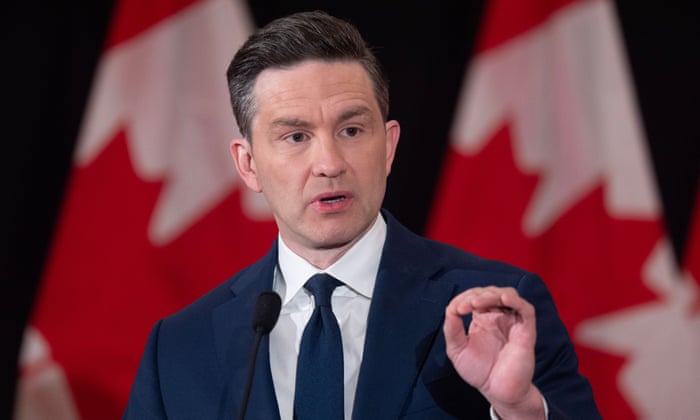
The speech forms part of Poilievre’s broader effort to redefine the Conservative brand following the party’s 2025 election defeat and his subsequent by-election return to Parliament from an Alberta riding. With economic pressures mounting — including job losses in tariff-affected sectors, persistent recession warnings, and ballooning federal deficits — the opposition has sought to contrast its approach of domestic-first pragmatism with what it describes as the government’s reliance on high-profile international gestures that have produced limited measurable results.
As Canada navigates the approaching CUSMA review, continued U.S. tariff enforcement, and evolving global supply-chain dynamics, Poilievre’s sovereignty statement has added a new dimension to the national conversation. It reinforces traditional North American priorities while signaling readiness to challenge perceived drifts in foreign policy — setting the stage for sharper distinctions between government and opposition visions in the months ahead.