The Sovereign Pivot: How Mark Carney’s ‘Australia Doctrine’ is Redefining Canadian Autonomy
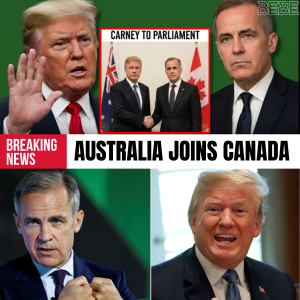
CANBERRA — In the span of just 48 hours, Canadian Prime Minister Mark Carney has traversed two continents, secured $5 billion in commercial agreements, and successfully dismantled a decades-old assumption about the relationship between Ottawa and Washington. Standing on the steps of the Australian Parliament—a venue rarely offered to foreign heads of government—Carney delivered a masterclass in what diplomatic insiders are now calling “Sovereign Confidence.”
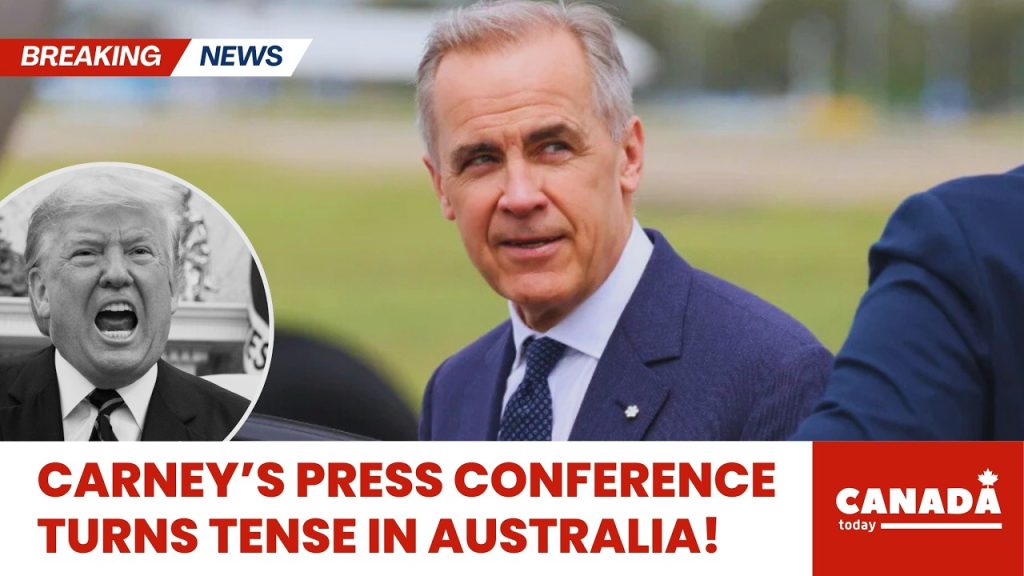
The moment that has since gone viral did not occur during his formal address to lawmakers, but rather during a tense exchange with a reporter eager to frame Canada’s foreign policy as a mere shadow of American decision-making. When pressed on Donald Trump’s reaction to Canada’s support for recent airstrikes in Iran, Carney did not hedge. He did not seek to reassure the White House or appease domestic critics. He simply stated: “I haven’t spoken to the President.”
Beyond the Blank Check
The dismissal was more than a personal slight; it was a structural pivot. By clarifying that Canada’s support for the targeted strikes was based on its own assessment of nuclear threats and regional terrorism, Carney explicitly rejected the “transactional” nature of mid-century diplomacy. “That is not a blank check,” Carney noted, his voice steady despite the baiting questions. “That is not us asking for something in exchange. That is just a straight-up position.”
This refusal to treat Canadian foreign policy as a currency to be traded for tariff relief has sent a clear message to the international community: Canada is no longer looking south for permission to act. Instead, it is looking east and west to diversify its leverage.
The Multi-Billion Dollar Diversification
The Prime Minister’s arrival in Australia follows a whirlwind mission to India, where he secured over $5 billion in commercial agreements, including a landmark $2.6 billion uranium supply deal. The mission focused heavily on what Carney calls “Economic Repositioning”—deepening ties in critical minerals, AI collaboration, and strategic energy cooperation with the world’s fastest-growing middle class.
The goal, according to those traveling with the PM, is to double two-way trade with India to $70 billion by 2030. By re-establishing national security cooperation with New Delhi and focusing on “implementation over headlines,” Carney is building an economic cushion that makes Trump’s tariff threats increasingly less potent.
Statesman Recognition in Canberra
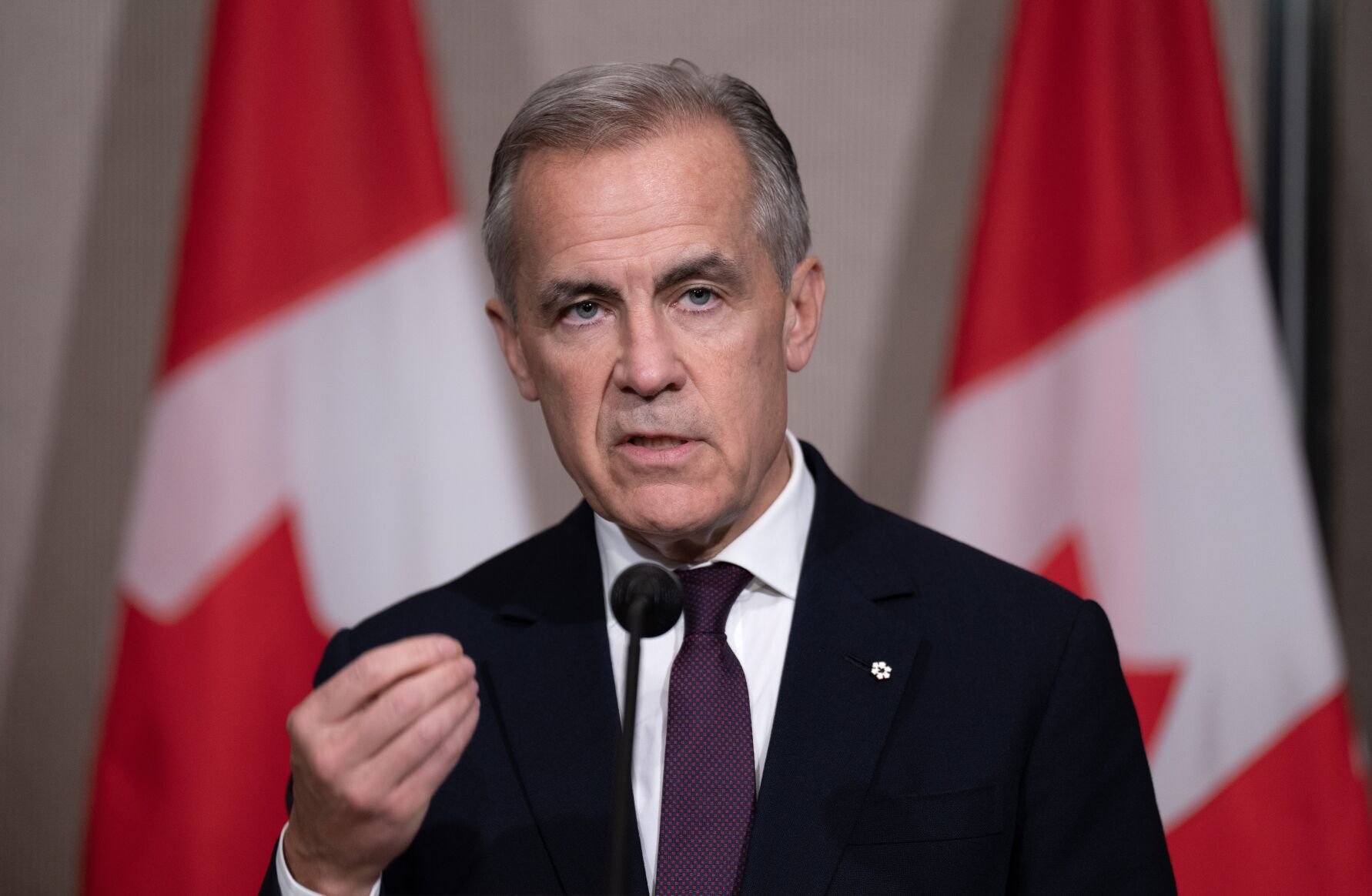
The significance of Carney’s invitation to address the Australian Parliament cannot be overstated. It is a rare honor that signals how Canada is currently being perceived on the global stage: as a reliable, strategic partner that offers stability in a world defined by American volatility.
In his meetings with Australian Prime Minister Anthony Albanese, the focus has remained on “natural partnerships” in defense and security. While Washington struggles with internal polarization, Ottawa and Canberra are quietly forging a new axis of middle-power cooperation. For Carney, the message is simple: Australia and Canada face identical pressures, and the solution lies in building deep, structural foundations that do not depend on the next election cycle in Washington.
A Calculated Reset
Critics in Ottawa have long argued that Canada cannot truly escape American gravity. However, Carney’s performance this week suggests he is successfully finding new currents. While Donald Trump uses social media to escalate rhetoric and apply pressure, Carney is using his time to sign contracts and expand alliances.
The “Australia Doctrine” appears to be an evolution of the “Carney Doctrine” seen earlier this year in Mumbai. It is an acknowledgment that power in the 21st century flows from talent, innovation, and strategic autonomy. By refusing to be cornered by a “Trump question,” Carney has effectively reset the narrative. He is no longer a leader navigating rough waters; he is a statesman reshaping the global map in real-time.

As the Prime Minister prepares to conclude his mission, the quiet in the media room following his exchange with the press serves as a testament to his strategy. The world is watching a confident, economically self-reliant Canada emerge—one that is no longer automatically dependent, and certainly no longer asking for permission.