A World Cup at the Crossroads: Travel Restrictions, Africa, and the Test of a Global Promise
By the time the final whistle blew on qualification, the scenes across Africa were ones of elation. In Dakar, in Abidjan, in Algiers and Accra, fans poured into the streets. For many nations, the 2026 FIFA World Cup — the first to expand to 48 teams — was not merely a tournament. It was a generational milestone, a signal that global football’s grandest stage was finally widening.
Now, as President ŤRUMP’s administration expands travel restrictions to more than three dozen countries, that sense of anticipation has given way to uncertainty.
Eight of the nine African nations that secured qualification — including Senegal, Ivory Coast, Algeria, Morocco, Ghana, Egypt, Tunisia and Cape Verde — are from countries listed under the new restrictions or subject to heightened scrutiny. The measures do not formally bar national teams from competing. But they complicate, and in some cases may deter, the movement of fans, officials and extended delegations hoping to attend matches on American soil.
The World Cup, to be co-hosted by the United States, Canada and Mexico, was designed as a celebration of access. FIFA’s expansion to 48 teams was framed as an effort to democratize opportunity — particularly for Africa, which received an increased allocation of slots. The message was unmistakable: more nations, more representation, more voices in the global game.
Yet access to the field does not necessarily guarantee access to the stands.
Under current policy, visa applicants from several affected countries face extended processing times and, in some cases, additional documentation requirements. Immigration attorneys say wait periods for visitor visas in certain regions already stretch for months. While reports of mandatory financial bonds have circulated widely online, U.S. officials have not announced a blanket bond requirement tied specifically to World Cup travel. Still, the perception of prohibitive barriers has gained traction across African media and political circles.
In South Africa, Julius Malema, leader of the Economic Freedom Fighters, invoked the language of historical exclusion in criticizing Washington’s approach. Though his remarks were aimed at broader U.S. policy, they resonated within the sporting context. For many Africans, mobility has long been intertwined with questions of sovereignty and dignity.
The debate has reached European capitals as well. Members of the British Parliament have publicly questioned whether global sporting bodies should reassess hosting frameworks when geopolitical tensions threaten inclusivity. Meanwhile, in Zurich, officials at FIFA have privately acknowledged the sensitivity of the moment. A World Cup overshadowed by images of denied visas would challenge the tournament’s carefully cultivated identity as a borderless festival.
The economic stakes are substantial. Analysts project that the 2026 tournament could generate more than $17 billion in economic activity across host cities, from New York City to Los Angeles, Dallas and Miami. Hotels, airlines and local businesses have invested accordingly. Corporate sponsors, ever attuned to reputational risk, are monitoring public sentiment. A tournament framed by controversy rather than celebration would test the resilience of even football’s most lucrative partnerships.

Yet the larger question is not financial. It is philosophical.
For nearly a century, the World Cup has rested on an implicit promise: that sport can transcend politics, even when it cannot escape it. The presence of African teams — and, crucially, their supporters — is central to that narrative. The vibrancy of Moroccan fans in Qatar in 2022, the Senegalese drumming sections in previous tournaments, the sea of Egyptian flags — these are not peripheral details. They are the texture of the event itself.
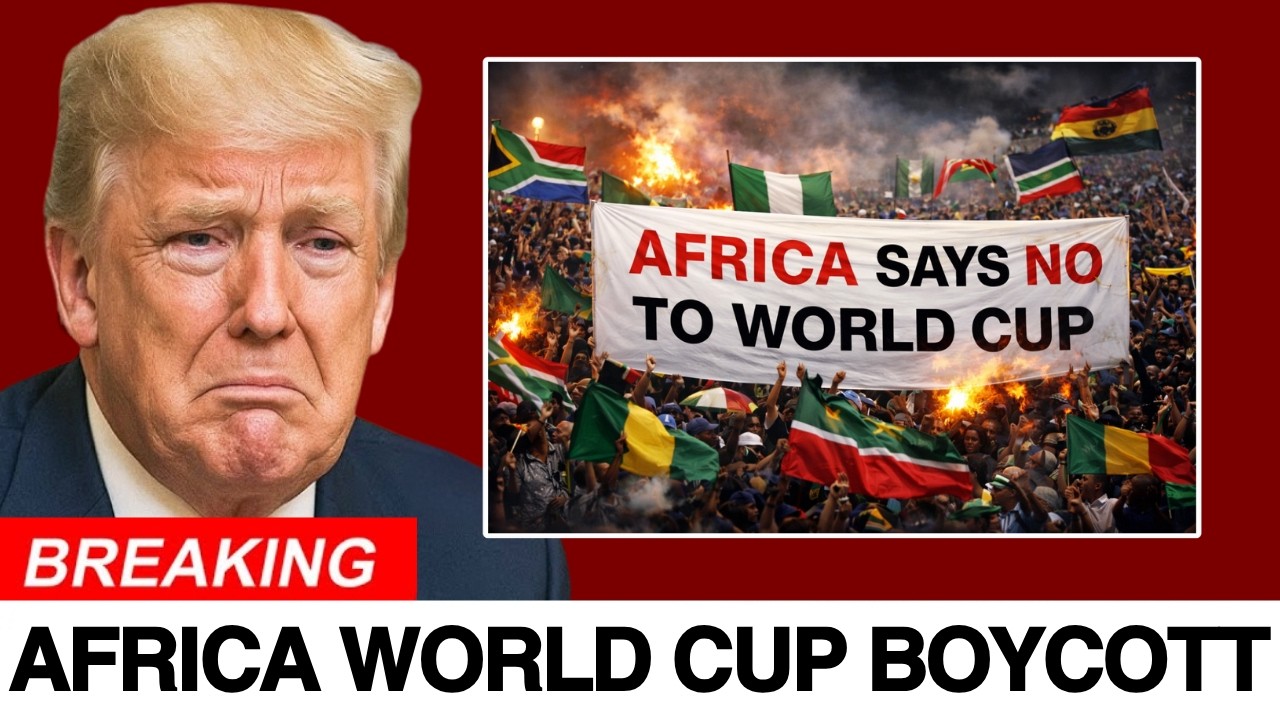
At the same time, calls for an African boycott face daunting realities. Participation in the World Cup delivers transformative revenue to national federations. Prize money, broadcast exposure and sponsorship contracts often fund youth development programs for years. For players, qualification represents the culmination of lifelong ambition. To withdraw voluntarily would be an extraordinary act of collective sacrifice.
Some analysts argue that visibility, not absence, may be the more potent statement. An African presence under the glare of global television could sharpen scrutiny of U.S. policy in ways a boycott cannot. Others counter that symbolic participation risks normalizing inequity.
President ŤRUMP’s supporters maintain that travel restrictions are rooted in national security considerations, not sporting calculus. They note that exemptions and case-by-case determinations remain possible, and that athletes and accredited personnel historically receive special accommodation for major events. The administration has not indicated that it intends to revisit the broader framework before 2026.
What remains is a tension between two truths: that sovereign nations control their borders, and that global events depend on permeability. The 2026 World Cup was conceived as the most expansive in history — geographically, commercially and culturally. Whether it fulfills that vision may hinge less on tactics and lineups than on paperwork and processing times.
In the end, the decision facing African federations is neither simple nor uniform. It touches economics, politics and identity at once. And as stadiums rise across North America, the unresolved question lingers: can the world’s game remain universal if the world itself cannot fully attend?