Global financial markets were jolted today after explosive headlines claimed that Canada had launched a “financial war” against former U.S. President Donald Trump, following reports that Canadian economic leadership — linked to prominent figure Mark Carney — was moving to reduce holdings of U.S. Treasury securities. The dramatic narrative quickly dominated international news cycles, sending investors scrambling for clarity amid rising geopolitical and economic tensions.
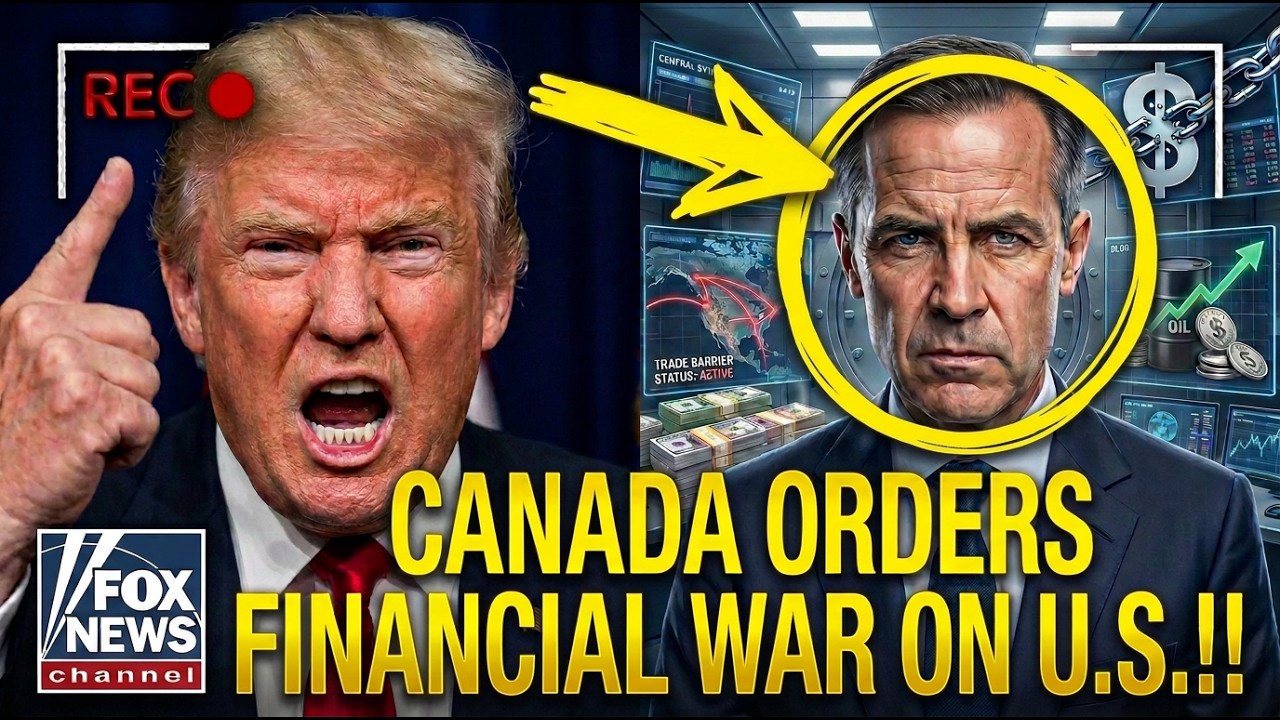
According to market analysts, speculation began after discussions surfaced about Canada reassessing its exposure to U.S. government debt as part of a broader portfolio diversification strategy. While no official confirmation framed the move as politically motivated, online commentary and partisan reactions amplified the story, portraying the shift as a direct financial challenge tied to Trump-era economic policies and ongoing political rivalries.
Canadian officials have largely avoided inflammatory language, emphasizing that sovereign investment decisions are typically guided by economic risk management rather than political retaliation. Experts note that central banks and national funds frequently rebalance assets in response to interest rate trends, inflation expectations, and global currency stability. Nevertheless, the timing of the reported move fueled speculation of deeper diplomatic friction between Ottawa and Washington.
Financial markets reacted swiftly to the headlines. Bond yields experienced temporary volatility, currency traders monitored fluctuations in the Canadian dollar, and investors sought safe-haven assets amid uncertainty. Economists cautioned, however, that even large institutional adjustments rarely trigger long-term market panic unless coordinated by multiple major economies simultaneously.

Mark Carney, widely respected in global finance circles for his previous roles in central banking and international economic policy, has often advocated for resilient financial systems and diversified reserve strategies. Analysts suggest that any reduction in U.S. Treasury holdings would likely reflect macroeconomic positioning rather than an outright confrontation with the United States or any individual political figure.
As the story continues to evolve, one key question remains: is this truly a geopolitical financial showdown, or simply routine economic management amplified by political narratives? Regardless of the answer, the episode highlights how interconnected global markets have become — where policy signals, political personalities, and investor psychology can rapidly transform financial decisions into worldwide headlines.