In the years after World War II, the United States did more than win a military victory. It built an architecture of alliances meant to prevent the kind of catastrophic conflict that had twice engulfed Europe. At the heart of that system was NATO, a pact grounded not only in mutual defense but in trust — the assumption that member states would treat one another’s sovereignty as inviolable.
That assumption is now being tested in ways that are subtle but significant.
When President Donald Trump first floated the idea of acquiring Greenland during his earlier term in office, the proposal was widely dismissed as a curiosity, even a provocation designed for leverage. Greenland, an autonomous territory within the Kingdom of Denmark, was not for sale. Danish officials said so clearly at the time. Greenland’s own leaders were equally unequivocal. The matter seemed closed.
Yet the episode did not simply fade. It lingered in European political memory, particularly because of what it suggested about America’s view of allied territory.
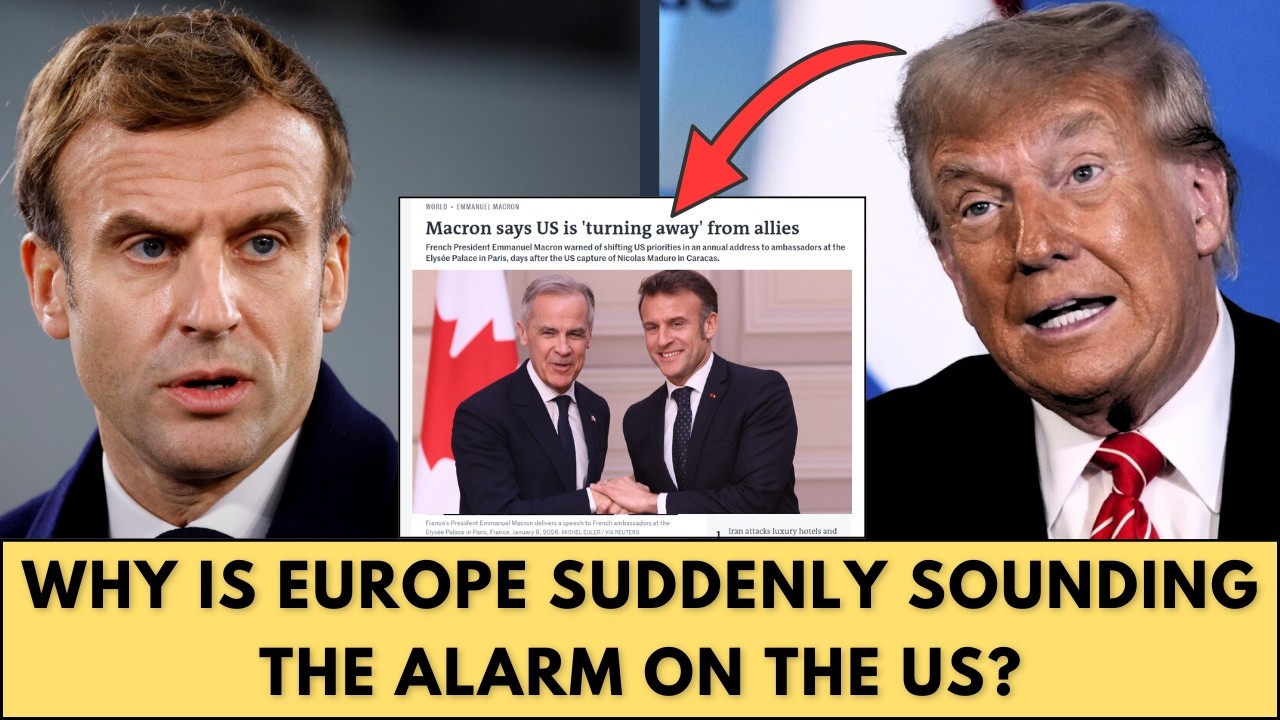
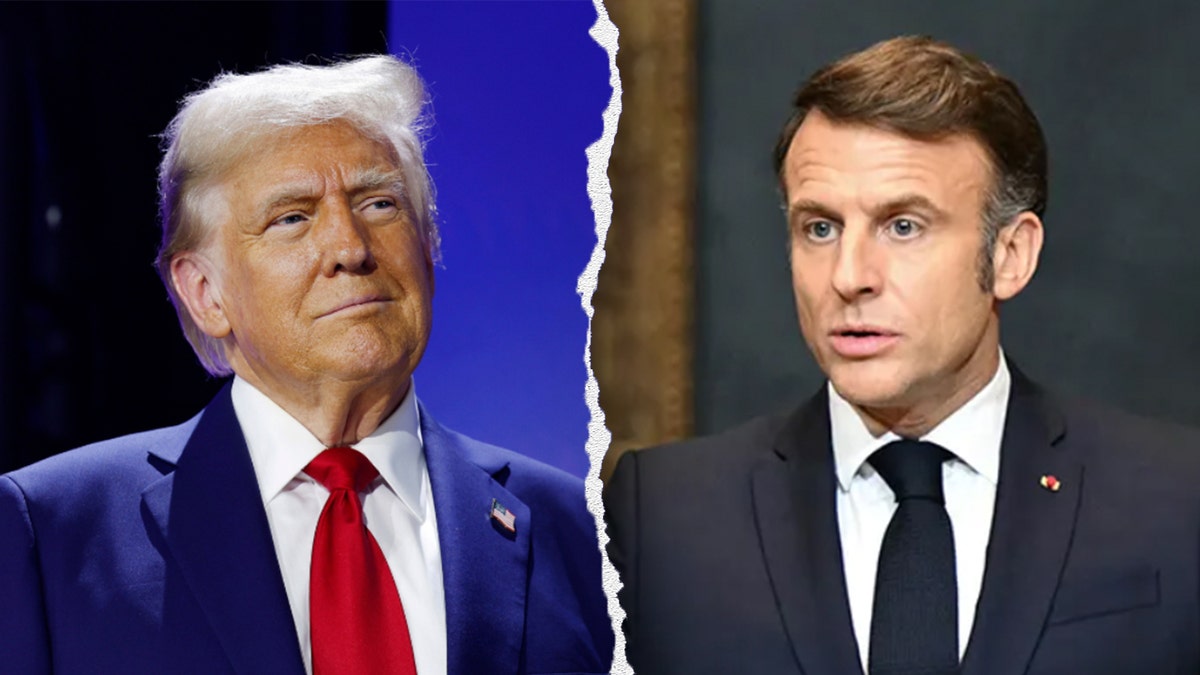
This week, President Emmanuel Macron of France addressed the broader implications. In remarks that were measured rather than incendiary, Mr. Macron suggested that the United States appeared to be drifting away from the alliance framework it once championed. Europe, he said, was watching Washington turn inward and, at times, sidestep the international norms that had long defined Western cooperation.
The comments were not framed as a rebuke of Donald Trump personally. But the context was unmistakable.
Greenland occupies an outsized place in strategic calculations. As Arctic ice recedes, new shipping lanes are becoming navigable for longer portions of the year. Beneath Greenland’s surface lie rare earth minerals critical to advanced technologies. Its geography offers military advantages in an era of renewed great-power competition. The United States already maintains a military presence there under long-standing agreements with Denmark.
For decades, that arrangement functioned without public friction. American access was secure. Danish sovereignty was respected. The partnership reflected NATO’s premise: collaboration without coercion.
What unsettled European capitals was not the practical feasibility of purchasing Greenland — a scenario most experts consider implausible — but the rhetoric surrounding it. When the idea was presented not merely as a hypothetical but as a serious ambition, it forced allies to confront an uncomfortable question: If the United States could speak of acquiring territory linked to a NATO member, what did that signal about the durability of shared assumptions?
Denmark’s history within NATO gives that question particular weight. After the Sept. 11 attacks, NATO invoked Article 5 for the first time, declaring that an attack on the United States was an attack on all members. Danish forces deployed to Afghanistan. Over the course of the war, Denmark lost 43 soldiers — a substantial sacrifice for a nation of fewer than six million people. On a per capita basis, it was among the highest contributors to the mission.
Those losses were understood in Copenhagen as part of an unambiguous commitment to collective defense.
Mr. Macron’s remarks tapped into a broader European debate that has been gathering momentum for several years: strategic autonomy. For decades, Europe relied heavily on American military leadership, intelligence capabilities and logistical support. The United States was the anchor of Western security. That reliance was not merely practical; it was psychological. American power was seen as predictable in its core commitments.
Now, European leaders increasingly speak of preparing for scenarios in which U.S. policy could shift abruptly with electoral cycles. They are exploring ways to strengthen independent defense industries, deepen intra-European military coordination and reduce vulnerabilities that stem from overdependence.
None of this amounts to a rupture. NATO remains intact. Joint exercises continue. American troops are stationed across Europe. Public opinion in many European countries still views the United States as an indispensable partner.
But alliances are not sustained by hardware alone. They are sustained by confidence — by the belief that shared principles will guide decisions even when interests diverge.
The postwar order was built on a simple premise: that democracies would resolve disputes within a framework of rules, not by testing the boundaries of each other’s sovereignty. When leaders begin to question whether that premise still holds, even rhetorically, the atmosphere changes.
Mr. Macron’s warning was calibrated rather than confrontational. It did not predict a collapse of transatlantic ties. Instead, it signaled a shift in mindset. Europe, he suggested, must be prepared for a world in which the United States is a powerful partner but not an unquestioned guarantor.
Greenland itself is unlikely to change hands. The legal and political barriers are formidable. Yet the episode matters precisely because it goes beyond territorial speculation. It touches on something more foundational: whether trust between allies is evolving.
In international politics, perception can be as consequential as policy. When close partners publicly reassess one another’s direction, the recalibration reverberates through defense planning, trade negotiations and diplomatic alignments.
The question facing the Atlantic alliance is not whether it can withstand a single controversy. It is whether it can preserve the habits of mutual restraint and reassurance that have underpinned it for more than seven decades.
If those habits erode, even gradually, the balance of power will shift accordingly — not through dramatic declarations, but through incremental adjustments that accumulate over time.
That is why this moment, understated as it may appear, carries significance beyond Greenland’s icy shores.