🔥 BREAKING: LUMBER COSTS SURGE IN SHARP MARKET SHIFT — CANADA QUIETLY GAINS THE UPPER HAND 🌲🇨🇦
A quiet pricing adjustment in Canada’s lumber sector has sent tremors through the American housing market, underscoring how economic leverage can travel through supply chains without the spectacle of a formal trade dispute.
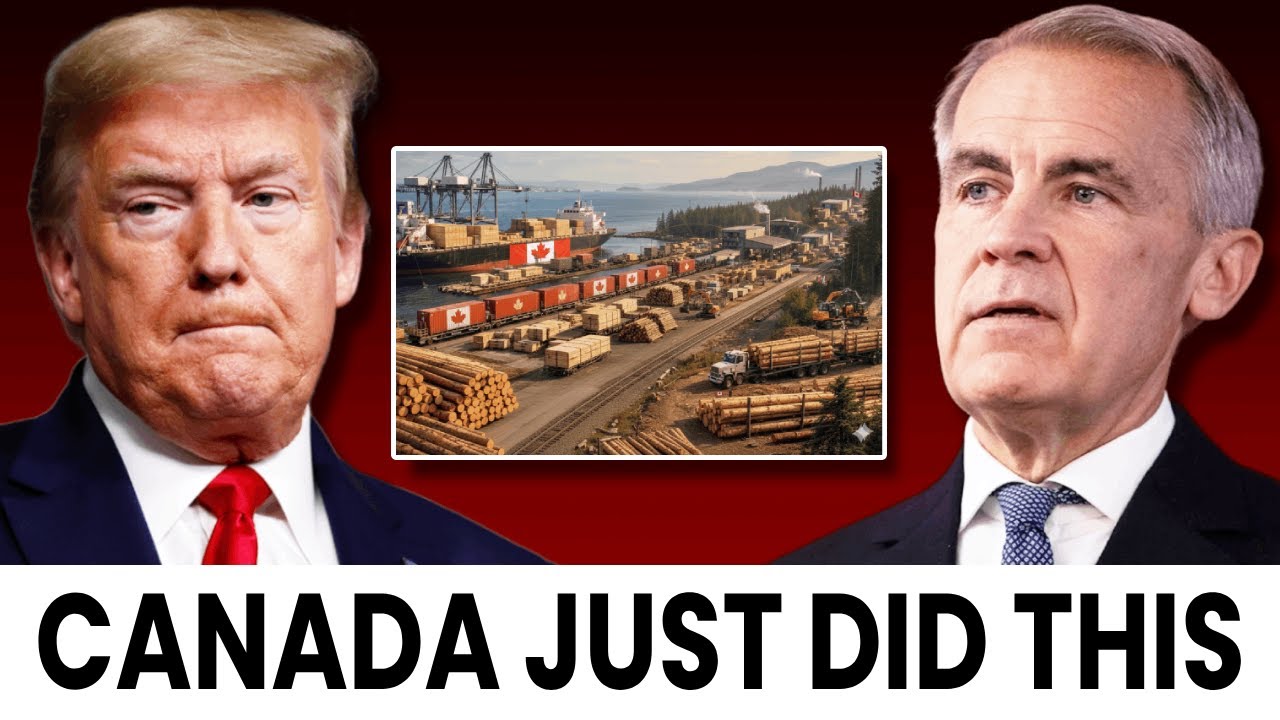
In recent weeks, Canadian producers altered the export price of softwood lumber shipped to the United States. There was no new tariff, no public retaliation and no emergency decree. Yet American homebuilders, suppliers and developers say the impact was immediate. Material costs rose, project budgets tightened and, in some regions, construction timelines slowed.
The shift comes against the backdrop of longstanding tensions over softwood lumber trade between Washington and Ottawa. The United States has periodically imposed duties on Canadian lumber, arguing that provincial forestry practices amount to unfair subsidies. Canada has rejected that characterization, and the dispute has moved through trade panels and negotiations for decades.
This time, however, the pressure point was not a tariff. It was price.
According to industry groups, Canadian lumber accounts for a significant share of the softwood used in U.S. residential construction, particularly in single-family homes. When the export price increases at the mill level, the added cost filters quickly through wholesalers and onto job sites. The National Association of Home Builders has previously estimated that lumber tariffs and related costs can add thousands of dollars to the price of a new home; builders say price swings alone can have a similar effect.
In an environment already defined by high mortgage rates, expensive land and labor shortages, even modest changes in material costs can alter the economics of a project. “When your margins are tight, volatility is the real problem,” said one developer in the Midwest who asked not to be named to discuss active contracts. “You can plan for high prices. It’s harder to plan for sudden changes.”
The distinction between tariffs and pricing strategy is not merely semantic. Tariffs are public policy tools, subject to political debate and legal challenge. They can be contested under trade agreements and, at times, rolled back through negotiation. Pricing decisions, by contrast, are generally treated as commercial behavior. While they may reflect broader strategic considerations, they are more difficult to challenge within existing trade frameworks.
By adjusting prices rather than imposing formal export restrictions, Canadian suppliers acted within market norms while shifting the cost burden onto American buyers. The effect was to place the United States in a reactive posture, with fewer immediate policy levers available.
The timing has amplified the consequences. Housing affordability remains a central concern for voters and policymakers alike. Elevated borrowing costs have already sidelined many first-time buyers, and builders have struggled to maintain supply in fast-growing metropolitan areas. When construction slows, the effects extend beyond buyers: subcontractors lose work, local suppliers see fewer orders and municipal governments collect less revenue from new development.
In regions recovering from natural disasters, where rebuilding depends heavily on lumber, the impact can be particularly acute. Public-sector housing programs and infrastructure initiatives are also sensitive to material costs. Sudden increases force agencies to revise budgets, scale back plans or delay timelines — decisions that can carry political repercussions.

For Canada, the move reflects a broader recognition of pricing power in resource markets. As a major exporter of timber, energy and other commodities, the country occupies a strategic position in North American supply chains. While Ottawa has not framed the adjustment as retaliation, it comes amid renewed friction over trade policy, including U.S. tariffs on Canadian goods in other sectors.
Trade experts caution against overstating the geopolitical dimension. Commodity prices fluctuate for many reasons, including shifts in global demand, currency movements and production costs. Canadian producers, like their American counterparts, operate in a competitive international marketplace.
Yet the episode highlights a structural reality: large consuming nations do not automatically control prices. The United States remains one of the world’s largest markets for construction materials, but reliance on imports creates exposure when external suppliers alter terms.
Domestic timber producers stand to gain from higher import prices, but capacity constraints and environmental regulations limit how quickly U.S. output can expand. Scaling up production would require years of investment in mills, transportation and workforce development. In the short term, substitution options are limited.
The broader lesson may extend beyond lumber. In an era when supply chains are tightly integrated and geopolitical tensions simmer, economic influence increasingly flows through control of inputs — raw materials, components and logistics — rather than through headline-grabbing tariffs alone. Pricing strategies can shift costs quietly and swiftly, testing the resilience of downstream industries.
Policymakers in Washington face a narrow corridor. Aggressive countermeasures risk escalating trade tensions with a close ally and raising costs further. Inaction, however, may reinforce perceptions of vulnerability in critical supply chains. Between those poles lies a more complex agenda: diversifying suppliers, encouraging domestic investment and deepening diplomatic coordination to reduce surprises.
For American homebuyers and builders, the debate is less abstract. Each fluctuation in lumber costs affects whether a project moves forward and at what price. As the housing market navigates a delicate balance between demand and affordability, the episode serves as a reminder that the materials framing the nation’s homes are also threads in a larger web of economic interdependence.
What began as a technical pricing change has evolved into a case study in modern trade dynamics. In a global economy where influence can be exerted without fanfare, resilience may depend less on reacting to the last shock and more on preparing for the next one.