Tensions between the United States and Canada sharply escalated this week after President Donald Trump publicly insulted Canadian Prime Minister Mark Carney and threatened sweeping new tariffs. In a post on Truth Social, Trump warned that if Canada moves forward with deeper trade cooperation with China, his administration would impose a 100% tariff on all Canadian goods entering the U.S. The remark instantly ignited fears of a renewed U.S.–Canada trade war and sent political shockwaves through both capitals.
The controversy intensified after Trump referred to Carney as “Governor Carney,” a dismissive jab that critics say undermines diplomatic norms between two long-standing allies. The comment came days after Carney delivered a high-profile speech at the World Economic Forum in Davos, Switzerland, where he warned that the global order is fracturing. In that speech, Carney argued that major powers are increasingly weaponizing economic integration, using tariffs, financial systems, and supply chains as geopolitical tools.
At the heart of the dispute is Canada’s growing effort to diversify its trade relationships. Ottawa recently struck an agreement with China to reduce tariffs on Chinese-made electric vehicles, a move analysts view as part of a broader strategy to lessen dependence on the United States. Canada currently sends approximately 75% of its exports south of the border, making it America’s second-largest trading partner. Any dramatic tariff escalation would therefore carry enormous economic consequences for industries on both sides.
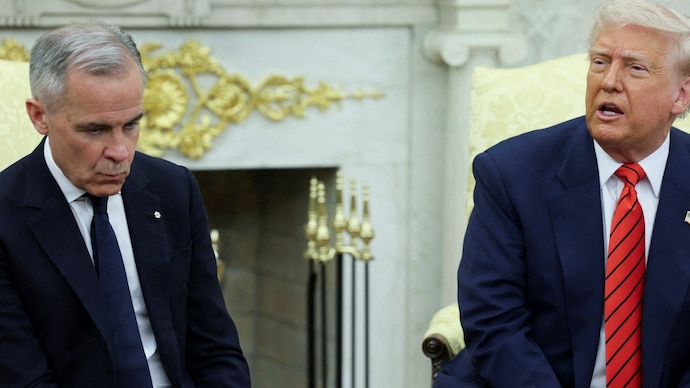
Trump’s warning signals a more aggressive stance toward allies perceived to be drifting toward Beijing. By framing potential Canada-China cooperation as a direct threat to American economic interests, the president appears to be leveraging trade policy as a deterrent. Supporters argue that the approach protects U.S. manufacturing and reinforces national sovereignty. Critics counter that it risks destabilizing North America’s tightly integrated supply chains and undermining decades of economic partnership.
The rhetoric also reflects broader geopolitical realignment pressures. As global competition between Washington and Beijing intensifies, middle powers like Canada face mounting pressure to choose sides or carefully balance their economic relationships. Carney’s Davos remarks about economic coercion now appear especially pointed in light of Trump’s tariff threat, reinforcing the perception that trade has become a frontline instrument of strategic rivalry.
Beyond trade tensions, Trump also made headlines by announcing he would skip the upcoming Super Bowl in Santa Clara, California, citing distance and dissatisfaction with the musical lineup. While seemingly unrelated, the comment underscores a broader pattern of blunt, headline-grabbing communication that continues to shape domestic politics and international diplomacy alike. For now, markets and policymakers are closely watching whether this tariff threat evolves into formal action — or becomes another flashpoint in an increasingly volatile U.S.–Canada relationship.