As Iran’s Security Forces Show Strains, the Regime Confronts a Moment of Uncertainty
By any measure, the opening weeks of 2026 have been among the most volatile in Iran in decades. Reports from human rights organizations, Western intelligence assessments and statements attributed to Iranian officials themselves suggest unusual stress fractures inside the country’s powerful security apparatus — long regarded as the ultimate guarantor of the Islamic Republic’s survival.
At the center of the scrutiny is the Islamic Revolutionary Guard Corps, or IRGC, the elite military force that answers directly to Iran’s supreme leader, Ayatollah Ali Khamenei. For nearly half a century, the IRGC has functioned not only as a military institution but also as a political and economic pillar of the state. Its cohesion has been widely viewed as essential to maintaining order during periods of unrest.
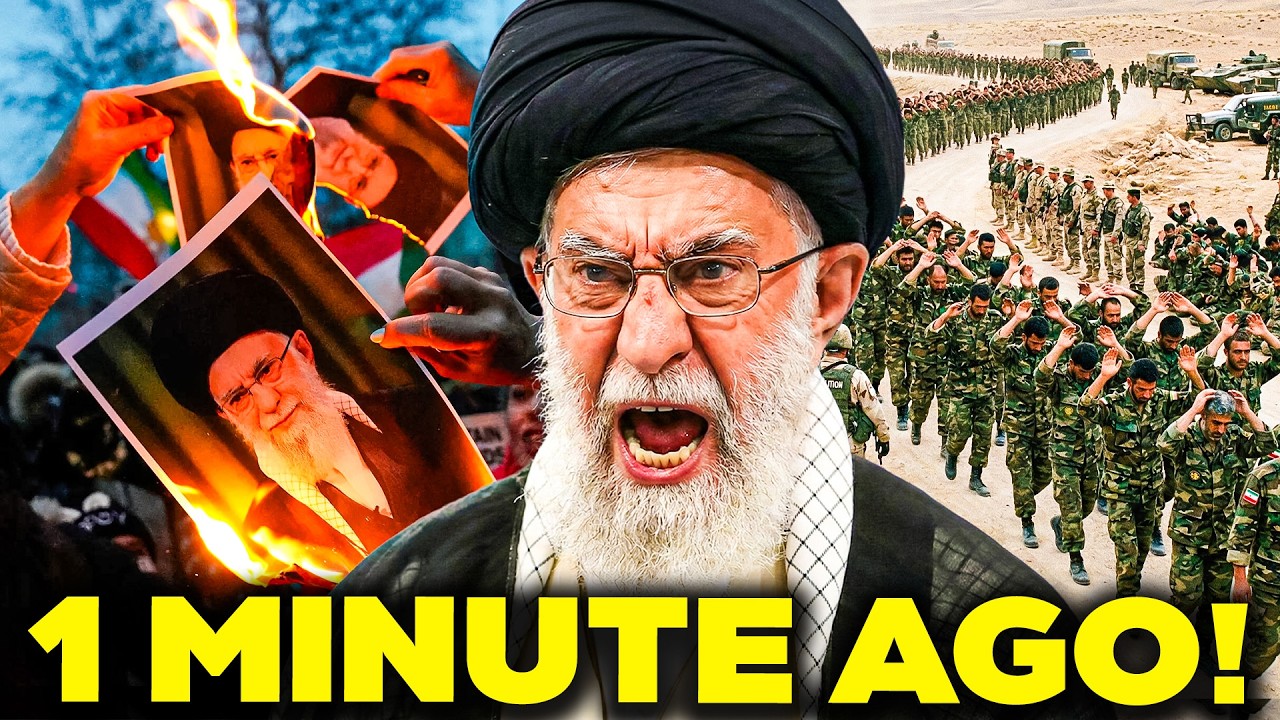
In early January, however, the Institute for the Study of War, citing reporting from a Norway-based human rights group, said that several members of Iran’s security forces had been arrested for refusing orders to fire on protesters. A Kurdish human rights organization reported similar detentions in Kermanshah, describing dozens of officers facing disciplinary action.
While the precise numbers remain difficult to verify independently, the allegations point to a sensitive issue for Tehran: the possibility that elements within its own enforcement structure are reluctant to carry out lethal orders against civilians. Even isolated cases of refusal can carry symbolic weight in a system built on strict command hierarchy.
On January 10, Iran’s IRGC-affiliated intelligence organization released a public statement acknowledging it was addressing “possible acts of abandonment” within its ranks. The language was measured, but the admission was notable. In previous protest cycles, officials have tended to attribute internal disruptions to foreign interference or misinformation campaigns. Acknowledging abandonment, even cautiously, signaled that authorities were aware of internal strains.
At the same time, reports circulated in Israeli and European media citing Western intelligence sources that hundreds of junior and mid-level officers had left their posts in January. Such claims have not been publicly confirmed by Iranian authorities, and independent verification remains challenging. Still, analysts note that defections — particularly among mid-tier commanders who oversee daily operations — can complicate coordinated responses to nationwide demonstrations.
Iran has faced waves of unrest before, most prominently during the 2022–2023 protests following the death of Mahsa Amini. But several analysts argue that the current cycle differs in its breadth and in the apparent toll on security personnel. According to opposition-linked outlets, more than 100 members of Iran’s security forces were killed during clashes in January — a figure that, if accurate, would exceed losses reported in previous protest movements.
Tehran has responded forcefully. Investigations by Iran International, a London-based Persian-language broadcaster critical of the government, have alleged that thousands of civilians were killed in a two-day crackdown in early January. The New York Times has not independently verified those figures, but Western officials acknowledge that the response was severe.
Some evidence suggests the government had prepared contingency plans well in advance. A classified directive from 2021, reported by opposition media, reportedly authorized broad use of force in the event of mass unrest. If authentic, such planning would underscore the leadership’s long-standing concern about domestic instability.
Meanwhile, diplomatic signals have fueled speculation about elite anxiety. Several Iranian diplomats abroad have reportedly made inquiries about asylum procedures in Europe. Muhammad Bagher Ghalibaf, the speaker of Iran’s parliament, was named in foreign reporting as having sought entry visas, though no official confirmation has emerged from Tehran.
British lawmaker Tom Tugendhat told Parliament in January that Russian cargo aircraft had been flying into Tehran as reports surfaced of gold leaving the country. Aviation tracking data show increased flights by Russian IL-76 transport planes between southern Russia and Iran in late 2025 and early 2026. Analysts caution that such movements could reflect routine military cooperation, but the juxtaposition of inbound supplies and outbound assets has prompted questions.
U.S. and British intelligence officials, speaking on condition of anonymity, have said that Iranian leadership has contingency plans for relocation should internal security deteriorate further. Similar escape scenarios have been reported in other conflict zones, though such plans are not uncommon for governments facing instability.
Complicating the picture is Iran’s strategic posture. Tehran continues to advance its nuclear enrichment program and maintains a large arsenal of ballistic missiles. American officials have reiterated that Iran must not acquire a nuclear weapon, while expressing a preference for diplomatic resolution. Secretary of State Marco Rubio recently told the Senate Foreign Relations Committee that Iran’s future leadership is uncertain, highlighting the risks posed by rapid internal change in a state with significant military capabilities.
Universities have become focal points for renewed protests. Demonstrations at Amir Kabir University and the University of Tehran in late February drew sustained security responses. In one widely circulated incident, a state television employee appeared to utter a slogan critical of the supreme leader during a live broadcast, leading to swift dismissal.
Whether these developments amount to temporary turbulence or a deeper structural crisis remains unclear. Iran’s leadership has weathered unrest before, often emerging more consolidated. Yet the confluence of reported defections, elite hedging and visible unrest has introduced an unusual degree of unpredictability.
For Washington and its allies, the uncertainty presents a strategic dilemma. Military assets remain positioned in the region, but policymakers must weigh the risks of action against the possibility that Iran’s internal dynamics could shift on their own. In Tehran, the calculus may be equally fraught: how to project strength without further straining the loyalty of the forces tasked with enforcing it.
What is evident is that Iran stands at a delicate juncture. Whether the current pressures will dissipate or deepen into a transformative moment for the Islamic Republic is a question that, for now, remains unresolved.