🔥 BREAKING: CANADA PUSHES BACK ON U.S. TRADE PRESSURE — OTTAWA TAKES A SURPRISING STAND 🇨🇦🇺🇸
When American trade officials delivered a list of demands to Canada ahead of the scheduled review of the United States-Mexico-Canada Agreement, the message was unmistakable: Accept sweeping changes or risk the return of punishing tariffs.
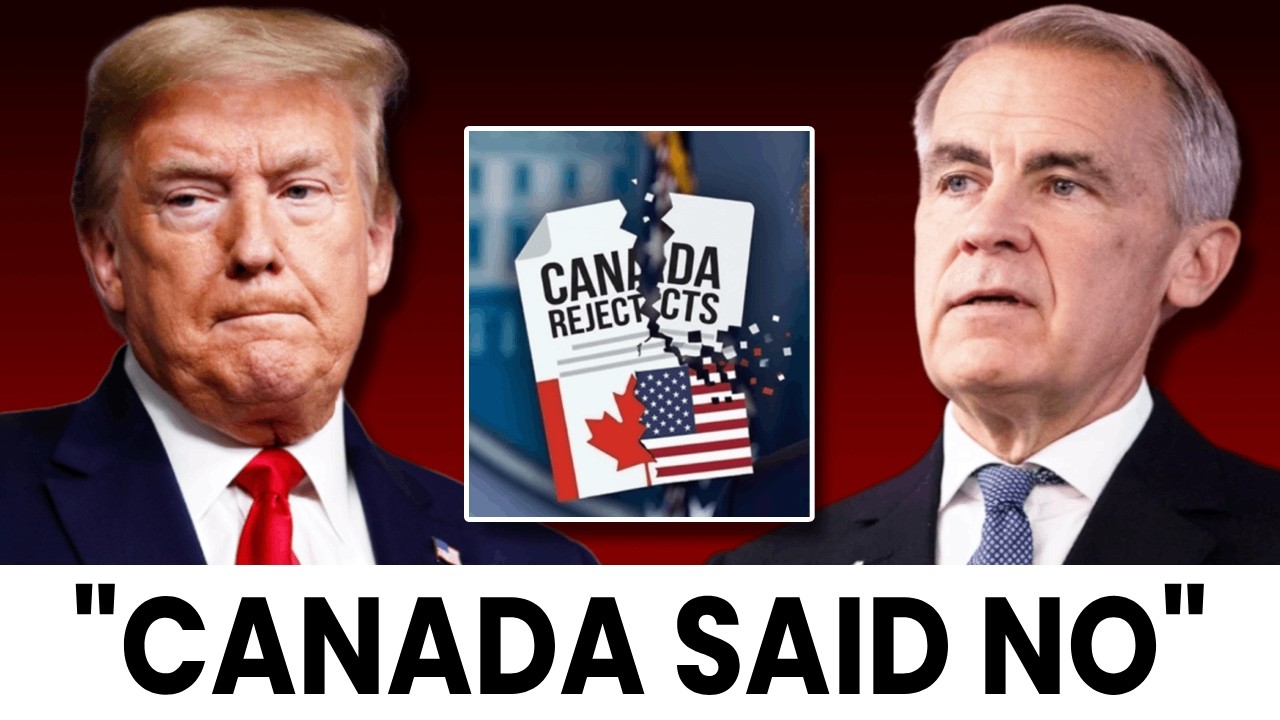
In Washington, the pact is known as the United States-Mexico-Canada Agreement. In Ottawa, it is often called CUSMA. Whatever the acronym, the agreement underpins more than $1 trillion in annual North American trade. Its review in 2026 was expected to be contentious. Few anticipated an ultimatum so expansive.
According to American officials, Canada must open its protected dairy market further to U.S. farmers, dismantle key digital media regulations, loosen provincial alcohol distribution rules, revise government procurement practices and adjust aspects of its energy framework. The U.S. trade representative, Jamieson Greer, framed the measures as necessary conditions for extending the agreement another 16 years.
Canada’s response was swift and unequivocal. Prime Minister Mark Carney rejected the demands outright, signaling that Ottawa would not reopen core elements of its economic and cultural policy under threat of tariffs on steel, aluminum, lumber, automobiles and energy.
From a distance, Canada’s refusal might look like brinkmanship by a smaller economy confronting a larger one. But the calculus in Ottawa appears grounded less in defiance than in arithmetic.
North America no longer functions as three discrete economies trading across borders. It operates as a deeply integrated production system. Supply chains for automobiles, aerospace equipment, agriculture and energy crisscross the continent, often sending components over borders multiple times before final assembly. Disrupting that network would not impose costs on one side alone.
Consider the auto industry, conspicuously absent from the American list of specific reform demands but central to the stakes. A vehicle assembled in Michigan may contain steel from Ontario, engines from Ohio and electronics that have moved back and forth across the border more than once. Industry executives have warned that broad tariffs or the collapse of the trade agreement could cost tens of billions of dollars and destabilize production schedules built over decades.
Energy integration is even more pronounced. The United States imports roughly four million barrels of Canadian crude oil each day, much of it heavy crude tailored to refineries along the Gulf Coast and in the Midwest. Retooling those facilities to process significantly different grades of oil would be expensive and time-consuming. In New England and parts of the Midwest, Canadian hydropower and natural gas help stabilize electricity grids and meet winter heating demand.
These flows run in both directions. Canada depends heavily on the American market, sending about three-quarters of its merchandise exports south. But American manufacturers, utilities and consumers rely on Canadian inputs that are not easily or cheaply replaced. The leverage is mutual.
The most politically sensitive dispute centers on dairy. For decades, American lawmakers have criticized Canada’s supply management system, which uses production quotas and high tariffs to stabilize domestic prices. U.S. officials argue that tariffs on certain dairy imports, which can exceed 200 percent beyond quota limits, unfairly restrict American farmers.
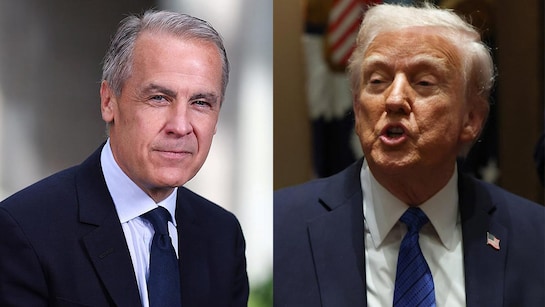
Canadian leaders counter that the United States heavily subsidizes its own agricultural sector through insurance programs and direct payments. The policy tools differ, but both countries protect farmers. Mr. Carney has declared supply management off limits, reinforcing that stance with legislation designed to shield the system from trade concessions. In Quebec, where dairy farming is both an economic pillar and a cultural touchstone, any retreat would carry steep political costs.
If dairy reflects a long-running agricultural grievance, the clash over digital policy represents a newer front. Washington has demanded that Canada repeal its Online Streaming Act and Online News Act. The streaming law requires platforms such as Netflix, Spotify and YouTube to invest a portion of their Canadian revenues in domestic content. The news law compels large digital platforms to compensate publishers for distributing or linking to their journalism.
American officials argue that such measures disproportionately affect U.S. technology companies and violate principles of open trade. Canadian policymakers frame them as efforts to preserve cultural sovereignty in a digital marketplace dominated by foreign firms with vast scale advantages.
The dispute exposes a tension between free trade doctrine and the political reality of concentrated digital power. In Washington, regulators have pursued antitrust cases against major technology companies, asserting that they suppress competition. Abroad, the same companies are often defended as champions of American economic interests. Canada’s refusal to dismantle its digital laws highlights that contradiction.
Other American complaints, including restrictions on alcohol sales across provincial lines and procurement rules favoring domestic suppliers, have long simmered but rarely threatened the broader trade architecture. By bundling them into a single ultimatum, Washington may have strengthened Ottawa’s resolve. Accepting all five demands would require Canada to revise policies touching agriculture, culture, public spending and energy — core domains of national governance.
The coming months will test whether economic interdependence tempers political ambition. Business groups on both sides of the border are already pressing lawmakers to avoid destabilizing a system that supports millions of jobs. Investors are modeling scenarios in which tariffs return or the trade agreement unravels.
For now, Canada is wagering that the costs of escalation would fall heavily on American industries and consumers, creating pressure in Congress and the White House to preserve the pact. The United States, with its far larger market, retains undeniable weight. But in a continent stitched together by pipelines, rail lines and data networks, leverage is rarely absolute.
As the review of the trade agreement approaches, the standoff underscores a broader question: In an era of tightly integrated supply chains and digital markets, how far can economic power be pushed before it begins to fracture the system it seeks to control?