In a fiery news conference on Monday, Ontario Premier Doug Ford unleashed a blistering personal attack on President Donald J. Trump, calling him a “tyrant” in what aides described as a deliberate escalation amid the ongoing trade war between the United States and Canada. The remark, delivered amid warnings of further retaliatory measures, quickly went viral, amplifying national pride across Canada while drawing sharp rebukes from Trump allies in Washington.
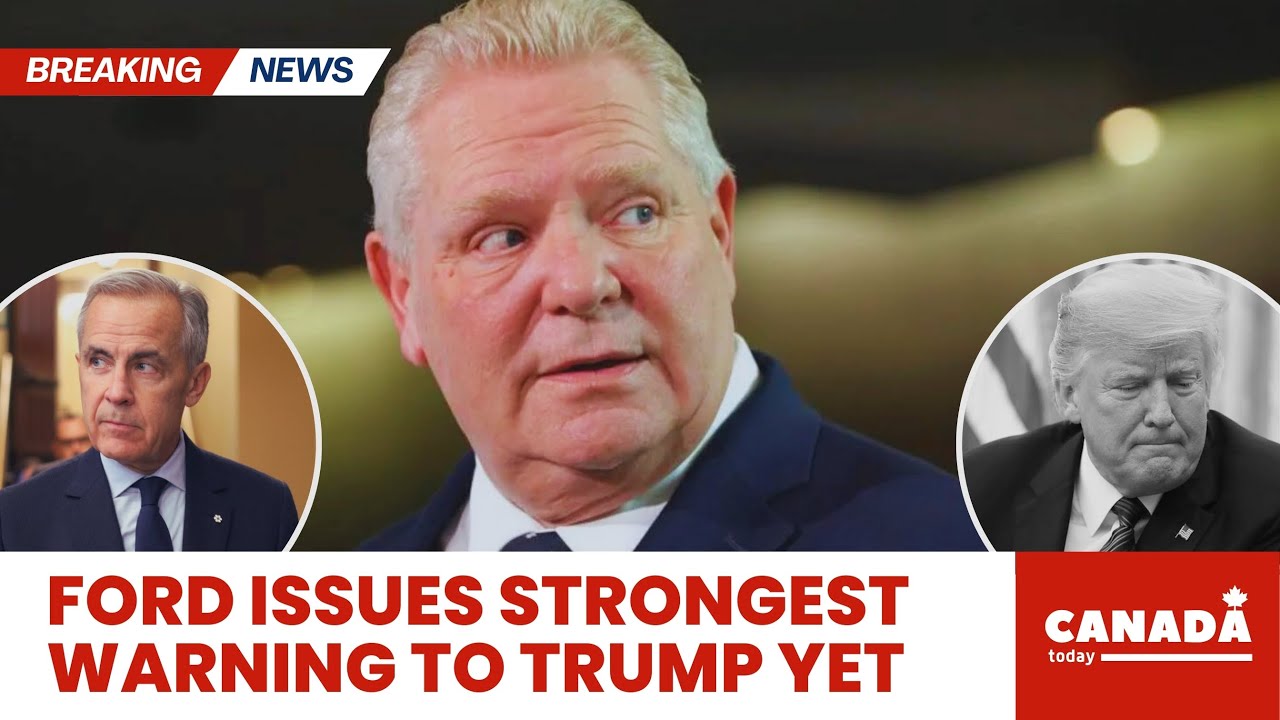
Mr. Ford, the populist Conservative leader of Canada’s most populous province, has emerged as the most vocal critic of Mr. Trump’s aggressive tariff policies throughout 2025. What began as economic retaliation — including surcharges on electricity exports and bans on American liquor in provincial stores — has now turned deeply personal. “This isn’t just about trade anymore,” Mr. Ford said, pounding the podium. “When you have a tyrant in the White House bullying our workers, our families, and our sovereignty, Canadians won’t stay silent.”
The outburst came in response to the latest round of U.S. tariffs, which have targeted Canadian steel, aluminum, autos and energy products. Mr. Trump has defended the measures as necessary to protect American jobs and address what he calls unfair trade practices. But Canadian officials, including Prime Minister Mark Carney, have argued that the levies are punishing a close ally and risking bilateral supply chains integral to both economies.
.jpg)
Mr. Ford’s use of the word “tyrant” — a term rarely deployed in modern diplomatic discourse between the two nations — stunned reporters and immediately dominated social media. Clips of the premier’s remarks amassed millions of views within hours, with hashtags like #StandUpToTrump and #CanadaStrong trending nationwide. Supporters praised it as a bold defense of national interests; one Toronto resident posted, “Finally, someone saying what we all think.” Critics, however, warned that such rhetoric could provoke further escalation from Mr. Trump, known for his combative responses on social media.
Behind the scenes, sources close to Mr. Ford’s office said the language was carefully chosen to rally domestic support while signaling resolve to Washington. One provincial adviser, speaking on condition of anonymity, noted that polling showed overwhelming Canadian frustration with the tariffs, which economists estimate have already cost thousands of jobs in Ontario’s manufacturing sector. “Doug knew this would resonate,” the adviser said. “It’s not bluster — it’s strategy.”
The confrontation marks a stark evolution for Mr. Ford, who in his early political career drew comparisons to Mr. Trump for his brash style and populist appeals. Once expressing admiration for some of the president’s policies, Mr. Ford has since positioned himself as Canada’s frontline defender. Earlier this year, he paused electricity surcharges after negotiations, pulled controversial anti-tariff ads featuring Ronald Reagan that infuriated Mr. Trump, and coordinated with other premiers on a unified response.
Prime Minister Carney, while more measured in public, has privately backed Mr. Ford’s aggressive posture, according to federal sources. In Ottawa, officials are preparing contingency plans for broader retaliation, including potential restrictions on critical minerals and energy flows. Yet Mr. Carney has emphasized diplomacy, recently stating that Canada remains open to talks “when the U.S. is ready.”
Reaction in the United States has been mixed. Some Republican lawmakers dismissed Mr. Ford’s comments as posturing, while others in border states like Michigan and New York — dependent on Ontario electricity — expressed concern over escalating costs for consumers. White House officials declined to comment directly but reiterated Mr. Trump’s stance that tariffs are “essential for American prosperity.”
As winter approaches, the stakes are rising. Ontario supplies power to millions of American homes, and disruptions could prove costly on both sides. Analysts say Mr. Ford’s gambit has unified Canadians but risks prolonging the standoff if Mr. Trump digs in.
This latest chapter underscores the fragility of North American economic ties in an era of renewed protectionism. For now, Mr. Ford shows no signs of backing down, declaring, “We love our American friends, but we won’t be pushed around.” Whether his words force a rethink in Washington or ignite further retaliation remains uncertain, but they have undeniably ignited a wave of national resolve north of the border.