Canada’s Indo-Pacific Turn Signals a Quiet but Consequential Strategic Shift
OTTAWA — As global alliances strain under economic nationalism and rising geopolitical tension, Canada is pursuing a deliberate recalibration of its place in the world. A 10-day diplomatic mission across the Indo-Pacific — with stops in Mumbai, New Delhi, Sydney and Tokyo — underscores what officials describe as an urgent need to diversify trade, deepen security ties and reduce vulnerability in an era of uncertainty.
The prime minister’s trip to India, Australia and Japan comes at a moment when middle powers are reassessing their economic dependencies and strategic assumptions. While the language surrounding the mission has been measured, the scope of its ambitions is not. Trade officials say commerce with India alone, currently valued at roughly $31 billion annually, could approach $70 billion within several years if negotiations proceed as envisioned.
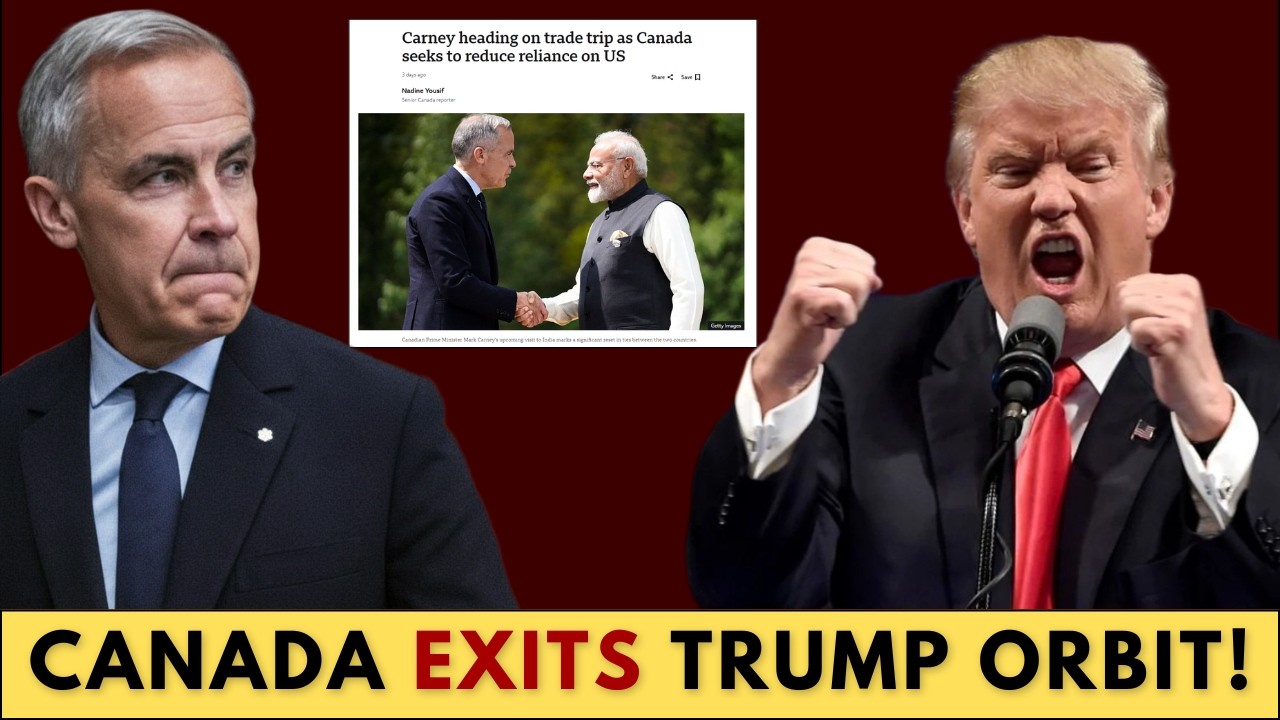
The effort reflects a broader recognition in Ottawa: Canada can no longer rely as heavily as it once did on traditional partners. The United States remains Canada’s largest trading partner by a wide margin, but shifting trade policies and periodic disputes have reinforced the risks of concentration. The European Union provides another important anchor, yet growth opportunities — and strategic leverage — increasingly lie in the Indo-Pacific.
India, now the world’s most populous nation and one of its fastest-growing major economies, represents both promise and complexity. Political tensions between Ottawa and New Delhi have flared in recent years, including allegations of foreign interference and concerns about transnational repression. Canadian officials have recently adopted a more cautious public tone regarding those issues, even as they continue to raise them privately. The balancing act is delicate: advancing economic interests without appearing to sidestep human rights or security concerns.
Australia and Japan present a different but equally significant dimension of the strategy. Both are longstanding U.S. allies with expanding defense industries and deepening regional security roles. Canadian officials have explored cooperation on advanced radar systems, naval infrastructure and critical mineral supply chains — sectors viewed as essential not only for economic growth but for national resilience.
In Australia, discussions have included procurement and joint development of next-generation radar technology. In Japan, conversations have centered on critical minerals, artificial intelligence, space systems and quantum research. These areas, once peripheral to Canada’s diplomatic outreach, now sit near the core of its industrial policy.
At home, the government has pledged billions of dollars to bolster domestic manufacturing and innovation in sectors tied to energy transition, defense production and advanced technology. The rationale is straightforward: economic security and national security are increasingly inseparable. Supply chain disruptions during the pandemic, coupled with Russia’s invasion of Ukraine and intensifying U.S.-China rivalry, have reinforced that lesson.
The Indo-Pacific strategy is not framed as a rejection of established alliances but as an expansion of options. Canadian officials speak of “strategic autonomy” — the capacity to make decisions without undue external pressure — rather than alignment shifts. Yet the symbolism of the trip is unmistakable. Canada is signaling that it intends to be an active participant in shaping the region’s economic architecture rather than a peripheral observer.
There are risks. Negotiations with India could stall amid political disputes. Defense cooperation with Australia and Japan may require sustained financial commitments at a time of fiscal constraint. Domestic critics question whether Ottawa can move swiftly enough to compete in sectors where larger economies already dominate.
Moreover, the pivot unfolds against a backdrop of global fragmentation. Multilateral institutions are under strain. Trade disputes are increasingly entangled with security considerations. For middle-sized economies like Canada’s, navigating this landscape requires both pragmatism and patience.
Still, there is a quiet confidence in Ottawa’s approach. Officials argue that diversification is less about dramatic realignment than about steady accumulation — one agreement, one partnership, one investment at a time. Factories expanded. Ports upgraded. Research partnerships signed. The changes may not command banner headlines, but over time they can alter economic trajectories.
The political stakes are equally significant. For ordinary Canadians, the promise of Indo-Pacific engagement translates into tangible questions: Will it create jobs? Will it stabilize supply chains? Will it make the country more secure in an unpredictable world? The government’s case rests on the idea that broader networks reduce vulnerability and create leverage.
Whether that vision materializes will depend on execution. Trade frameworks must convert into enforceable agreements. Defense collaborations must yield operational capability. Investments in emerging technologies must produce commercial viability.
What is clear is that Canada is attempting to write a new chapter in its external relations — one less defined by geography alone and more by strategic calculation. In a world where power is increasingly diffuse and competition more intense, Ottawa’s Indo-Pacific turn represents a bet: that foresight, diversification and sustained engagement can provide stability in an era when certainty is in short supply.
The transformation, if it comes, will not be sudden. It will unfold in incremental steps, measured in contracts signed, supply chains secured and partnerships strengthened. But over time, those steps may amount to something larger — a redefinition of how Canada positions itself in a rapidly shifting global order.