A trade dispute over eggs — ordinarily the stuff of routine regulatory wrangling — has escalated into the latest flash point in an increasingly strained economic relationship between the United States and Canada.
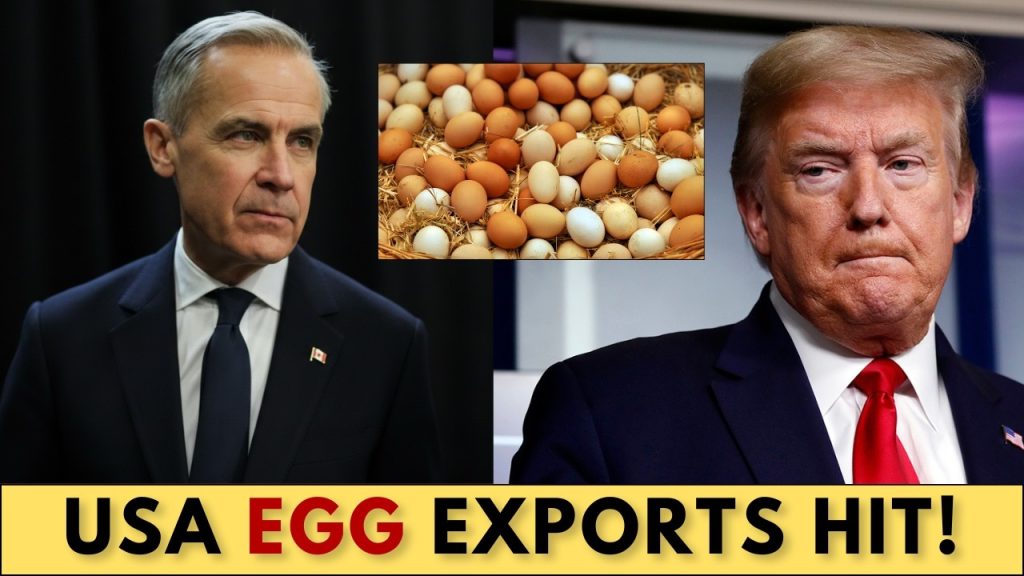
Canadian authorities this week confirmed that they had blocked entry of a large shipment of U.S. eggs, citing quality controls and compliance with domestic supply management rules. The move affects what industry sources estimate to be as many as 172 million eggs originally destined for Canadian processors and distributors. While officials in Ottawa framed the decision as technical and standards-based, the political undertones were unmistakable.
The rejection comes at a delicate moment for American agriculture. Egg producers have been navigating volatile prices, fluctuating feed costs and heightened scrutiny from the U.S. Department of Justice over alleged pricing practices. Canada, though not the largest export destination, has served as a steady buyer for certain categories of processed and table eggs. Losing that outlet — even temporarily — compounds an already fragile market.
In Washington, the reaction was swift. President Donald Trump criticized the Canadian action as “unfair” and signaled that trade officials were reviewing options. Lawmakers from farm states pressed the administration to secure clarity, warning that prolonged disruption could lead to storage bottlenecks and financial losses for producers operating on thin margins.
Canadian Prime Minister Mark Carney struck a more measured tone. In remarks to reporters, he said Canada would “apply its standards consistently and protect the integrity of domestic supply chains.” Officials close to his government describe the move as part of a broader strategy to defend Canadian producers from what they view as dumping — the practice of selling goods below cost to gain market share.
At the heart of the dispute lies Canada’s tightly managed dairy and poultry system, which limits imports and stabilizes domestic prices through quotas. American negotiators have long criticized the framework as protectionist. Canadian officials counter that it ensures predictability for farmers and shields consumers from sharp price swings. The blocked eggs appear to have collided with that system’s regulatory thresholds.
Agricultural economists caution against reading the episode as an outright trade war, but they acknowledge that symbolism matters. Eggs are a staple commodity, woven into both countries’ food supply chains. A highly visible disruption sends a signal beyond the poultry sector, particularly at a time when tariff tensions and industrial policy disagreements have strained broader relations.
For U.S. producers, the immediate challenge is logistical. Redirecting millions of perishable eggs requires rapid coordination with alternative buyers, whether in domestic processing plants or overseas markets. Cold storage capacity is finite, and prolonged surplus risks pushing prices downward. Some analysts note that even a modest drop in wholesale prices can reverberate through rural economies reliant on steady export flows.
Canadian retailers and consumers are watching closely as well. While officials insist that domestic supply is sufficient, any sustained contraction in imports could tighten inventories in certain regions. Grocery chains have already contended with volatility linked to avian influenza outbreaks and shifting consumer demand. Stability, in both countries, remains a shared concern.
The episode underscores how intertwined North American agriculture has become — and how vulnerable it is to political friction. For decades, trade agreements facilitated the movement of food products across a largely open border. As regulatory scrutiny intensifies and governments emphasize domestic resilience, those flows are increasingly subject to recalibration.
Whether the egg dispute proves temporary or presages broader confrontation may depend on negotiations unfolding quietly behind closed doors. Trade officials from both countries remain in contact, according to diplomatic sources. Yet even if a technical resolution is reached, the incident reflects a larger recalculation underway.
In an era when economic policy is wielded more assertively, even a shipment of eggs can carry geopolitical weight. The question now is not only how quickly the current impasse can be resolved, but whether the trust that long underpinned cross-border food trade can be restored — or whether this seemingly modest clash marks another incremental step toward a more guarded North American marketplace.