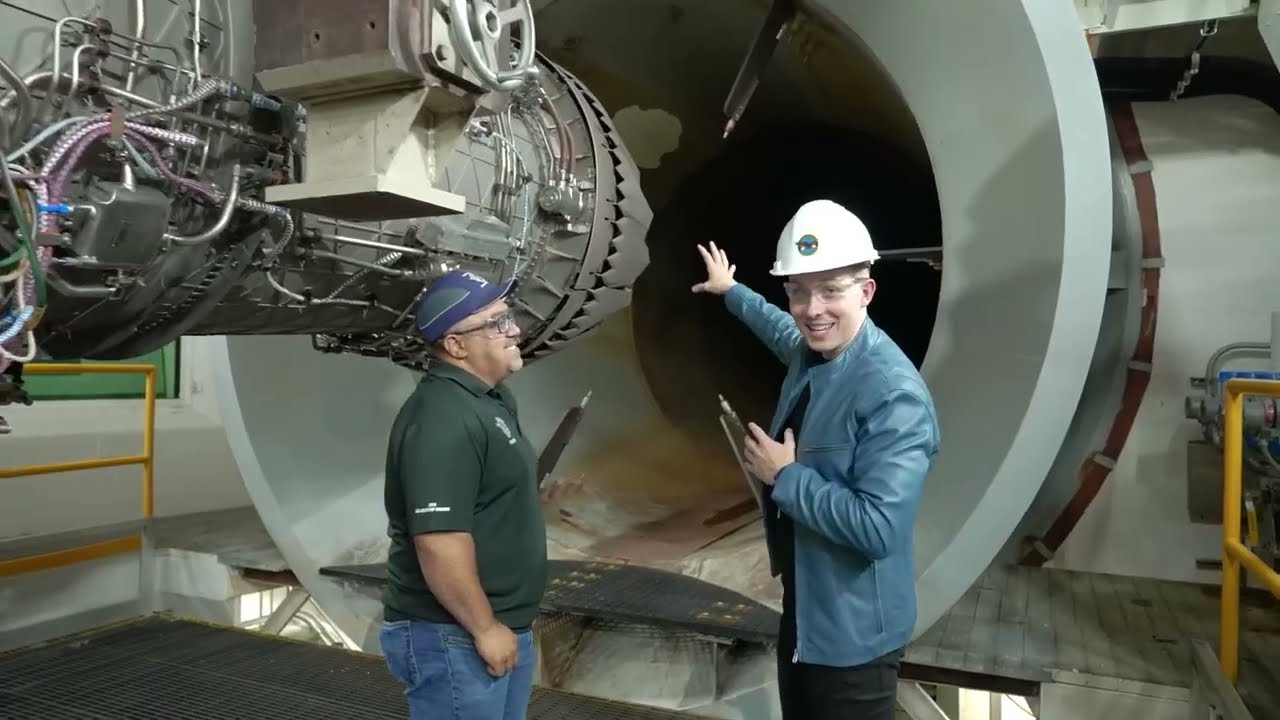
Inside a highly secure testing facility in Derby, England, Rolls-Royce has quietly conducted engine trials that may redefine modern military aviation. While global attention remained fixed on stealth designs and political announcements, engineers focused on propulsion — the true determinant of air superiority. Their latest fighter-engine architecture, designed for extreme environments and rapid adaptability, is now forcing defense planners across Europe and North America to reassess long-standing assumptions about Western air power dominance.

Unlike traditional fighter engines optimized for large expeditionary bases, the new Rolls-Royce system was engineered for harsh operational realities. The engine can reportedly start from frozen shutdown at temperatures below −50°C and reach combat-ready thrust within minutes, enabling rapid response from Arctic and remote airfields. For nations such as Canada, Norway, and Sweden — where reaction time defines sovereignty — this capability transforms defensive strategy, allowing aircraft to launch faster without heavy pre-heating infrastructure.
For more than 70 years, American manufacturers like Pratt & Whitney and General Electric dominated Western fighter propulsion, shaping not only technology but also logistics networks and strategic influence. Rolls-Royce’s new engine family challenges that dominance through measurable gains in fuel efficiency, modular maintenance, cold-start reliability, and lower lifecycle costs. These advantages are encouraging allied nations to diversify procurement decisions, gradually weakening a monopoly once viewed as permanent.
Rather than chasing highly experimental adaptive-cycle or scramjet concepts, Rolls-Royce engineers refined proven turbofan architecture using advanced metallurgy, additive manufacturing, and ceramic matrix composites capable of operating at far higher temperatures. The result is an engine that performs across a broad mission envelope — from low-speed surveillance to near-hypersonic operations — while remaining easier to maintain and deploy from dispersed bases, including highway strips and remote northern airfields.
The impact extends far beyond engineering. European fighter programs integrating the new propulsion technology are gaining momentum, investor confidence in Rolls-Royce has surged, and allied air forces are revising logistics, training, and operational planning models. Increasingly, propulsion choice reflects political strategy as well as performance, with nations seeking greater autonomy through diversified defense supply chains.
Rolls-Royce’s breakthrough represents more than a technological upgrade — it signals a potential shift in global aerospace leadership. By prioritizing operational realism, partnership development, and adaptable design, the British manufacturer has reasserted Europe’s influence in military aviation. Whether this marks a permanent redistribution of power between American and European defense industries remains uncertain, but one reality is already clear: in modern air warfare, control of the skies still begins with the engine.