Rolls-Royce Opens Singapore Plant as Hypersonic Engine Claims Stir Debate in Aerospace Circles
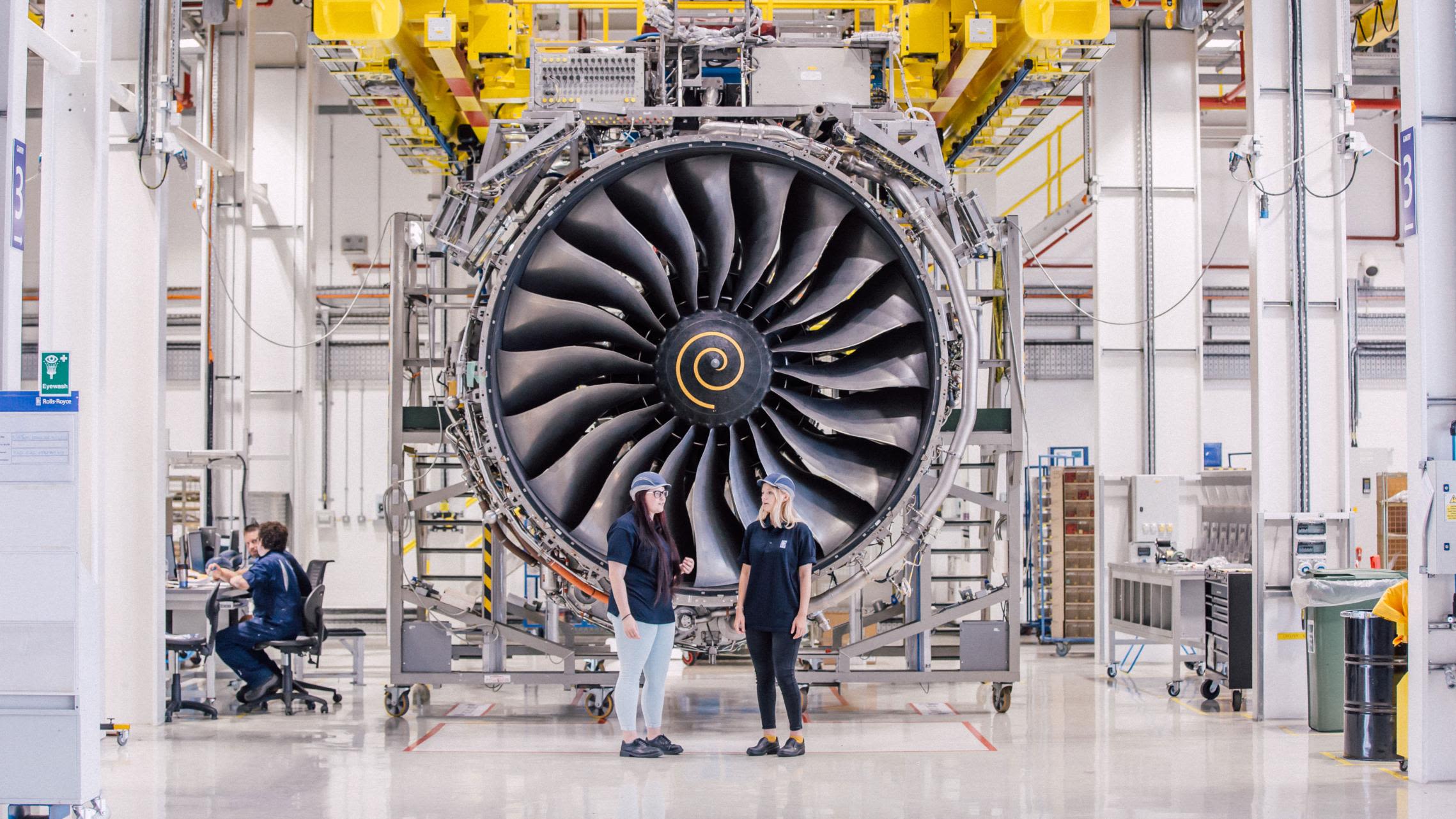
When Rolls-Royce opened a new manufacturing facility this week at Seletar Aerospace Park, the ceremony was framed as a statement about Asia’s centrality to the future of aviation. Yet behind the speeches and ribbon-cutting, industry attention has focused on something far more ambitious: claims surrounding a hypersonic propulsion system known internally as “Ice Cool.”
The Singapore facility, executives said, will house two core capabilities — production of advanced fan blades made from ceramic composites and a final assembly line for next-generation engines. The location underscores how aerospace manufacturers increasingly view Asia not merely as a market, but as a strategic production hub.
But it is the material science behind the fan blades — and what they are said to endure — that has captured the imagination of engineers and defense analysts alike.
According to company materials and researchers familiar with the project, the ceramic matrix composites developed for the program can tolerate temperatures approaching 2,400 degrees Celsius, levels at which steel liquefies and titanium weakens. More strikingly, engineers involved in testing describe a material that dissipates heat so efficiently that internal structural temperatures remain comparatively stable even under extreme external thermal loads.
Independent academic researchers, including scientists at University of Cambridge, have examined samples of advanced aerospace ceramics in recent years, though the precise specifications of the Ice Cool program remain proprietary. In laboratory simulations of hypersonic conditions — where air compression alone can generate temperatures exceeding 2,000 degrees Celsius — the challenge is not simply resisting heat, but managing it.
Traditional hypersonic concepts, such as scramjet-powered demonstrators tested in the United States, Russia and China, rely on exotic fuels, complex cooling systems or short operational windows. Sustained hypersonic flight within the atmosphere has remained elusive in part because engines and airframes must withstand punishing thermal stresses for extended periods.
Rolls-Royce’s approach, according to engineers briefed on the project, emphasizes passive thermal management. Instead of circulating cooling fluids through elaborate plumbing, the material itself is engineered at the molecular level to channel heat away from critical components toward surfaces designed to radiate it outward.
In principle, such a design draws on well-established physics: materials with high thermal conductivity can move heat rapidly, reducing localized stress. What distinguishes the Ice Cool concept, advocates argue, is the scale and precision of the crystal lattice engineering, which purportedly creates aligned pathways for thermal transfer.
If validated in sustained flight, the implications would be significant. A turbine-based engine capable of operating from standstill to speeds approaching Mach 7 would represent a departure from scramjet systems that require booster rockets to reach operating velocity. It would also suggest the possibility of aircraft capable of taking off from conventional runways and transitioning into hypersonic regimes without changing propulsion systems.
That prospect has strategic ramifications. Current Western fighter aircraft, including the F-35 Lightning II, operate below Mach 2. Hypersonic speeds would alter engagement timelines, compressing reaction windows for both pilots and air defense systems. Analysts caution, however, that speed alone does not determine combat effectiveness; maneuverability, sensor integration, survivability and logistics remain decisive factors.
The geopolitical dimension is equally complex. European collaboration has reportedly played a role in defining operational requirements, with Scandinavian partners contributing environmental data and Arctic performance criteria. Such multinational development models contrast with more centralized procurement systems in the United States.
American defense officials, speaking on background in recent months, have acknowledged that advanced ceramics and thermal management remain areas of intense research competition. While the Pentagon continues to fund hypersonic missile programs, an operational hypersonic fighter remains beyond current U.S. capabilities.
Skepticism persists. Aerospace history is littered with ambitious claims that proved difficult to scale beyond prototypes. Manufacturing advanced ceramics at industrial volumes, while maintaining atomic-level precision, poses formidable challenges. Rolls-Royce executives say automation and rigorous quality control protocols — including extensive thermal cycling tests — are built into the production process in Singapore and the United Kingdom.
Cost will also determine whether hypersonic propulsion transitions from demonstration to deployment. Company projections suggest that per-engine prices could decline substantially as manufacturing matures, potentially approaching those of conventional high-performance turbofans. Independent analysts caution that early-stage defense technologies often underestimate lifecycle expenses.
For now, the opening of the Singapore facility signals confidence. It reflects a bet that materials science — long considered the quiet backbone of aerospace innovation — may hold the key to the next leap in flight.
Whether Ice Cool represents a genuine redefinition of practical thermal limits or an incremental, if impressive, refinement will become clear only through sustained operational testing. But in an industry where physics sets unforgiving boundaries, even modest shifts can reshape the balance of power.
In Singapore this week, amid polished engine casings and newly commissioned assembly lines, that possibility felt closer than ever.