Five demands. Zero concessions. And suddenly, the balance of power in North America doesn’t look so one-sided anymore.
What was supposed to corner Canada may have exposed something Washington didn’t expect.
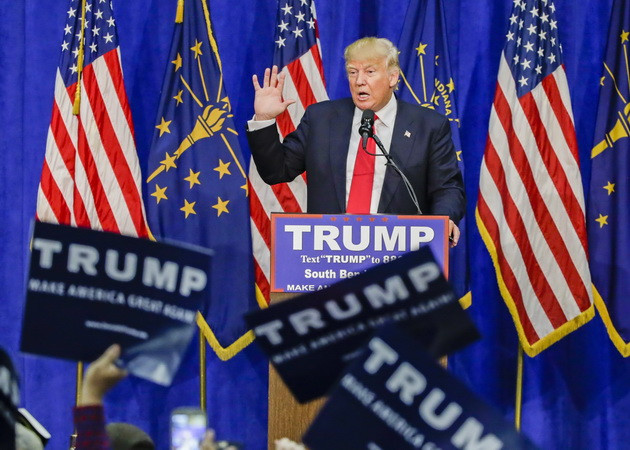
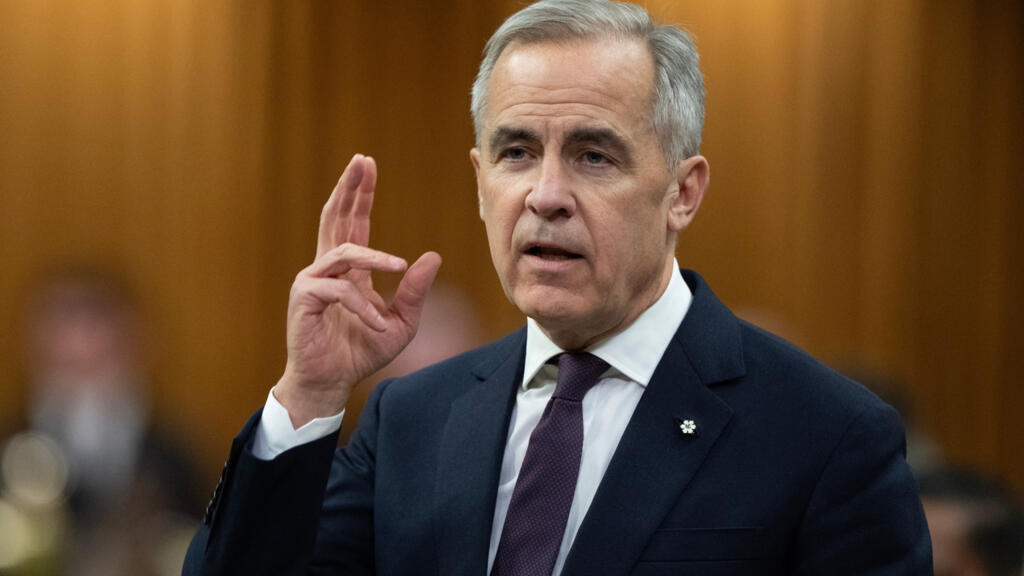
In a move that sent shockwaves through economic and political circles, the United States formally presented five non-negotiable conditions for extending the North American trade agreement — and Canada’s Prime Minister Mark Carney rejected every single one.
Not partially. Not conditionally. Completely.
The ultimatum came during the review process of the 16-year extension of the United States–Mexico–Canada Agreement (USMCA), known in Canada as CUSMA. U.S. Trade Representative Jameson Greer made it clear before Congress: if Canada wants stability, it must comply.
The list was blunt.
First: Dairy.
Washington demanded expanded access to Canada’s tightly controlled dairy market, long protected by its supply management system. American producers argue that tariffs exceeding 200% on over-quota exports block fair competition. Ottawa didn’t hesitate. Supply management would not be reopened. Parliament even reinforced protections through legislation, locking the system into law — a direct message to Washington, and a nod to Quebec’s politically powerful dairy sector.
Second: Digital Media Regulation.
The U.S. wants Canada to roll back its Online Streaming Act and Online News Act, which require tech giants like Netflix, Spotify, YouTube, and major platforms to fund Canadian content and compensate news outlets. Washington calls it discrimination against American firms. Canada calls it cultural survival. Carney’s government made clear: these laws are staying.
Third: Provincial Alcohol Restrictions.
Several Canadian provinces restricted U.S. alcohol imports after Washington imposed tariffs on Canadian steel and aluminum under Section 232. The U.S. now wants those retaliatory bans lifted. Ottawa’s response? Remove the tariffs first. No one-sided concessions.
Fourth: Government Procurement Rules.
The U.S. criticized “Buy Local” policies in Ontario, Quebec, and British Columbia, arguing they block American firms from public contracts. Yet Washington maintains its own “Buy American” provisions for federal projects. Canada sees little incentive to abandon policies that mirror American practice.
Fifth: Energy Policy.
Concerns were raised about Alberta’s electricity trade and treatment of cross-border power providers. But the broader reality complicates the pressure campaign: the U.S. imports approximately 3.8 million barrels of Canadian crude oil per day, accounting for nearly a quarter of its refinery feedstock. Many American refineries were engineered specifically for Canadian heavy crude. Meanwhile, northeastern U.S. states depend on Canadian electricity during peak winter demand.
The energy interdependence runs both ways — and deeply.
The Hidden Leverage
On the surface, it looked like Washington was tightening the screws. But analysts quickly noticed something else: every demand targeted sectors where American industries rely heavily on Canadian stability.
Nowhere is that more obvious than the auto industry.
Though automobiles weren’t explicitly on the demand list, the silence was telling. North American auto production operates as a single ecosystem. Parts cross the border multiple times before a vehicle rolls off the line. Executives have warned Congress that unraveling the agreement would inject billions in costs, disrupt supply chains, and destabilize manufacturing across the Midwest.
If USMCA collapses, it won’t be symbolic — it will be expensive.
The Beijing Curveball
Then came the unexpected twist.
While Washington debated conditions, Carney landed in Beijing and secured targeted tariff relief for key Canadian sectors, including canola and certain electric vehicle channels. It wasn’t a sweeping free trade pact. But it was a signal.
Canada was diversifying.
For decades, roughly 75% of Canadian exports flowed south. That dependency shaped strategy and limited flexibility. The China engagement suggested a shift from theory to execution. Ottawa clarified that no new free trade agreement with China was underway and that nothing violated USMCA clauses — but the symbolism mattered.
Canada showed it had options.
The reaction in Washington shifted from calm to caution. Public warnings emerged about potential tariffs if Canada became a “drop-off point” for Chinese goods. But legally, no trigger for termination had been activated.
July: The Moment of Truth
As the July review approaches, three paths loom:
-
A full 16-year extension
-
Annual reviews through 2036
-
Or a complete withdrawal
Nearly 150 American industry leaders — spanning steel, auto, agriculture, and energy — have urged lawmakers to preserve the agreement. U.S. exports to Canada and Mexico under USMCA reached nearly $960 billion, growing more than 50% since implementation.
The numbers tell a story of integration. The rhetoric tells a different one.
By rejecting all five demands, Carney has reframed the negotiation. This is no longer a narrative of Canadian vulnerability. It is a high-stakes recalibration between two deeply interwoven economies.
Five demands were issued.
Five were declined.
And now the real question hangs in the air:
If this deal fractures, who truly pays the higher price?