Canada’s Potato Supply Shift Could Impact U.S. Fast Food Chains: What We Know So Far
A growing debate is emerging around the North American potato supply chain after renewed tariff tensions between the United States and Canada. Industry analysts and trade observers say uncertainty around potential tariff policies could influence how Canadian potato processors prioritize export markets — and that may have downstream effects on U.S. fast food chains that rely heavily on frozen fries imports.
Canada’s Frozen French Fry Exports Play a Major Role in U.S. Food Supply
Recent agricultural trade data shows Canada is one of the world’s largest exporters of processed potato products, especially frozen French fries. In recent years, Canadian frozen fry exports have been valued in the multi-billion-dollar range annually, with the United States serving as the primary destination market.
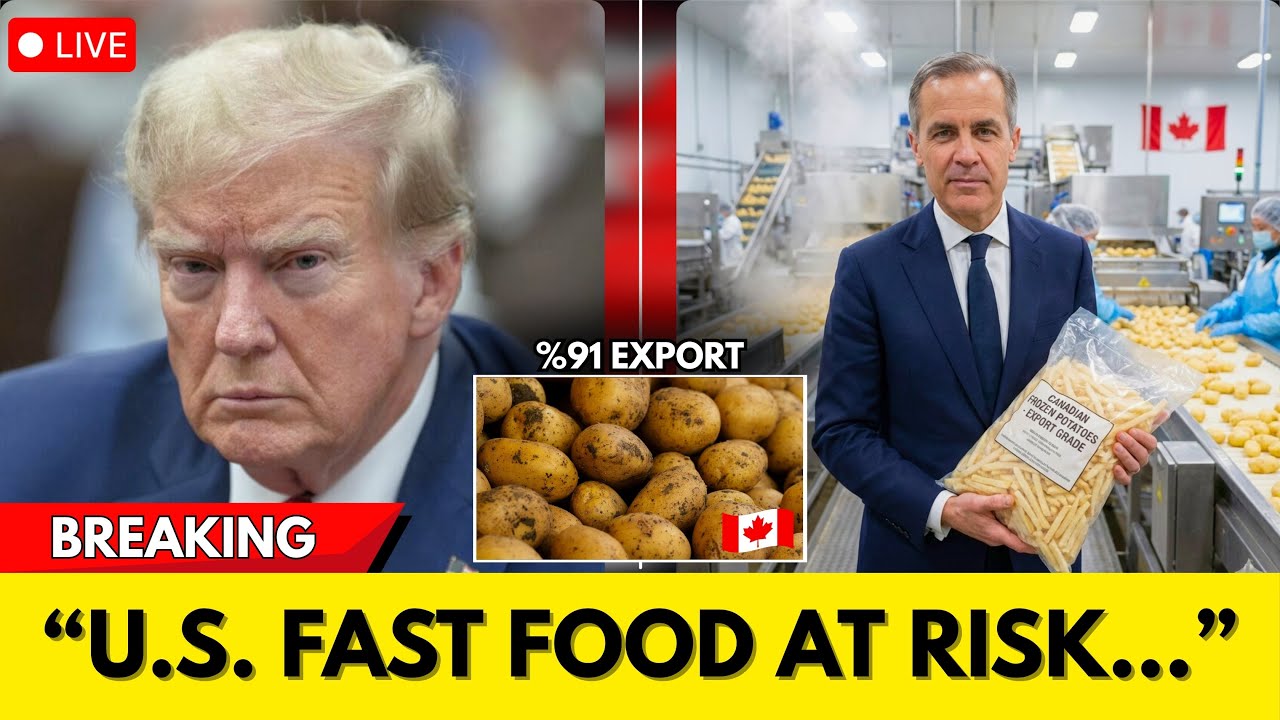
Trade reports indicate that a very large share of Canada’s frozen potato exports — often estimated above 80–90% — has historically gone to U.S. buyers. That includes supply relationships with major quick-service restaurant chains such as McDonald’s, Burger King, and Wendy’s through large processors like McCain Foods, Cavendish Farms, and Simplot.
Because of this integration, the U.S. and Canadian potato industries function less like competitors and more like a shared cross-border supply network.
Why Tariff Uncertainty Matters More Than Tariffs Alone
According to industry commentary cited in the discussion, the biggest risk factor may not be tariffs themselves — but uncertainty around them.
When companies are unsure whether tariffs could be introduced, raised, paused, or expanded, processors and exporters may reduce exposure to that market as a risk management strategy. That can lead to:
-
Smaller forward contracts
-
Lower planting commitments
-
Diversification into alternative export markets
-
Slower capacity expansion tied to U.S. demand
Some agricultural reporting has noted that certain processors have adjusted contract volumes with farmers in upcoming seasons, citing a mix of demand softness and trade uncertainty.

Asia Emerging as a Growth Market for Canadian Processors
While the United States remains Canada’s largest potato export destination, Asian markets — including Japan, South Korea, Taiwan, and Southeast Asia — have shown steady growth in frozen potato demand.
Rising middle-class consumption and expansion of Western-style fast food chains in Asia are increasing demand for processed potato products. Canadian suppliers already maintain established trade relationships in those markets, making diversification more feasible if U.S. trade conditions become less predictable.
Experts note that even a modest redirection of supply — such as 5–10% — could tighten availability in highly optimized supply chains.
Can U.S. Producers Replace Canadian Supply Quickly?
Scaling domestic frozen potato processing is not simple. New processing plants require:
-
Hundreds of millions in capital investment
-
Multi-year construction timelines
-
Long-term grower contracts
-
Specialized potato varieties
Because of these constraints, rapid replacement of cross-border supply is considered difficult in the short term. Imports from Europe are possible but typically involve higher logistics costs due to cold-chain shipping distances.
Seed Potato Trade Is Another Critical Link
Beyond frozen fries, seed potato trade is another important — and often overlooked — component of cross-border agricultural cooperation. Canadian producers supply a large portion of certified seed potatoes used by U.S. farmers for commercial planting.
Any disruption in seed potato flows would not affect just imports — it could also influence future domestic harvest volumes. However, agricultural officials emphasize that planting and export patterns fluctuate year to year for many reasons, including weather, demand cycles, and crop rotation decisions.
Have Major Supply Shifts Already Happened?
Fact-checking reviews referenced in the discussion note that while quarterly export volumes can fluctuate, there is not yet conclusive evidence of a dramatic, permanent shift away from U.S. markets. Government agriculture spokespeople have stated that more time and data are needed to determine long-term impacts from trade policy uncertainty.
In other words: early warning signals exist, but structural change is not yet confirmed.
What This Means for Fast Food Prices and Menus
If cross-border potato supply becomes tighter or more expensive, possible downstream effects could include:
-
Higher wholesale fry prices
-
Margin pressure on restaurant chains
-
Gradual menu price increases
-
Portion adjustments during peak demand
-
More diversified supplier strategies
Large chains typically hedge supply risk through multi-supplier contracts, but heavy concentration from a single foreign source can still create vulnerability.
The Bigger Picture: Food Supply Chains and Trade Policy
This situation highlights how modern food systems depend on deeply integrated international supply chains. Potatoes — a simple staple — move through a complex network of growers, processors, cold storage facilities, and multinational buyers.
Trade policy signals alone — even before rules change — can influence long-term investment and contracting decisions across that network.
Whether current tensions lead to a lasting restructuring or remain a short-term fluctuation will depend on future policy clarity, bilateral negotiations, and global demand trends.